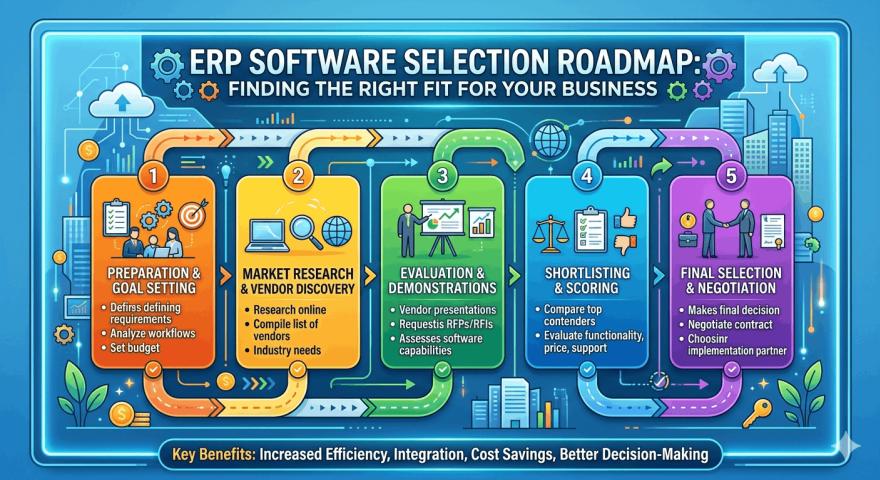
Most SMB owners ask the same question before signing off on ERP development: will this actually pay for itself?
Fair question. Custom software isn't cheap, and vague promises about "efficiency gains" don't help anyone budget. So here are five common SMB scenarios, based on the kind of ERP outcomes businesses in manufacturing, retail, distribution, healthcare, and logistics regularly report — with the actual metrics that matter.
1. Manufacturing: Cutting Inventory Waste
A mid-sized manufacturer running spreadsheets for inventory typically overorders raw materials to avoid stockouts. That ties up cash and creates waste when materials expire or become obsolete.
After moving to a custom ERP software solutions India setup with real-time inventory tracking:
- Raw material overordering drops by 20-30%
- Stockout incidents fall sharply due to automated reorder triggers
- Warehouse staff spend less time on manual stock counts
The ROI here isn't abstract — it shows up directly in reduced carrying costs.
2. Retail: Faster Checkout, Fewer Errors
A multi-location retail business juggling separate POS systems per store loses visibility into which locations are actually profitable.
With a unified ERP:
- Sales reconciliation time drops from days to hours
- Pricing errors across locations get caught before they affect margins
- Inventory transfers between stores become trackable instead of guesswork
For retail, the payback usually comes from tighter margins, not flashy features.
3. Distribution: Order Accuracy at Scale
Distributors handling hundreds of daily orders manually are almost guaranteed to ship something wrong eventually. Wrong shipments mean returns, refunds, and damaged client trust.
Custom Custom ERP development services built around order management typically deliver:
- Order accuracy rates above 98%
- Reduced return-processing costs
- Faster order-to-delivery cycles, which improves customer retention
4. Healthcare Clinics: Billing Accuracy
Clinics running billing manually often lose revenue to unclaimed insurance amounts or coding errors that go unnoticed for months.
A properly built ERP with integrated billing modules helps:
- Reduce claim rejection rates
- Shorten the time between service delivery and payment collection
- Give admin staff a clear dashboard instead of scattered spreadsheets
The financial impact compounds over a year — small percentage improvements in claims processing add up fast.
5. Logistics: Fleet and Fuel Visibility
Logistics companies without integrated tracking often can't tell which routes or vehicles are actually costing them money.
With ERP-driven fleet management:
- Fuel cost tracking becomes route-specific instead of a lump total
- Maintenance scheduling becomes predictive rather than reactive
- Driver assignment gets optimized based on real delivery data
What These Patterns Tell Us
None of these numbers are guaranteed — every business is different, and ROI depends on how well the system is built around actual workflows, not templated modules. But the pattern holds: the businesses that get real value from ERP investment are the ones working with a Custom ERP Software Development company willing to understand their operations before writing a single line of code.
Conclusion
ERP ROI isn't about a single big win. It's inventory waste that stops piling up, orders that stop going out wrong, and billing that stops leaking revenue quietly month after month. If you're evaluating whether custom development makes sense for your business, start by mapping where your current process actually bleeds money — that's usually where the ROI shows up first.
Frequently Asked Questions
How long does it typically take to see ROI from a custom ERP system?
Most SMBs start seeing measurable operational improvements within three to six months of go-live, particularly in areas like inventory accuracy and order processing. Full financial ROI, factoring in the initial development cost, usually plays out over twelve to eighteen months depending on the scale of the system and how quickly staff adopt it.
Is custom ERP development worth it for a small business, or is off-the-shelf software enough?
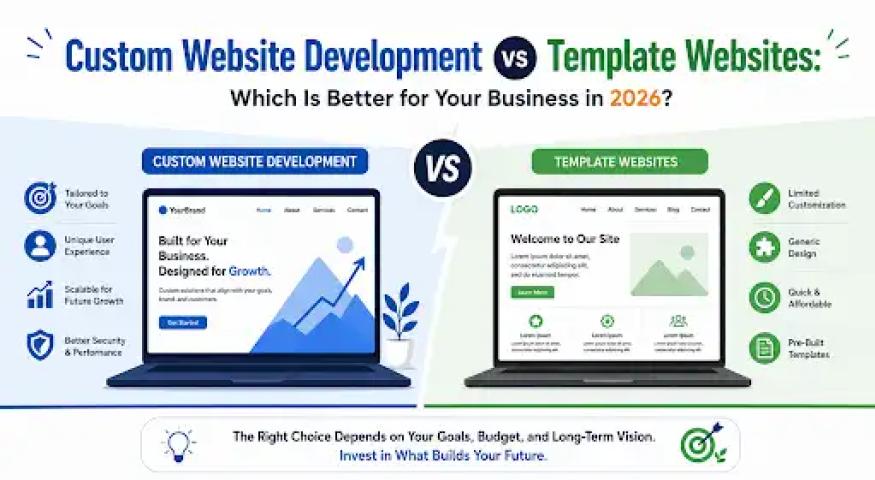
It depends on how specific your workflows are. If your business runs standard processes that match a generic platform's assumptions, off-the-shelf software can work fine. But if you're forcing your operations to fit someone else's template, you end up paying for workarounds instead of solutions — that's usually where custom development starts making more financial sense.
What factors most affect ERP ROI for SMBs?
The biggest factors are how well the system matches actual daily workflows, how much staff training happens during rollout, and whether the business tracks the right metrics before and after implementation. A system built without understanding real operational pain points