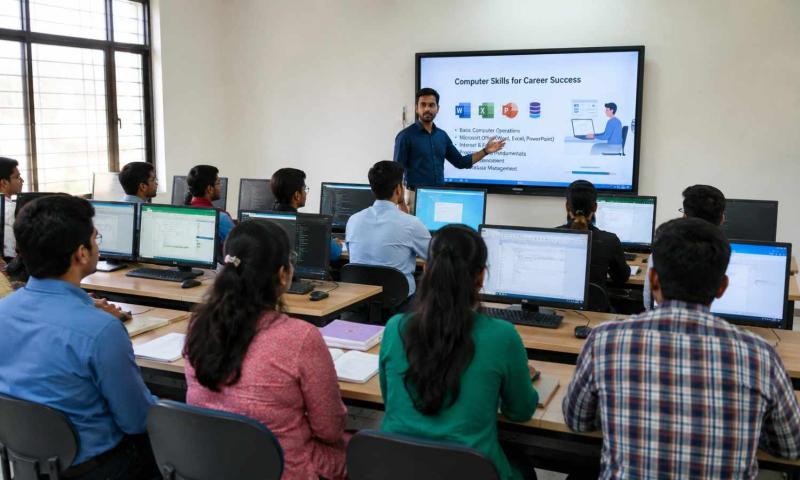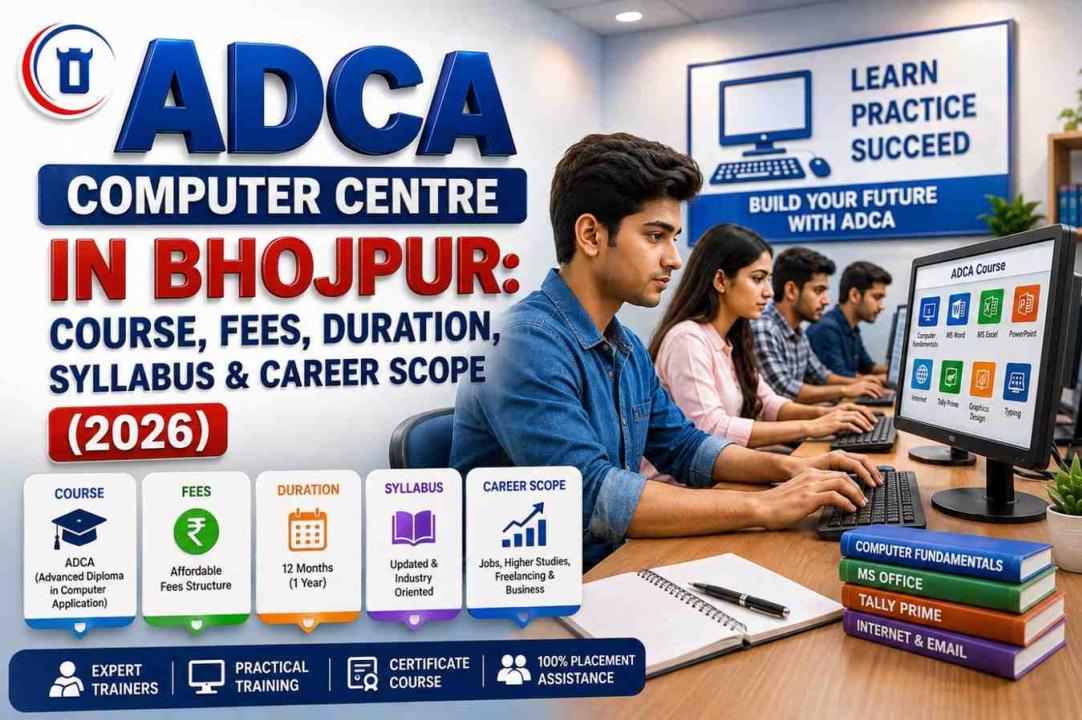
Computer knowledge has become useful for education, office work, business, and many entry-level jobs. Students in Bhojpur and nearby areas often look for practical courses that cover office applications, accounting, typing, and digital skills. An ADCA program can provide structured learning in these areas. However, students should compare the syllabus, practical training, fees, faculty, and certification before choosing an institute.
What Is ADCA?
ADCA generally stands for Advanced Diploma in Computer Applications. It is designed to develop practical knowledge of computers and commonly used applications.
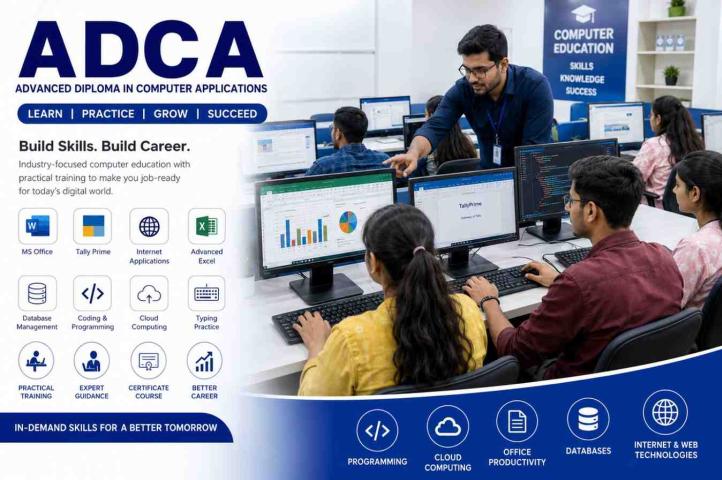
The course can introduce students to computer fundamentals, Windows, MS Office, internet usage, typing, data entry, accounting basics, and other office-related skills. Depending on the institute, the syllabus may also include Tally and additional computer applications.
The exact subjects can differ between course providers. Therefore, students should always check the current syllabus before admission.
Why Choose an ADCA Course in Bhojpur?
Computer skills are useful across many industries. Offices need employees who can prepare documents, manage spreadsheets, maintain records, handle emails, and perform basic digital tasks.
An ADCA program can help beginners build these skills in a structured way. Practical classes are especially useful because students can apply concepts instead of only studying theory.
For learners searching for an ADCA computer centre, the main goal should be skill development. A good program should balance classroom explanations with regular computer practice.
Students should also consider the location and accessibility of the institute. Learners from Arrah and nearby areas may compare local options before selecting a suitable course.
ADCA Course Duration
The duration of an ADCA course can vary from one institute to another. Some programs may follow a longer academic schedule, while others may offer shorter training formats.
Students should not select a course only because it has a short duration. The number of practical sessions and depth of the syllabus are equally important.
Before joining an ADCA training centre, students should ask:
- How long is the complete course?
- How many practical classes are included?
- What subjects are covered?
- Is there regular typing practice?
- Are computer systems available for students?
- Is a certificate provided after completion?
These questions can help learners understand what they are actually paying for.
ADCA Eligibility
Eligibility requirements may differ between institutes. Many computer training programs are designed for students who have completed basic schooling or higher secondary education.
Beginners can also consider such courses if they want to improve their computer knowledge. Students should confirm the exact eligibility criteria with the selected ADCA course institute before registration.
A basic understanding of reading, writing, and common computer operations can make learning easier, although the required level depends on the course structure.
ADCA Course Fees
There is no single fixed fee for every ADCA program. Course fees can depend on several factors.
These may include:
- Course duration
- Number of practical sessions
- Computer laboratory facilities
- Faculty experience
- Study materials
- Certification
- Software covered
- Class size
- Additional training modules
Students should compare the total course structure instead of choosing an institute only because its fee is lower.
An ADCA coaching centre should clearly explain its fees and any additional charges before admission. Asking for a complete fee structure can help students avoid confusion later.
ADCA Syllabus
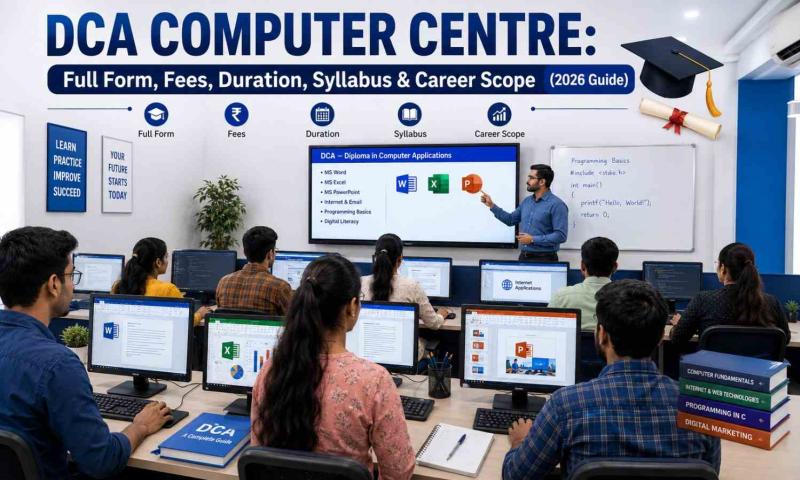
A typical ADCA syllabus focuses on practical computer applications. However, subjects can vary between institutes.
Computer Fundamentals
Students may learn basic computer concepts, hardware, software, operating systems, files, folders, and common computer operations.
Windows-based practice can help beginners understand how to manage files and use desktop applications.
MS Office
MS Office is an important part of many computer application courses.
Students may work with:
- MS Word for document preparation
- MS Excel for spreadsheets and calculations
- PowerPoint for presentations
These applications are useful in schools, offices, businesses, and administrative work.
MS Word practice can include formatting documents, creating tables, editing text, and preparing basic reports. Excel can introduce formulas, worksheets, data organization, and simple calculations.
Internet Basics
Internet basics can help students understand web browsing, email, online communication, and digital information.
Students should also learn responsible online practices. Basic awareness of passwords, suspicious links, and safe browsing can support better digital habits.
Tally and Accounting Basics
Some ADCA programs include Tally and accounting fundamentals. These topics can be useful for learners interested in office administration or basic accounts-related work.
Students may learn concepts such as transactions, records, and basic business accounting processes.
The depth of Tally training depends on the institute's syllabus. Learners interested specifically in accounting should check how many practical sessions are included.
Typing and Data Entry
Typing is another useful skill for office work. Regular practice can improve both speed and accuracy.
Data entry training can teach students how to enter information into digital records carefully. Accuracy is particularly important because incorrect entries can affect reports and business records.
Practical Skills Students Can Develop
A well-structured course can help learners develop several practical abilities.
These may include:
- Document preparation
- Spreadsheet handling
- Presentation creation
- Basic accounting
- Typing
- Data entry
- Internet usage
- File management
- Office automation
- Digital communication
Practical assignments can make these skills easier to understand. Students should therefore look for ADCA computer classes that provide regular hands-on computer work.
How to Choose the Right Computer Centre
Choosing a suitable ADCA course centre requires more than checking advertisements. Students should evaluate the actual learning environment.
Important factors include:
Course Syllabus
Check whether the syllabus covers the subjects you need. Students interested in office work may want strong MS Office and data-entry practice.
Practical Training
A computer course should provide enough time for hands-on learning. Ask whether every student gets regular access to a computer.
Faculty
Teachers should be able to explain concepts clearly and provide practical guidance.
Infrastructure
Check the computer laboratory, available systems, software, classroom environment, and learning resources.
Fees and Duration
Compare the total cost with the course duration and subjects included. A lower fee does not always mean better value.
Certification
Ask what type of certificate is issued and what requirements students must complete before receiving it.
Students searching for an ADCA institute near me or ADCA classes near me should also consider travel time. A nearby centre can make regular attendance easier, but quality should remain the main consideration.
The idea behind “ADCA Computer Centre in Ara – Complete Guide for Students” is useful here: learners should compare practical factors rather than selecting a centre only from a name or advertisement.
Similarly, searches such as “Best 10 Computer Centres in Arrah: Which is Right For You and Why?” should be treated as a starting point for comparison, not as proof that one centre is automatically suitable for every student.
Career Scope After ADCA
ADCA can provide foundational skills for several entry-level roles. Possible opportunities may include:
- Computer operator
- Data entry operator
- Office assistant
- Back-office assistant
- Documentation assistant
- Junior computer assistant
- Basic accounting assistant
However, completing a course does not automatically guarantee employment. Career outcomes depend on practical skills, communication ability, experience, location, and employer requirements.
Students can improve their prospects by continuing to practice typing, Excel, accounting software, documentation, and other job-related skills.
One local training option is Career Boss Institute, where students can explore computer-focused learning based on their individual goals.
Who Should Consider ADCA?
ADCA can be considered by students who want structured computer training. It may be useful for beginners, college students, job seekers, and learners interested in office applications.
It can also help people who want to improve their digital skills before applying for entry-level administrative or computer-related positions.
Students who already have advanced computer knowledge may instead benefit from specialized courses in areas such as programming, web development, data analysis, or advanced accounting.
ADCA vs Basic Computer Course
A basic computer course usually focuses on fundamental operations. ADCA programs generally cover a broader range of computer applications and may include office automation, accounting, typing, and data management.
The right choice depends on the learner's current knowledge and career goals. Beginners may prefer a foundational course, while learners seeking broader office-related training can consider a more comprehensive program.
Conclusion
Choosing the right computer course requires careful comparison. Students should review the syllabus, duration, practical classes, faculty, laboratory facilities, fees, and certification before admission.
A useful ADCA Computer Centre in Bhojpur should focus on practical learning rather than only theoretical lessons. Students can benefit most when they regularly practice MS Office, typing, data entry, internet skills, accounting basics, and other computer applications.
Before enrolling, visit the centre if possible, ask questions about the course, and understand what is included in the total fee. Compare available options based on learning quality and personal career goals. Start by checking the syllabus, attending a counselling session, and choosing the training option that best matches your skills and future plans.