
Organizations now allocate 60 to 70% of their total data budgets to data engineering activities, according to 2026 market research, and the global data engineering market itself is projected to reach $105.4 billion this year. That spending shift isn't happening at the enterprise level alone. Research on early-stage companies found that 65% of tech startups build formal data pipelines within their first year, and startups that adopt strong pipelines early are twice as likely to scale their data analytics successfully later. Modern Data Engineering has stopped being a large-company problem and become a growth-stage one.
The catch is most growing businesses don't invest in Data Engineering Services until the pain is already expensive: a board deck built on numbers three teams disagree about, or a launch delayed because nobody trusts the dashboard. This piece looks at the signs that moment has arrived, and what a real move to modern data infrastructure looks like once it does.
What does "Modern Data Engineering" Mean?
Modern data engineering isn't a rebrand of traditional ETL work, though the two share surface similarity. Traditional data engineering means nightly batch jobs moving data from one system to a warehouse for reporting the next morning.
Modern data engineering adds:
- real-time pipelines
- built-in data quality monitoring
- infrastructure
designed to serve dashboards, AI workloads, and broader data intelligence needs from the same underlying platform.
Data engineering consulting sits alongside bringing in outside expertise to design and rebuilding infrastructure.
7 Signs Your Business Has Outgrown Ad Hoc Data Work
These are the patterns that most consistently show up right before a business finally commits to real data engineering services, according to both industry research and what tends to get flagged in a pipeline review.
1. The same report gets rebuilt manually every week
If someone is exporting, cleaning, and joining the same fields by hand on a recurring schedule, that's not a reporting problem, it's a pipeline that was never built. Multiply that by every recurring report across finance, sales, and marketing, and you're looking at a meaningful chunk of skilled headcount spent on work a properly built pipeline would do automatically, every time, without anyone remembering to run it.
2. Nobody agrees on one number
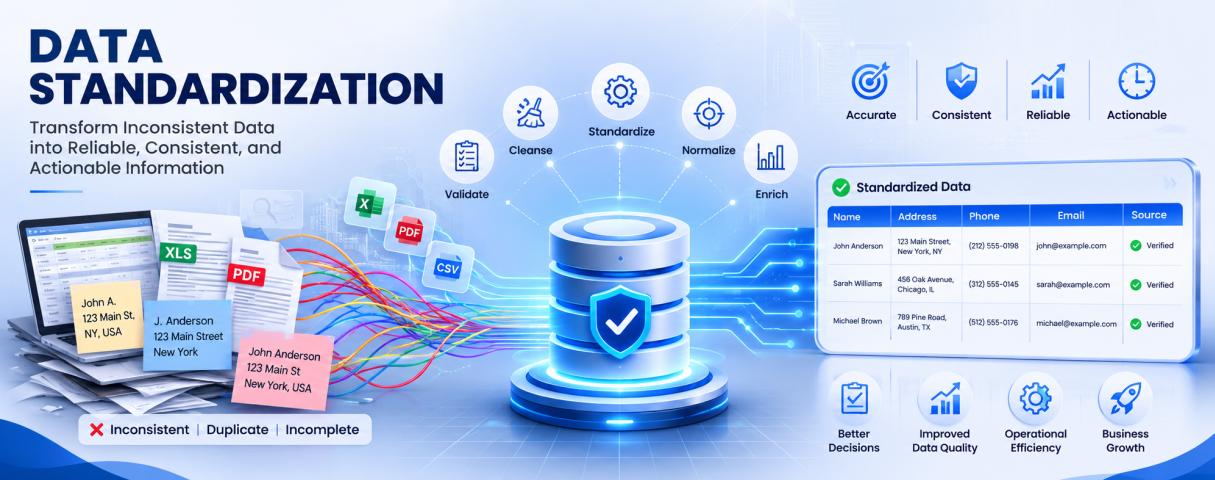
When sales, finance, and marketing each have a different figure for the same metric. There's no single source of truth. Without a single source of truth, data intelligence across the business becomes guesswork instead of a shared asset. Every strategic decision built on that number is standing on something shakier than it looks. The usual fix is a meeting where everyone compares spreadsheets and picks a number by consensus or treats a structural data problem as a communication problem. It never actually resolves the underlying gap.
3. Growth is outpacing your current infrastructure's actual capacity
70% of mid-market companies operate centralized data pipelines built for scalable data analytics. Businesses operating on spreadsheets and ad hoc scripts are behind their peers. This gap usually widens right after a funding round or a new product launch.
4. A launch or decision gets delayed waiting on data.
If product, marketing, or leadership routinely wait days for an answer a well-built pipeline would surface in minutes, that delay has a real cost even if nobody's tracking it as one. A pricing change, a campaign go/no-go, or a feature rollout that waits three days on a manual data pull is a three-day head start handed to whichever competitor didn't have that bottleneck.
5. Your data engineer, if you have one, is a bottleneck for everything
A single person who's become the only one who understands how data actually flows through the business is a single point of failure, not a solved problem, no matter how skilled that person is. If that person takes a two-week vacation and half the dashboards start throwing errors nobody else can diagnose, that's not bad luck, it's the predictable result of a system that was never documented or built to be handed off.
6. AI or advanced analytics projects keep stalling before launch
Modern AI use cases need clean, well-structured, low-latency data, and a pipeline built years ago for nightly reporting usually can't deliver that without real rework first. This is the sign most likely to get misdiagnosed, since the project looks like it's failing on the model or the vendor, when the actual blocker is almost always the data feeding into it.
7. Data quality issues keep surfacing after the fact, not before
If errors get caught by a customer or a board member instead of an automated check, that's a signal the pipeline has no real quality layer built in, just a reporting layer sitting on top of unverified data. It also quietly erodes trust in every other number for business reports. Further leading to a cost that compounds well beyond the specific error that got caught.
What This Looks Like in Practice?
Amazon's own internal data infrastructure ran into a version of this problem at scale: as the business grew, its existing data warehousing setup became costly and difficult to scale alongside global expansion. The move to Amazon Redshift, a purpose-built cloud data warehouse using columnar storage and parallelized queries, cut the time to generate key insights from hours down to minutes, while lowering operational costs at the same time. The numbers won't map onto every business, but the pattern will. The infrastructure that worked at one stage of growth becomes the constraint at the next one. The fix is architectural.
McKinsey reported that businesses investing in scalable data infrastructure observe a 20% boost in their operational efficiency. Those that don't tend to face recurring breakdowns that compound as the business keeps growing.
Deciding When to Act
Not every business needs a full infrastructure rebuild today, and treating every one of the seven signs above as an emergency would be overkill for a genuinely early-stage company. The honest test is whether more than two or three of those signs are already true right now. One or two is worth watching. Three or more, especially with AI or advanced analytics on your roadmap, is a strong signal that ad hoc fixes will cost more within the next twelve months than a real infrastructure investment would.
Bringing In the Right Help
The businesses that get real value from external data engineering services treat it as a partnership in designing the system, not just outsourced labor for building whatever spec gets handed over. Look for a provider who asks detailed questions about how your business actually uses data today, including the messy manual workarounds, before proposing an architecture. A consultant who proposes a solution before understanding your bottlenecks is optimizing for a quick sale, not a system that holds up as you keep growing.
The Bottom Line
A modern data engineering strategy isn't really about the technology stack underneath it, Kafka versus batch jobs, Redshift versus Snowflake, all of that is secondary. It's about whether your business can trust its own numbers and move on them quickly as it grows, or whether every decision routes through someone manually reconciling spreadsheets first. The seven signs above are a reasonably honest way to tell which category your business is in right now.