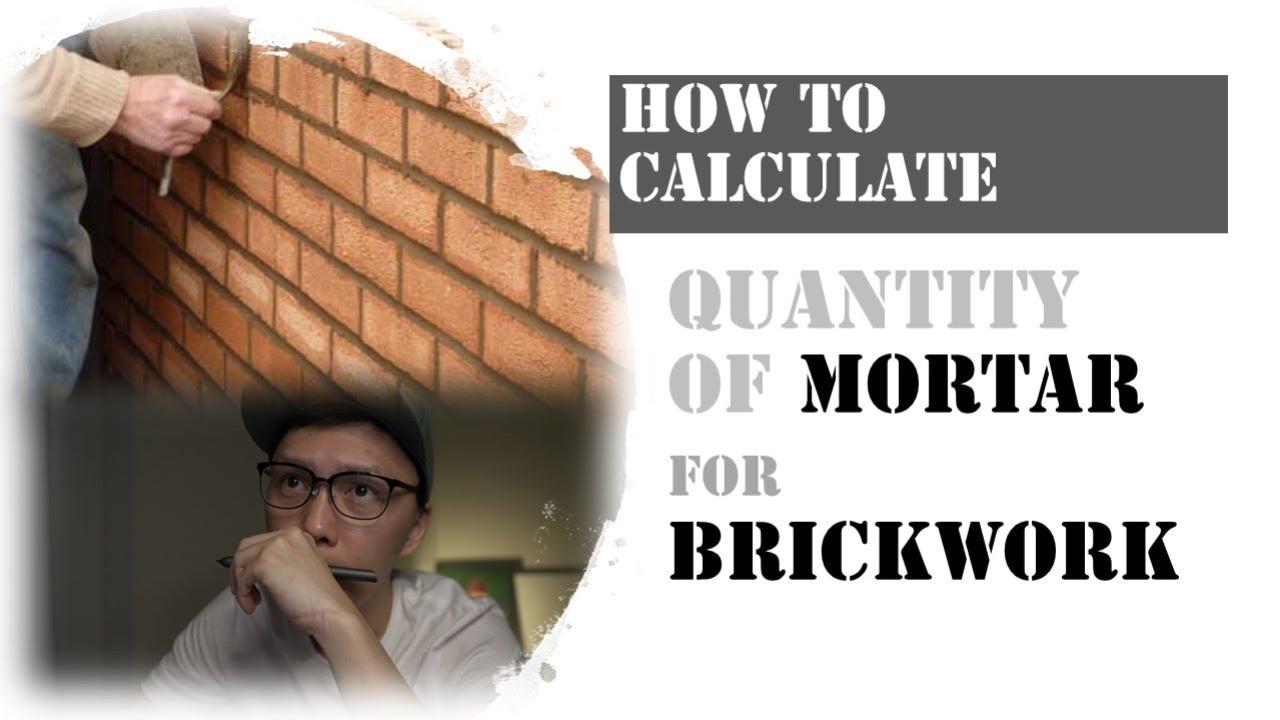
Masonry projects require careful planning. Whether you're building a brick wall, installing concrete blocks, constructing a stone feature, or repairing existing masonry, having the right amount of mortar is essential. Too little can bring construction to a halt, while buying too much can increase costs and leave you with unnecessary material.
Estimating mortar requirements manually can also become complicated because the amount needed depends on several factors, including wall dimensions, masonry unit size, joint thickness, and the type of construction.
A digital calculator can simplify this process. By entering a few project measurements, homeowners, contractors, and DIY builders can develop a more practical estimate before purchasing materials.
What Is Mortar?
Mortar is a workable mixture commonly made from cementitious material, sand, and water. Depending on the project and specifications, different mortar formulations may be used.
In masonry construction, mortar performs several important functions. It bonds individual units together, helps distribute loads, fills gaps between bricks or blocks, and can contribute to the overall weather resistance of a wall.
Because mortar joints occupy space between masonry units, even a relatively small difference in joint thickness can affect the total amount required.
Why Accurate Material Estimation Matters
Material estimation is an important part of project planning.
If you underestimate the quantity of mortar, you may need to make another trip to purchase additional materials. This can cause delays and may be inconvenient if the same materials or mix components are not immediately available.
Overestimating has a different problem. Excess materials can increase project costs and may eventually go to waste.
An accurate estimate provides a useful starting point for purchasing and budgeting. It can also help contractors organize deliveries and coordinate the timing of different stages of construction.
How a Mortar Calculator Works
A mortar calculator uses project measurements and construction assumptions to estimate the amount of mortar required.
Depending on the calculator, you may need to enter information such as:
Wall length
Wall height
Masonry unit dimensions
Number of walls
Mortar joint thickness
Type of masonry
Desired waste allowance
The calculator processes these inputs and provides an estimated quantity.
The exact inputs and calculation method can vary between tools, so users should understand the assumptions behind the result rather than treating every estimate as an exact measurement.
Start With Accurate Measurements
The quality of any estimate depends on the measurements entered.
Measure the length and height of the wall carefully. If you're working with multiple sections that have different dimensions, calculate them separately before combining the results.
For more complicated projects, account for openings such as doors and windows. These areas generally do not require masonry units or mortar, so including them in the total wall area could produce an unnecessarily high estimate.
Taking a few extra minutes to verify measurements can prevent mistakes later.
Consider the Size of Masonry Units
Brick and block dimensions can vary considerably, and unit size affects how many joints are present within a given area.
A wall constructed from larger blocks may have fewer individual units than a wall made from smaller bricks. As a result, the mortar requirement can differ even when two walls have the same overall dimensions.
When using a calculator, enter the actual dimensions of the masonry units whenever possible instead of relying on a generic size.
Joint Thickness Makes a Difference
Mortar joints are another important consideration.
Thicker joints generally require more mortar, while thinner joints require less. The appropriate joint thickness depends on the type of masonry and the project's construction requirements.
Rather than selecting a thickness simply to reduce material usage, follow the specifications appropriate for the masonry system you're building.
For professional construction, project drawings, applicable building requirements, manufacturer instructions, or relevant masonry standards should take precedence over a general online estimate.
Account for Waste
No construction project uses materials with perfect efficiency.
Mortar can be lost during mixing, transportation, application, and cleanup. Some material may also remain in mixing equipment or become unsuitable for use before the project is finished.
For this reason, adding a reasonable waste allowance to the calculated quantity can provide a more practical purchasing estimate.
The appropriate allowance depends on the project's complexity, worker experience, construction method, and site conditions. A straightforward wall may have different requirements from a detailed masonry project with numerous corners and openings.
Improve Project Budgeting
Material quantities are directly connected to project costs.
Once you have an estimate for mortar, you can determine how much cementitious material, sand, premixed mortar, or other components may need to be purchased, depending on the chosen product.
This makes it easier to build a preliminary project budget.
A detailed estimate can also help compare different construction approaches. For example, you might evaluate the material implications of different masonry unit sizes or wall dimensions before construction begins.
Remember that mortar is only one part of the total masonry budget. You may also need to account for bricks or blocks, reinforcement, tools, delivery, labor, equipment, scaffolding, and finishing materials.
Useful for DIY and Professional Projects
Mortar estimation tools aren't limited to large construction companies.
DIY homeowners can use them to develop an initial understanding of how much material a small masonry project might require. This can be particularly helpful when planning garden walls, repairs, outdoor structures, or decorative masonry.
Contractors can use calculations as part of their estimating workflow and then refine the numbers using project-specific specifications and experience.
For larger or structurally important projects, however, a calculator should be treated as an estimating aid rather than a substitute for professional planning.
Combine Calculations With Product Information
Different mortar products can have different coverage rates and mixing requirements.
If you're using a bagged or premixed product, check the manufacturer's published coverage information. That information can be used alongside your project dimensions to develop a more accurate purchasing estimate.
Pay attention to whether the manufacturer's coverage assumes a particular joint thickness, masonry unit size, or application method. Differences between those assumptions and your actual project can affect the final quantity.
Recheck Before Purchasing
Before ordering materials, review the calculation one more time.
Confirm the wall dimensions, openings, masonry unit size, joint thickness, number of sections, and waste allowance. For larger projects, consider having another person independently check the measurements.
This simple verification step can catch data-entry mistakes before they turn into expensive purchasing errors.
Understand the Limits of an Estimate
A calculator provides an estimate, not a guarantee of exact material consumption.
Actual mortar usage can vary because of workmanship, joint dimensions, masonry-unit tolerances, surface conditions, mixing practices, weather, and other factors.
For structural or regulated construction, always follow the project specifications and applicable construction requirements. If you're uncertain about the appropriate mortar type or structural design, consult a qualified masonry professional or other relevant building professional.
Plan Smarter With Better Estimates
Masonry projects become easier to manage when material requirements are considered before construction starts. Estimating mortar early can help homeowners and contractors plan purchases, establish budgets, reduce unnecessary waste, and avoid preventable delays.
Using a calculator is a simple way to turn basic project measurements into a useful starting estimate. When combined with accurate measurements, appropriate construction specifications, manufacturer information, and a sensible waste allowance, it can make material planning considerably more straightforward.
Whether you're working on a small repair or a larger masonry project, taking the time to estimate materials before ordering can help you approach the job with a clearer plan and better control over your resources.