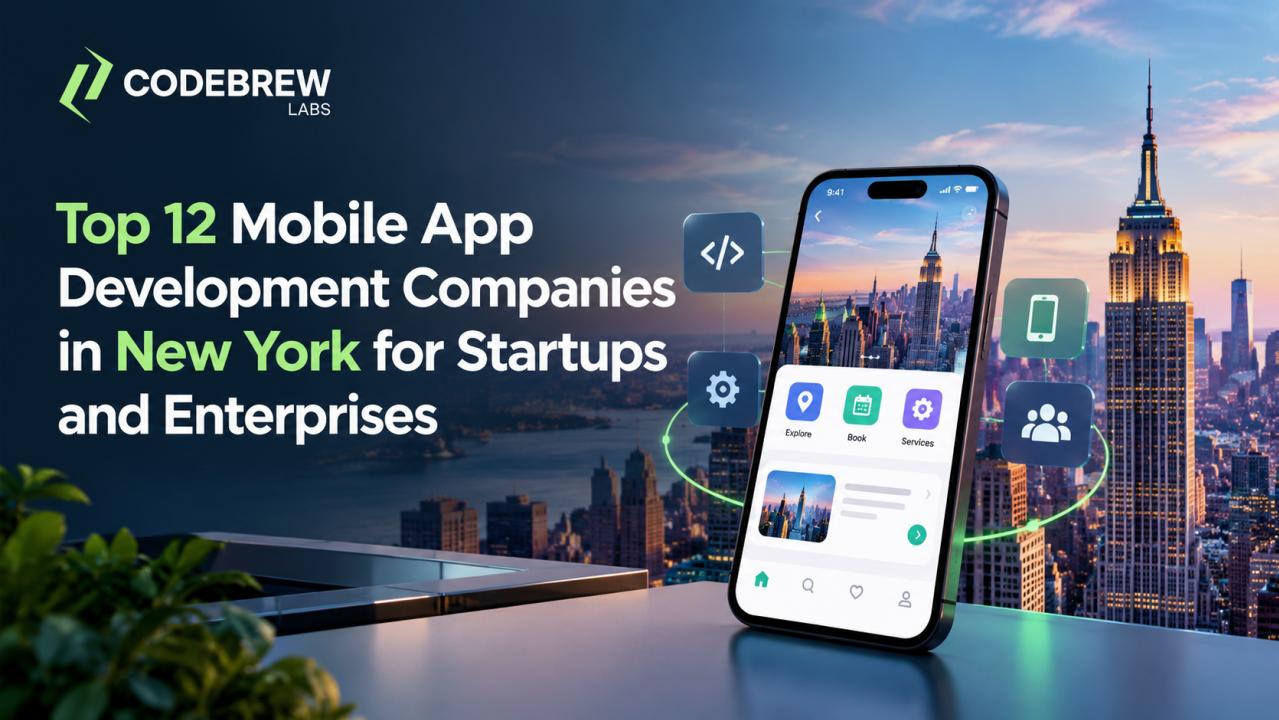
Your product team has the idea, the business case is approved, and there is pressure to get the app moving. The difficult part often comes next: finding a Mobile App Development Company in New York that can actually match your product requirements, technical stack, budget, and delivery expectations.
New York gives buyers plenty of options, from boutique product studios and startup-focused teams to larger engineering firms working with complex enterprise systems. But a familiar name does not automatically make a company the right fit for your project.
A startup building an MVP needs speed, product thinking, and sensible scope control. An enterprise may care more about security, integrations, compliance, documentation, scalability, and long-term support. Those are very different buying criteria.
This list looks at 12 companies from that perspective. It covers firms with a New York or wider US presence and considers their capabilities, product fit, delivery approach, and experience relevant to US and international buyers.
How We Chose These Companies
The selection focuses on four practical areas: technical range, industry fit, delivery process, and post-launch support.
Technical range matters because modern mobile products rarely stop at iOS or Android development. APIs, cloud infrastructure, AI features, analytics, payment systems, backend services, and third-party integrations can all become part of the same project.
Industry fit matters just as much. A fintech product, healthcare application, marketplace, and internal enterprise application can have completely different technical and regulatory requirements.
We also considered whether a company appears suited to startup MVPs, established products, enterprise mobile solutions, or a combination of these. Where relevant, international and Middle Eastern experience is also useful for companies serving organizations operating across multiple markets.
The list is not intended as a universal ranking. Your project requirements should determine which firms deserve a closer conversation.
1. Code Brew Labs
- iOS App Development
- Android App Development
- Cross-Platform App Development
- Custom Mobile App Development
- AI-Powered App Development
- Enterprise App Development
- Flutter App Development
- React Native App Development
- UI/UX Design
- Mobile App MVP Development
- Backend & Cloud Development
- API Integration
- App Testing & Quality Assurance
- App Maintenance & Support
2. Dubai App Developer
- AI App Development
- Custom AI Development
- AI Automation Solutions
- AI Agents & RAG Development
- Generative AI Development
- AI Consulting & Strategy
- Machine Learning Development
- Natural Language Processing (NLP)
- Computer Vision & OCR
- Cloud AI & Data Engineering
- Predictive Analytics
- Enterprise AI Integration
- AI-Powered Mobile App Development
- Business Process Automation
3. Royo Apps
- iOS App Development
- Android App Development
- React Native App Development
- Flutter App Development
- Custom Mobile App Development
- On-Demand App Development
- Marketplace App Development
- E-commerce App Development
- AI & ML Solutions
- Software Development
- UI/UX Design
- MVP Development
- Blockchain Development
- IT Consulting
- DevOps Services
4. Blocktech Brew
- Blockchain App Development
- Custom Blockchain Development
- dApp Development
- Blockchain Consulting
- Crypto Wallet Development
- NFT Marketplace Development
- DeFi Development
- Smart Contract Development
- Web3 Development
- AI Development
- Generative AI Development
- AI Consulting
- Metaverse Development
- Blockchain Game Development
- Mobile Game Development
5. Fueled
Fueled is a product development company known for building mobile and digital products for startups and established businesses. Its work spans product strategy, UX/UI design, mobile development, and web development, making it relevant when product design and engineering need to stay closely connected.
It can suit founders who want a partner involved in shaping the product rather than simply implementing a finished specification. Businesses with an existing product can also consider it when they need to improve the experience or build a new digital product.
A key differentiator is its product-oriented approach, particularly around design and digital experience.
The trade-off is that a product studio approach may not be the right match for every procurement model. Enterprises looking for a large offshore engineering operation or a highly standardized staff-augmentation arrangement may need to compare its model carefully with other providers.
Key services: Product strategy, UX/UI design, mobile app development, web development, and digital product development.
6. Dom & Tom
Dom & Tom is a digital product development agency with experience across mobile applications, web applications, product strategy, and design. Its work is relevant to organizations that need to develop or modernize customer-facing digital products rather than simply outsource isolated coding tasks.
For startups, the combination of strategy, design, and engineering can be useful when the product definition is still evolving. Enterprises can consider the company for digital products that require a structured design and development process.
Its differentiator is the connection between product strategy and technical delivery.
However, organizations that already have a mature internal product and engineering team may not need as much external strategy or design involvement. In that situation, a development-focused partner may offer a more direct engagement model.
Key services: Mobile development, web development, product strategy, UX/UI design, and digital product development.
7. BlueLabel
BlueLabel is a New York-based digital product agency focused on mobile and web application development. Its work covers product strategy, design, development, and ongoing product support, making it relevant to organizations that want a partner across several stages of the product lifecycle.
Startups can consider BlueLabel when they need help turning an early concept into a working digital product. For established businesses, its product development capabilities can support new mobile initiatives and digital customer experiences.
The company's focus on digital products is a useful differentiator for buyers who want product thinking alongside engineering.
One limitation is that organizations with highly specialized requirements—such as very large internal enterprise platforms or niche infrastructure work—should confirm the company's experience with those specific environments before selecting it.
Key services: Product strategy, mobile app development, web applications, UX/UI design, and product support.
8. WillowTree
WillowTree is a digital product company working across product strategy, design, engineering, and digital experiences. Its capabilities extend beyond mobile applications into broader digital product development, which can be useful for larger organizations managing multiple customer touchpoints.
Enterprise buyers may find this model relevant when a mobile application is part of a larger digital ecosystem rather than a standalone product. Startups can also consider it when they need substantial product strategy and design support alongside engineering.
Its differentiator is its broader digital product perspective, particularly for organizations thinking beyond a single mobile application.
The main consideration is project fit. Smaller startups with a narrowly scoped MVP should evaluate whether they need a large product-development engagement or whether a smaller specialist team would provide a more practical structure.
Key services: Product strategy, digital product design, mobile development, web development, and digital experience services.
9. GeekyAnts
GeekyAnts is a software development company focused on web and mobile applications, with experience across technologies including React Native, Flutter, React, and other modern development frameworks. Its work covers product development for businesses that need to turn an idea or existing concept into a functional digital product.
For startups, GeekyAnts can be a practical option when the goal is to build an MVP, validate a product concept, or create a mobile application without assembling a large internal engineering team. Its cross-platform capabilities can also be useful when a product needs to reach both iOS and Android users from a shared development approach.
A differentiator is its emphasis on modern JavaScript and cross-platform technologies, which can suit startups looking to move quickly while keeping development relatively streamlined.
The limitation is that companies with highly complex enterprise requirements, extensive compliance obligations, or large-scale legacy integrations should verify the team's experience with those specific environments before choosing it.
Key services: Mobile app development, React Native, Flutter, web development, UI/UX, software development, and cross-platform application development.
10. Intellectsoft
Intellectsoft provides software development and consulting services across areas including mobile applications, web platforms, cloud, blockchain, and enterprise software. Its enterprise-oriented capabilities make it relevant for organizations where mobile development is connected to larger business systems.
Enterprise buyers can consider the company for applications involving integrations, cloud infrastructure, and complex software environments. Startups with technically demanding products may also find its broader engineering capabilities useful.
Its differentiator is the combination of software engineering and enterprise technology services.
However, a small startup building a straightforward MVP may not need such a broad consulting and engineering setup. Founders should compare the proposed team structure, development process, and commercial model against a smaller product studio before deciding.
Key services: Mobile development, enterprise software, cloud, web development, blockchain, and software consulting.
11. ELEKS
ELEKS is a software engineering and consulting company offering services that include mobile development, custom software, cloud, data, AI, and enterprise technology. Its engineering breadth makes it relevant to organizations where the mobile product is part of a larger technology environment.
Enterprise teams can consider ELEKS when security, integrations, data systems, and long-term engineering requirements are central to the project. It can also be relevant to technology companies that need additional engineering capacity for complex products.
Its differentiator is the breadth of software engineering capabilities available beyond mobile development alone.
That breadth can also be a limitation for smaller projects. If your requirement is simply to validate an MVP quickly, a smaller startup-focused development team may provide a less complicated engagement.
Key services: Mobile development, custom software, cloud, AI, data engineering, enterprise software, and technology consulting.
12. Cheesecake Labs
Cheesecake Labs is a software design and development company with experience in mobile applications, web platforms, product design, and software engineering. Its product-focused approach can suit startups and growing companies that need help moving from product definition into technical delivery.
For startup teams, the combination of design and development can reduce the gap between product decisions and implementation. Established companies can also consider the firm for new digital products or extensions to existing platforms.
Its differentiator is the integration of product design and engineering rather than treating mobile development as an isolated technical function.
The company should still be evaluated against your geographic and procurement requirements. If having a substantial New York-based delivery team or a specific Middle Eastern operating presence is mandatory, verify the current structure before moving forward.
Key services: Mobile application development, web development, product design, UX/UI, and software engineering.
How to Choose Between These Companies
There is no useful way to choose a development partner without first defining what the project actually needs.
Start with budget and scope. An MVP with five or six core screens, basic authentication, payments, and an admin panel is a different engagement from a customer platform connected to ERP, CRM, analytics, identity management, and multiple internal systems. Ask every shortlisted Mobile App Development Company to separate initial development costs from ongoing infrastructure, maintenance, third-party services, and future feature work.
Then consider timeline. A tight launch date should not automatically mean asking developers to cut testing or security work. Instead, discuss the minimum viable scope and which features can move into later releases.
Your in-house versus outsourced model matters, too. If you have a strong internal product and engineering team, you may only need specialist development capacity. If you have a product manager and business team but limited technical resources, an end-to-end partner may make more sense.
For enterprise projects, compliance and security deserve early attention. Ask about data handling, authentication, access controls, hosting requirements, auditability, development environments, testing, and third-party integrations. If the application will operate in multiple countries, confirm how the proposed architecture handles regional requirements.
And don't treat an MVP and an enterprise platform as the same type of project. Startup app developers should be able to explain what belongs in version one and what can wait. Enterprise teams should be able to discuss architecture, integrations, documentation, testing, support, and governance without reducing everything to a list of app screens.
For organizations operating between the US, Saudi Arabia, and the wider Middle East, regional requirements deserve their own discussion. Arabic and English support, right-to-left interfaces, local payment systems, data governance, integrations, and deployment requirements can influence architecture from the beginning.
Finally, look beyond the sales presentation. Ask who will actually work on your project, how progress will be reported, what happens when requirements change, who owns the source code, how QA is handled, and what support looks like after launch.
The Questions to Ask Before Signing
A good discovery call should leave you with fewer unknowns, not just a polished proposal.
Ask the development partner to walk through a similar technical problem rather than simply showing finished applications. Ask how they would structure your MVP, what they would postpone, which integrations could create risk, and where they see technical uncertainty.
You should also ask for clarity around the team itself. Who is the project manager? Who owns the architecture? Will senior engineers participate? Where is the development team located? How often will you receive builds? What happens if a key developer leaves?
For enterprise buyers, add questions about security reviews, documentation, testing standards, deployment environments, source-code ownership, access controls, and post-launch support.
For startups, ask a different set of questions: Can the team challenge unnecessary features? How quickly can the first usable version be tested? How are product changes handled? What will the company need from your internal team each week?
The right partner is not necessarily the company with the longest service list. It is the one whose way of working matches the product you are actually trying to build.
Before comparing proposals, write down your users, core workflows, target platforms, integrations, launch market, expected scale, budget range, and post-launch requirements. Then take that same brief to several companies. The differences in their questions, assumptions, timelines, and proposed architecture will tell you far more than a homepage ever could.