For small businesses, packaging is often one of the first physical experiences a customer has with the brand. A product may be excellent, but if the packaging looks generic, oversized, or inconsistent, the overall experience can feel less professional.
Custom packaging can help small businesses improve product presentation, strengthen brand recognition, and create a more consistent customer experience. It can also solve practical needs such as protection, storage, gifting, and shipping.
The goal is not to make packaging expensive or complicated. The best packaging is the option that fits the product, supports the brand, and works within the business’s budget and order volume.
Why Packaging Matters for Small Businesses
Large brands already have strong recognition. Smaller businesses often need to work harder to create trust and memorability.
Packaging can help by giving customers repeated exposure to:
- Brand colours
- Logo
- Typography
- Product information
- Brand tone
- Visual consistency
When these elements are used consistently across boxes, bags, labels, stickers, and wrapping, the product starts to feel more complete.
For example, a jewellery startup may use navy rigid boxes with a small foil logo, while an apparel brand may use branded wrapping paper and matching stickers. The packaging formats are different, but the visual identity remains consistent.
Custom Packaging Can Improve Brand Recognition
Customers tend to remember repeated visual patterns.
If a small business uses the same colours, logo treatment, and design >
This is especially useful for businesses selling through:
- Ecommerce stores
- Social media
- Online marketplaces
- Retail outlets
- Exhibitions and pop-ups
- Corporate gifting
Packaging can therefore act as a practical extension of the brand identity, not just a protective layer around the product.
Better Packaging Can Improve Product Presentation
Presentation matters because customers often form an impression before they even use the product.
Custom packaging can make the product look more intentional by matching the packaging structure to the product.
Examples include:
- Jewellery boxes with inserts
- Garment wrapping paper
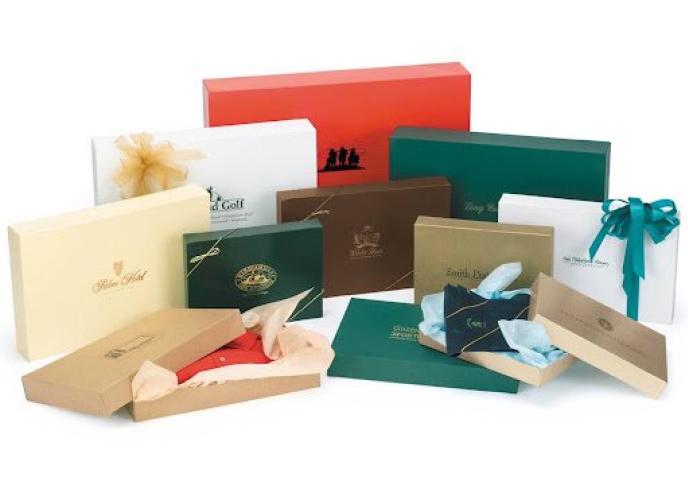
- Gift boxes
- Folding cartons
- Paper bags
- Product sleeves
- Custom labels
A D2C jewellery brand, for example, may use a small rigid box with an insert to keep the item secure and present it neatly. An apparel seller may use branded wrapping paper inside a mailer to create a cleaner unboxing experience without using an expensive custom box.
Packaging Should Protect the Product Too
Branding is important, but packaging still has to do its primary job: protect the product.
Small businesses should consider:
- Product weight
- Product dimensions
- Fragility
- Shipping method
- Storage conditions
- Moisture exposure
- Empty space inside the pack
For example, a fragile product may need a rigid structure or protective insert, while a lightweight retail product may only require a folding carton or paper bag.
The right packaging balances appearance with function.
A Better Unboxing Experience Can Strengthen the Brand
For ecommerce businesses, the unboxing moment can influence how customers perceive the product and the brand.
Simple elements can improve the experience:
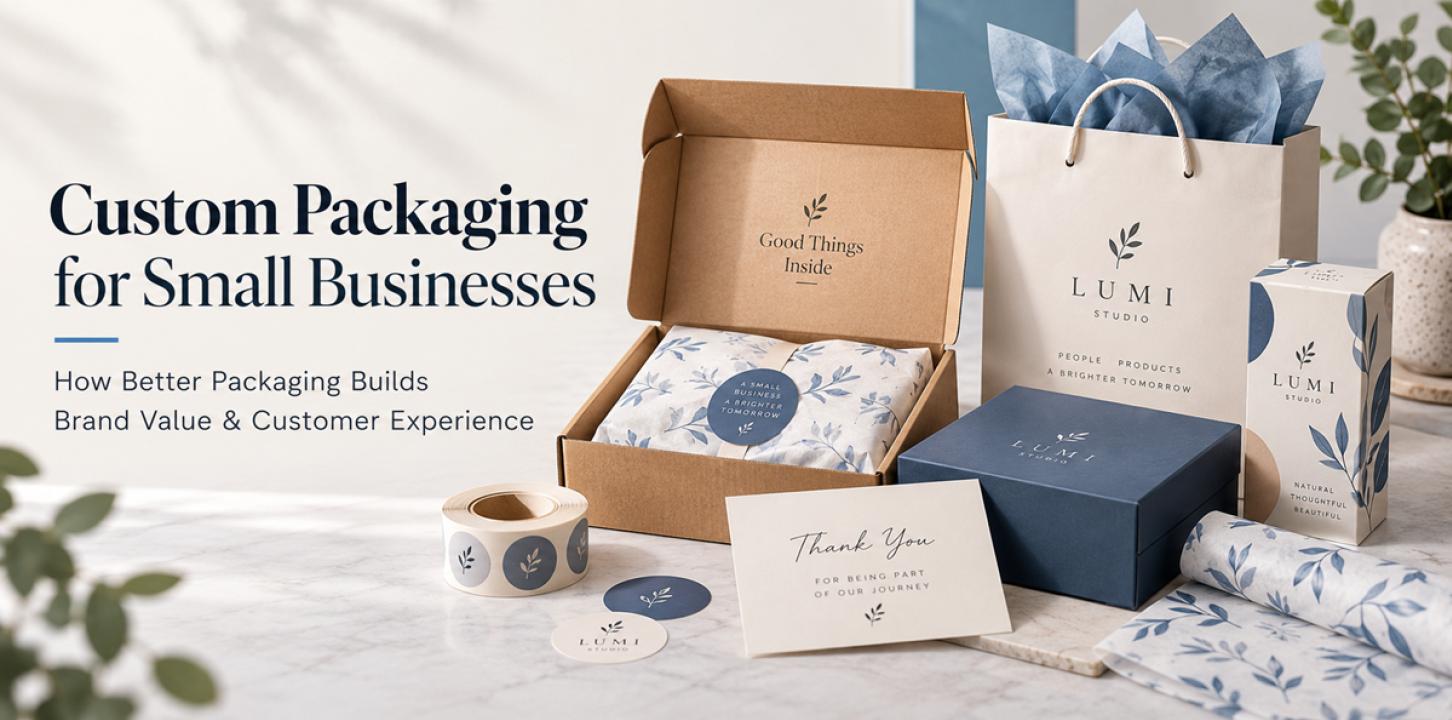
- Branded tissue paper
- Custom stickers
- Thank-you cards
- Printed inserts
- Product-specific boxes
- Clean product arrangement
The packaging does not need to be elaborate.
A simple box with consistent colours, a clear logo, and neat inner presentation can feel more premium than generic packaging. It can also make the product easier to photograph and share on social media.
Small Businesses Do Not Always Need Fully Custom Boxes
One common mistake is assuming that custom packaging always means expensive, fully bespoke packaging.
Small businesses can start gradually.
For example:
- Use standard-size boxes with branded stickers
- Add custom wrapping paper
- Use printed sleeves
- Add thank-you cards
- Use logo-printed paper bags
- Introduce custom boxes only for premium products
This allows the business to improve presentation without adding unnecessary cost.
As order volumes increase, the packaging can become more customized.
Custom Packaging for Different Product Categories
Different product categories need different packaging approaches.
Jewellery
Jewellery usually benefits from compact, structured packaging.
Common options include:
- Rigid jewellery boxes
- Ring boxes
- Earring boxes
- Necklace boxes
- Chain boxes
- Bangle boxes
A suitable insert can help keep the item in position and improve presentation.
Apparel
Clothing products can use:
- Garment wrapping paper
- Tissue paper
- Mailer boxes
- Paper bags
- Branded stickers
A simple branded inner layer can make the product feel more polished without overcomplicating the outer packaging.
Ecommerce Products
For ecommerce, protection and shipping efficiency are usually the priority.
Useful formats may include:
- Corrugated mailer boxes
- Shipping cartons
- Protective inserts
- Branded tape or stickers
- Inner product packaging
The outer packaging should protect the product during delivery, while the inner packaging can focus more on presentation.
Gifts
Gift products often benefit from:
- Rigid gift boxes
- Folding gift boxes
- Wrapping paper
- Tissue paper
- Decorative sleeves
- Branded inserts
In this case, the packaging becomes part of the gifting experience itself.
Common Packaging Mistakes Small Businesses Should Avoid
Custom packaging can support a brand, but poor decisions can increase cost without adding much value.
Using Oversized Packaging
Too much empty space can increase material use, shipping cost, and product movement inside the box.
Adding Too Much Design
Too many colours, fonts, or messages can make the packaging look cluttered.
A simple and consistent design is often more effective.
Ignoring Product Fit
The packaging should match the actual product dimensions.
Poor fit can affect both protection and presentation.
Choosing Appearance Over Function
A beautiful package that does not protect the product is not effective packaging.
Inconsistent Branding
Using different colours, logos, and design >
How Small Businesses Can Choose the Right Packaging
A practical way to choose packaging is to start with the product.
Ask these questions:
- What is the product size?
- How heavy is it?
- Is it fragile?
- Will it be shipped or sold in-store?
- Does it need moisture protection?
- What level of branding is required?
- What quantity is needed?
- What is the packaging budget?
Once these details are clear, it becomes easier to compare materials and structures.
As order volumes grow, many businesses start comparing custom packaging solutions based on product type, branding needs, quantity, and shipping requirements.
Why Packaging Should Be Part of the Marketing Strategy
Small businesses often treat packaging and marketing as separate activities, but they are closely connected.
Packaging can support marketing by:
- Reinforcing brand identity
- Creating visual consistency
- Improving product presentation
- Supporting social media content
- Improving gifting experience
- Increasing brand recall
Every time a customer receives, carries, opens, or photographs the package, the brand gets another chance to be noticed.
That makes packaging a practical marketing touchpoint.
Conclusion
Custom packaging can help small businesses build a stronger brand without requiring a large marketing budget.
The right packaging can improve product protection, presentation, consistency, and customer experience.
The most effective approach is to start with the product and the customer journey, then choose packaging that balances function, branding, quantity, and cost.
For small businesses, packaging should not be treated as an afterthought. When chosen thoughtfully, it becomes part of how the brand is experienced and remembered.