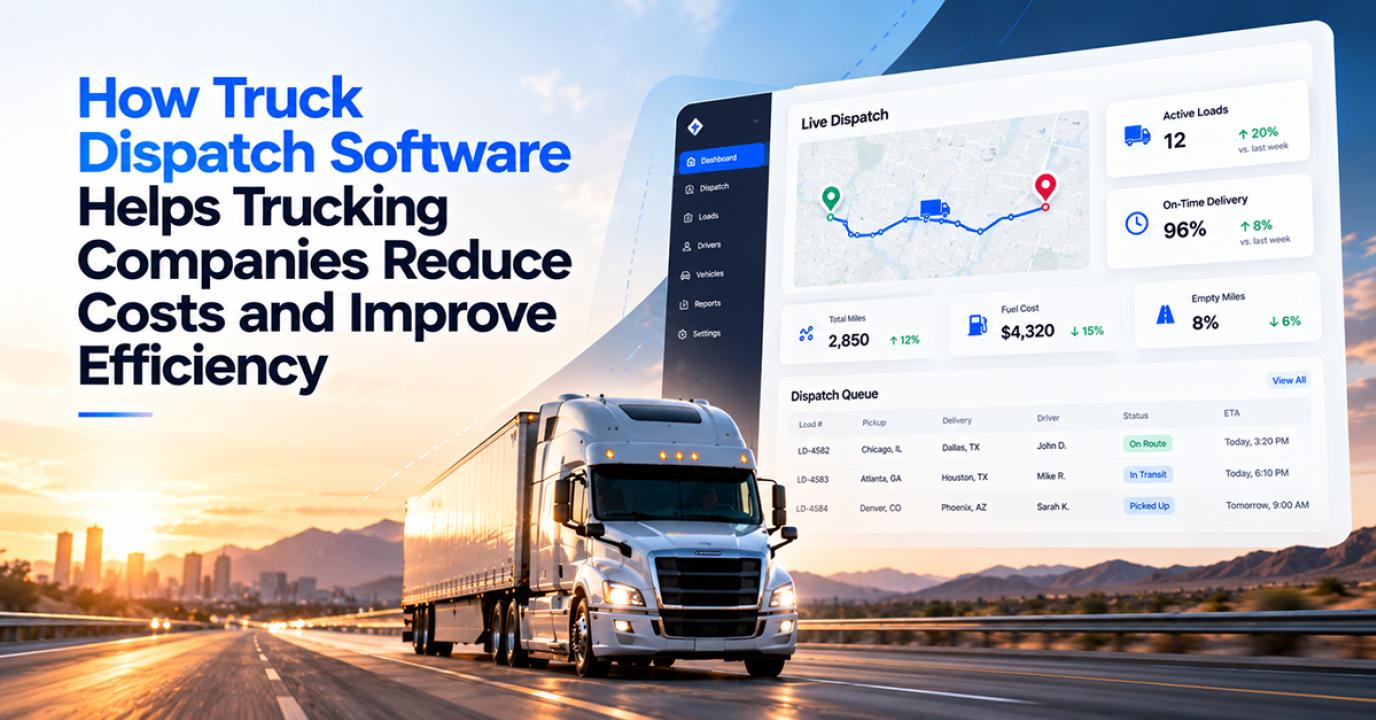
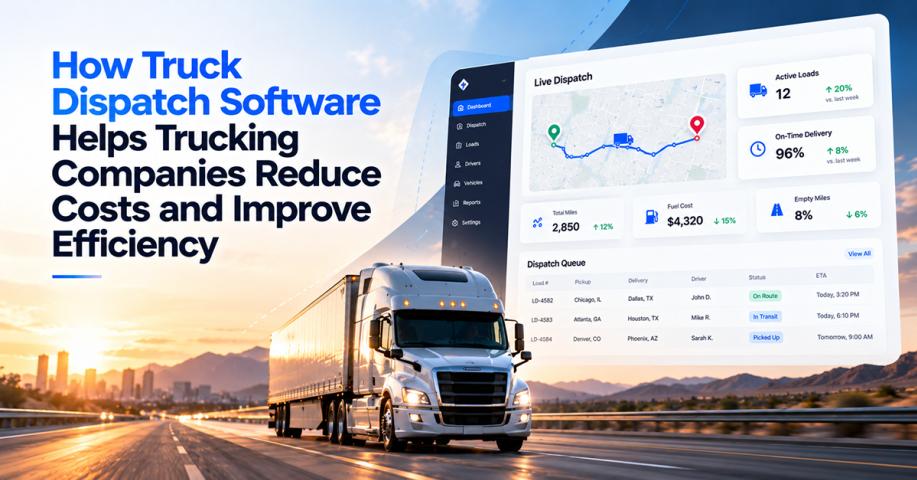
Trucking companies operate on tight margins where fuel, labor, maintenance, equipment, insurance, and empty miles can quickly reduce profitability. As operating costs continue to rise, fleet owners need better ways to coordinate loads, drivers, vehicles, and deliveries without increasing administrative overhead. Truck dispatch software provides a centralized way to automate dispatch operations, improve fleet utilization, reduce avoidable costs, and give dispatchers real-time visibility across daily transportation activities.
What Is Truck Dispatch Software?
Truck dispatch software is a digital platform that helps trucking companies coordinate freight loads, drivers, vehicles, routes, schedules, documentation, and delivery activities from a centralized system.
Modern dispatch platforms can support functions such as:
Load creation and assignment
Driver and vehicle management
Route planning and optimization
Real-time GPS tracking
Pickup and delivery scheduling
Digital documentation
Driver communication
Proof of delivery management
Rate and settlement management
Operational analytics
Compliance tracking
Why Trucking Companies Need Better Dispatch Management
Traditional dispatch processes can become difficult to manage as a fleet grows. A dispatcher may need to coordinate multiple drivers, monitor vehicle locations, assign new loads, communicate with customers, track delivery updates, and handle documentation simultaneously.
This is where trucking dispatch software can create measurable operational improvements by connecting dispatch workflows, fleet information, drivers, and shipment data.
6 Ways Truck Dispatch Software Reduces Operating Costs
1. Reduce Empty Miles Through Better Load Assignment
Empty miles are one of the most expensive forms of inefficiency for trucking companies because the vehicle consumes time and fuel without generating revenue.
A modern truck dispatch management software platform can help dispatchers identify suitable loads based on vehicle availability, capacity, location, route, and driver status.
2. Optimize Routes and Reduce Fuel Waste
Fuel represents a major operating expense for trucking fleets. Even small improvements in routing can become significant when multiplied across hundreds or thousands of trips.
A truck dispatch system can help dispatchers plan routes based on delivery windows, vehicle constraints, road conditions, and other operational requirements. Real-time visibility can also help teams respond more quickly when conditions change.
Better route planning can help reduce unnecessary mileage, improve trip predictability, and keep drivers focused on productive routes.
3. Minimize Manual Dispatching and Administrative Work
Dispatch teams often spend significant time performing repetitive tasks such as assigning loads, calling drivers, checking vehicle locations, updating shipment statuses, and organizing documents.
Dispatch software for trucking companies brings these activities into a centralized workflow.
4. Improve Driver and Fleet Utilization
A truck sitting idle represents an underutilized asset.
A centralized trucking management software platform can also connect driver activity with load planning, documentation, and delivery updates. Better visibility helps fleet owners identify underutilized vehicles and operational bottlenecks before they become persistent problems.
For companies managing larger fleets, integrating dispatch operations with broader Fleet Management Software can provide a more complete view of vehicles, maintenance, tracking, and fleet performance.
5. Speed Up Documentation, Billing, and Settlements
Paper-based processes can delay billing and increase administrative effort.
Modern dispatch platforms can digitize documents such as bills of lading, proof of delivery records, inspection documents, and other shipment information.
6. Improve Visibility Into Operational Costs
Reducing costs consistently requires more than cutting expenses. Fleet owners need to understand where money is being spent and which operational activities are affecting profitability.
This allows managers to evaluate indicators such as:
Vehicle utilization
Empty miles
On-time delivery
Load performance
Route efficiency
Driver activity
Cost per trip
Delivery delays
Fleet productivity
Key Features to Look for in Truck Dispatch Software
Not every dispatch platform provides the same capabilities. When evaluating a solution, trucking companies should focus on features that directly support operational efficiency and scalability.
Centralized Load Management: The platform should allow dispatchers to create, assign, monitor, and update loads from one interface.
Real-Time GPS Tracking: Live vehicle visibility helps dispatchers monitor active trips and respond quickly to delays or unexpected events.
Driver Mobile Application: Drivers should be able to receive assignments, access route information, update trip status, communicate with dispatchers, and submit digital documents from the field.
Route and Dispatch Optimization: The system should help dispatchers make better assignment and routing decisions based on vehicle capacity, availability, location, and delivery requirements.
Digital Documentation: Electronic BOLs, PODs, inspection records, and shipment documents can reduce paperwork and simplify operational workflows.
Analytics and Reporting: Operational dashboards can help fleet owners monitor utilization, delivery performance, costs, and other important business metrics.
Scalability and Integration: As a trucking company grows, its dispatch system should be able to support more vehicles, drivers, loads, users, and operational complexity without forcing the business to replace its technology stack.
Truck Dispatch Software vs. Traditional Dispatch Methods
Traditional dispatching often depends on spreadsheets, phone calls, emails, and multiple disconnected applications. These methods may work for a small operation but become increasingly difficult to manage as the number of trucks and loads increases.
This shift can improve:
Communication speed
Load visibility
Fleet utilization
Driver coordination
Route planning
Documentation
Delivery transparency
Operational decision-making
How to Choose the Right Truck Dispatch System
Before selecting a solution, fleet owners should evaluate their current dispatch workflow and identify the areas creating the most operational friction.
Consider questions such as:
How much time do dispatchers spend assigning loads manually?
How frequently do trucks operate empty?
Can dispatchers see vehicle locations in real time?
How quickly can drivers receive new assignments?
Are shipment documents still being processed manually?
Can management track cost and utilization metrics?
Does the system integrate with existing fleet or transportation technology?
Can the platform scale as the fleet expands?
The right solution should solve existing operational challenges while providing enough flexibility to support future growth.
For trucking businesses operating across different transportation segments, a broader Transportation & Logistics Solutions ecosystem can also help connect dispatch, fleet, freight, and other transportation workflows as operational requirements evolve.
Conclusion
For trucking companies, efficiency is closely connected to profitability. Rising fuel, maintenance, equipment, labor, and other operating costs make it increasingly important to get more value from every truck, driver, load, and mile.
Truck dispatch software can help achieve this by centralizing dispatch operations, improving load assignment, reducing empty miles, optimizing routes, automating administrative work, improving fleet visibility, and providing actionable operational data.