Custom crypto tokens are moving beyond their early association with fundraising and speculative trading. Businesses now explore token-based systems to manage customer rewards, represent real-world assets, automate payments, coordinate supply chains, and give users access to digital services. Their value comes from connecting digital ownership or permissions with specific business activities.
For Web3 founders and established companies, the central question is no longer simply how to launch a token. It is how a token can solve a practical problem, create measurable value, and fit into existing operations. That requires a clear business model, suitable blockchain infrastructure, secure smart contracts, and a reason for customers or partners to use the token.
1. Customer Loyalty Programs That Offer More Than Points
Traditional loyalty programs often restrict customers to points, vouchers, or benefits within a single company's ecosystem. Custom crypto tokens can introduce programmable rewards that support more flexible customer experiences. A retailer, for example, could issue tokens when customers make purchases, complete product reviews, attend events, or participate in a brand community.
Depending on the design, customers could redeem tokens for discounts, premium services, exclusive products, or membership benefits. Businesses could also create partnerships where rewards from one participating brand unlock benefits with another. This may help companies build loyalty around an interconnected network rather than a single storefront.
Starbucks' former Odyssey initiative illustrated how a major consumer brand could experiment with blockchain-based digital collectibles and customer engagement. Although the program ended in 2024, it demonstrated the potential and practical challenges of introducing blockchain experiences to mainstream audiences. The broader lesson is that technology alone does not create loyalty. Rewards must offer clear value, remain easy to use, and give customers a reason to return.
Businesses considering token-based loyalty should assess redemption costs, customer adoption, wallet accessibility, and applicable consumer protection rules. A conventional database may be more suitable for a closed rewards program. A token becomes more compelling when portability, verifiable ownership, or participation across multiple businesses creates a genuine advantage.
2. Real-World Asset Tokenization and Digital Ownership
One of the most commercially relevant applications of custom crypto tokens is representing rights associated with real-world assets. These assets can include real estate, private credit, commodities, infrastructure, and certain financial instruments. Instead of treating tokenization as a simple process of creating blockchain units, businesses must establish what each token legally represents and how the underlying rights are maintained.
For example, a property investment platform could use tokens to represent defined interests in a legally structured investment vehicle. Investors might access ownership records, receive eligible distributions, or transfer their interests subject to applicable restrictions. A private-credit business could use tokenized records to track claims associated with loan portfolios and automate parts of payment administration.
The commercial appeal is easier recordkeeping, programmable transfers, and the potential for broader investor access. Yet tokenization does not automatically make an asset liquid or guarantee fractional ownership. Legal documentation, asset custody, valuation, investor eligibility, and enforceable rights remain essential.
BlackRock's launch of the BUIDL tokenized fund in 2024 provided a prominent example of traditional financial assets being represented through blockchain infrastructure. The initiative showed institutional interest in tokenized fund structures, although it should not be confused with unrestricted public trading of tokenized assets.
For businesses exploring this model, the priority is to align token design with the legal structure, transfer rules, reporting needs, and intended users. Custom token development can support the technical layer, but legal and financial professionals must establish the underlying rights and obligations.
3. Business Payments and Automated Transactions
Custom crypto tokens can support payments between businesses, customers, suppliers, and international partners. When designed for payment use, tokens can represent transferable value and interact with smart contracts to automate specific transaction conditions. This can help businesses reduce manual reconciliation and coordinate payments across digital platforms.
For example, a company working with international suppliers could use a suitable stablecoin-based payment system to settle invoices, subject to local regulations and the provider's requirements. A smart contract could release payment after receiving verified confirmation that goods have been delivered or an agreed milestone has been completed. The token itself does not verify physical delivery. The business still needs reliable data from logistics systems, authorized participants, or other external sources.
The growth of tokenized financial products also demonstrates that blockchain-based assets can support operational uses beyond fundraising. BlackRock's BUIDL fund, launched in March 2024, surpassed $1 billion in assets under management in March 2025. Its structure supports eligible investors with on-chain fund interests and daily dividend payouts.
Businesses should distinguish between stablecoins, utility tokens, and investment-related tokens before selecting a payment model. Each has different economic functions, technical requirements, and regulatory implications. A custom token is most useful when its transaction capabilities address a specific need that conventional payment infrastructure cannot adequately serve.
4. Supply Chain Tracking and Partner Incentives
Supply chains involve manufacturers, distributors, logistics providers, retailers, and other participants. Each organization maintains records using different systems, making it difficult to reconcile product movements, delivery status, and supplier performance. Blockchain-based systems can create a shared record of events, while custom tokens can introduce incentives or permissions around participation.
Consider a manufacturer that wants suppliers to submit verified production updates on time. It could use a token-based reward system to recognize approved data submissions, timely deliveries, or compliance with agreed operational standards. Tokens might also provide access to specific platform features or partner services. These mechanisms require clear reward rules and safeguards against fraudulent reporting.
Walmart's blockchain food-traceability work offers a useful example of the underlying business problem. In a mango-tracing pilot conducted with IBM, the time needed to trace a product's origin fell from nearly seven days to 2.2 seconds. Walmart later required suppliers of leafy greens to support blockchain-based traceability.
The example demonstrates the potential value of shared blockchain records, not proof that a crypto token is necessary for every supply chain. A conventional permissioned blockchain may handle traceability without a transferable asset. A custom token becomes more relevant when businesses need programmable incentives, access rights, or settlement between network participants.
5. Membership, Digital Access, and Community Participation
Businesses can use custom tokens to manage membership and grant access to digital or physical experiences. A token could represent eligibility for a subscription tier, entry to private events, access to professional resources, or participation in a customer community. Smart contracts can check whether a wallet holds the required token before granting access.
For example, a software company could issue a membership token that unlocks selected resources or community features. A professional network might offer different access levels based on membership type. An entertainment business could connect digital collectibles with exclusive experiences or merchandise.
The main advantage is programmable access. Businesses can define eligibility rules and connect token ownership with applications across compatible systems. They must still decide whether tokens can be transferred, renewed, revoked, or shared. A freely transferable token may be unsuitable when membership is intended for one verified individual.
Privacy also matters. Public blockchains can expose transaction histories and wallet relationships. Companies should avoid placing personal information directly on-chain and should assess identity verification, consent, and data protection requirements before implementation.
6. Governance and Participation in Digital Ecosystems
Custom tokens can help Web3 platforms coordinate participation among users, developers, partners, and service providers. Depending on the design, tokens may grant voting rights, enable proposals, or determine access to specific governance processes. This can give participants a defined role in decisions affecting the ecosystem.
A decentralized application, for example, might allow eligible token holders to vote on proposed product upgrades or changes to community funding rules. A gaming platform could use tokens to coordinate certain player decisions, while a developer ecosystem might establish incentives for approved contributions.
Yet token-based governance is not automatically democratic. Voting power concentrated among a few holders can produce unequal outcomes, and token holders may lack the expertise to evaluate technical proposals. Projects need clear voting rules, proposal thresholds, conflict-of-interest safeguards, and emergency procedures.
Businesses should also distinguish community participation from legal corporate control. Holding a governance token does not automatically grant shareholders' rights, ownership of a company, or claims on its revenue. The rights attached to each token must be documented clearly.
How to Decide Whether Your Business Needs a Custom Token
Not every business problem requires a crypto token. Before development begins, decision-makers should identify the operational need and compare token-based systems with conventional alternatives.
Evaluate these questions:
- Business purpose: What specific problem will the token address?
- User demand: Why would customers, suppliers, or partners use it?
- Token utility: Does it represent access, rewards, payment value, governance, or an asset-related right?
- Technical requirements: Which blockchain, smart contracts, integrations, and wallet experiences will the project need?
- Security: How will the business test contracts, manage permissions, and respond to vulnerabilities?
- Compliance: Could the token fall under financial, consumer protection, privacy, tax, or other regulatory requirements?
- Performance measurement: Which indicators will demonstrate value, such as repeat purchases, faster settlement, reduced administrative work, or active participation?
- A pilot can help test these assumptions before a business commits to a broader rollout. Track user adoption and operational results, rather than relying only on token price or transaction volume.
Build a Token Around a Real Business Need
Custom crypto tokens can support loyalty programs, asset representation, payments, supply chain coordination, digital access, and community governance. Their commercial value depends on how well the token connects to a real business process. Clear utility, appropriate technical architecture, security controls, and regulatory planning matter more than issuing a token simply because blockchain technology is available.
Businesses exploring these opportunities can work with an experienced development team to translate their requirements into a suitable token model. Blockchain App Factory provides crypto token development services for projects that need custom token creation, smart contract development, tokenomics planning, and blockchain deployment.
The strongest starting point is a practical question: What business outcome should your token make easier, more accessible, or more transparent? Answering that question can help determine whether a custom token is the right solution and how to build it around lasting business value.
- Business purpose: What specific problem will the token address?
Beyond Fundraising: Business Applications of Custom Crypto Tokens


Written by
johnjn85412
3 days ago
Related articles:
How Fintech Companies Can Launch Their Own Tokenization Platform

Real-world asset tokenization is creating a new opportunity for fintech companies to bring traditional assets onto blockchain infrastructure. Tokenized treasuries, private credit, funds, commodities, and other assets are moving beyond..
Why ERC-20 Is the Go-To Standard for ICOs?
Ever wondered why every ICO seems to start with an ERC-20 token? If you're exploring crypto fundraising for your project, this question has probably crossed your mind. You might be..
How to Integrate Ethereum Tokens with dApps Using Web3.js and Ethers.js
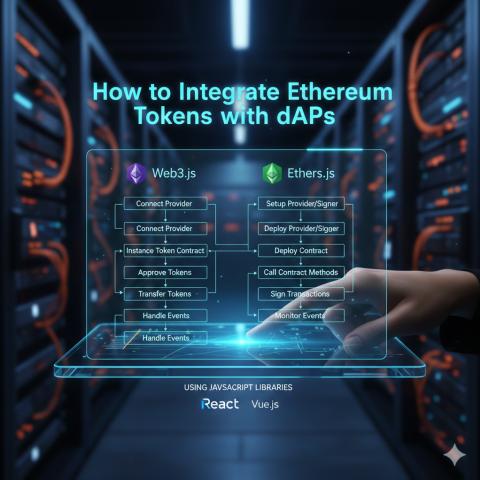
Modern dApps rarely work without tokens, especially in ecosystems powered by ERC-20 or similar standards. Whether you're building a simple utility token or managing a complete on-chain workflow, understanding how..
Top Tools and Languages Used in Cryptocurrency Development
Unless you are totally out of touch with the real world, it is likely that you are familiar with what cryptocurrencies and blockchains are. They have shaped the technology world..
How to Design Tokenomics for a Successful Token Launch
Discover the key principles of designing effective tokenomics for a successful token launch. Learn how to create sustainable token models that drive growth and user engagement.How to Design Tokenomics for..
Voodoo Token: A PulseChain Based Crypto Ecosystem
Voodoo Token is a decentralized peer to peer cryptocurrency project built on the PulseChain blockchain. The project presents VDO as its main token and aims to combine memecoin culture with..
How to Create a Crypto Token in 2026: Complete Step-by-Step Guide
Crypto tokens have become an important part of the Web3 ecosystem. Startups, DeFi platforms, gaming projects, businesses, and blockchain applications can use tokens for payments, rewards, governance, staking, and ecosystem..
What Businesses Can Build on Top of Stablecoins Beyond Payments
Stablecoins are often introduced as a faster and more efficient way to move digital value. While payments and remittances remain important use cases, they represent only one part of the..
Stablecoins for Fintech Startups: What to Build Before Launching a Digital Payment Product
The fintech industry is moving toward payment infrastructure that is faster, more programmable, and less dependent on fragmented settlement processes. Stablecoins are increasingly relevant to this shift because they combine..
Mobile App Development Cost: Key Factors That Influence Your App Budget
Building a mobile app is a significant investment, but the mobile app development cost can vary widely from one project to another. A simple business application with a few screens..
Custom Mobile App Development: Process, Benefits, and Key Considerations
Businesses often outgrow generic applications when their workflows, customer experiences, or integration requirements become more complex. Custom mobile app development allows businesses to build an application around specific processes instead..
How to Choose an AI Development Company: Services, Expertise, and Key Evaluation Criteria
Choosing the right AI development company can determine whether your AI initiative becomes a production-ready business capability or remains an expensive proof of concept. The right partner should understand your..
Machine Learning Development Cost: The Complete 2026 Guide

What Does Machine Learning Development Cost?As you plan on building a machine learning solution for your company, the realistic answer is that it depends — but only to an extent...
AI Development Beyond Chatbots: Building Systems That Can Reason, Decide, and Act
Artificial intelligence is moving beyond systems that simply respond to questions or generate content. Modern AI development is increasingly focused on building systems that can interpret context, reason over information,..
AI Agent Development: How Enterprises Can Automate Complex Business Workflows
Enterprise automation is moving beyond fixed rules and repetitive task execution.AI agents introduce a different approach to automation. Instead of executing only predefined instructions, an AI agent can interpret an..
AI Agent Development: How Enterprises Can Automate Complex Business Workflows
Enterprise automation is moving beyond fixed rules and repetitive task execution. Traditional workflow systems are effective when processes follow predictable paths, but modern business operations rarely remain that simple. Customer..
How AI Solutions Development Is Turning Enterprise AI into Measurable Business Value

According to McKinsey’s 2026 State of AI survey, most organizations—about 78%—now use AI somewhere in their business. But here’s the catch: only 6% can call themselves “AI high performers.” That..
In-House CRM Development Team vs. an Outsourced Development Partner: What Actually Changes

Hiring an in-house team and outsourcing your CRM build aren't two versions of the same decision. They're different bets, with different payoffs and different ways things go wrong.If you're comparing..