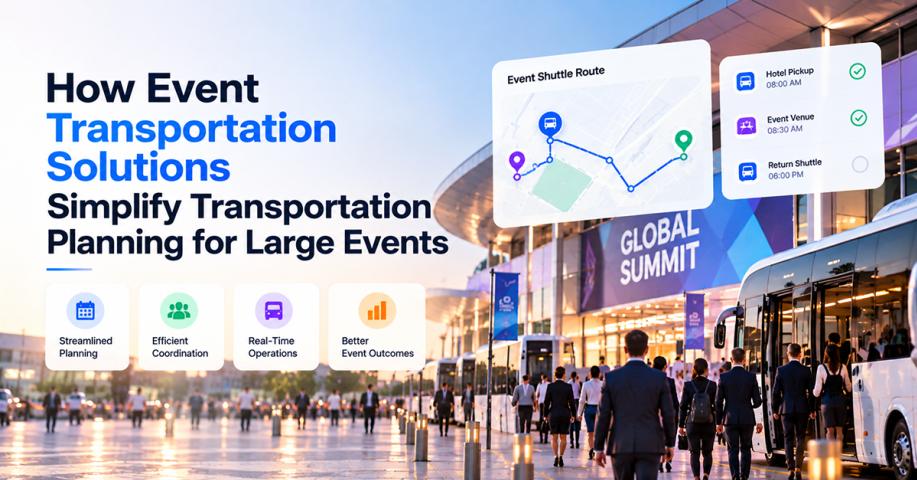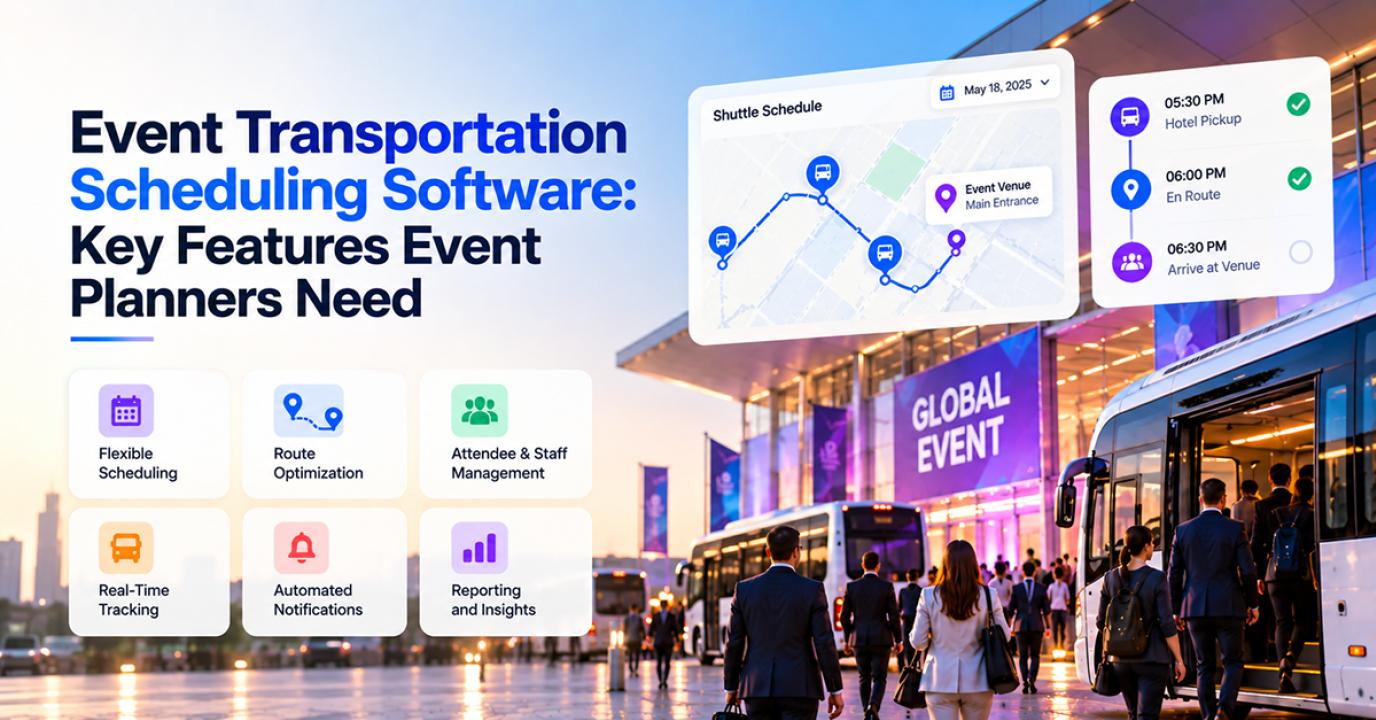
Planning transportation for a large event involves far more than assigning vehicles to pickup locations. Event planners and logistics teams must coordinate routes, drivers, schedules, passenger demand, vehicle capacity, venue access, and last-minute changes while keeping attendees informed. Event transportation scheduling software helps bring these moving parts into one centralized system, making it easier to plan, manage, and monitor event transportation operations. Event transportation scheduling software can give teams better visibility across trips while reducing the manual coordination involved in complex event mobility.
Whether you are organizing a corporate conference, trade show, festival, sporting event, wedding, or multi-day gathering, transportation scheduling can directly influence the attendee experience. The right technology helps planners move beyond spreadsheets and disconnected communication channels toward a more coordinated transportation operation.
Why Event Transportation Scheduling Requires More Than a Spreadsheet
Transportation planning becomes complicated when an event involves multiple hotels, venues, airports, parking areas, and pickup zones.
A typical event transportation plan may include:
Multiple pickup and drop-off locations
Different vehicle types and capacities
Hundreds or thousands of passengers
Driver assignments and shifts
Fixed departure and arrival windows
Recurring shuttle routes
VIP and priority transportation
Real-time route changes
Passenger notifications
Traffic and venue access considerations
Managing these details manually can create scheduling conflicts and make it difficult to respond when conditions change.
For example, a conference session may run 30 minutes late, causing attendees to arrive at a shuttle pickup point later than expected. A vehicle may also become unavailable or traffic may significantly increase travel time. A scheduling system gives planners the visibility and flexibility needed to adjust operations without rebuilding the entire transportation plan.
Key Features to Look for in Event Transportation Scheduling Software
Not every scheduling platform offers the same capabilities. Event planners should evaluate whether a solution can support both pre-event planning and real-time transportation management.
1. Centralized Trip and Schedule Management
The foundation of effective transportation scheduling is a centralized view of every planned trip.
Instead of maintaining separate spreadsheets for routes, vehicles, drivers, and passenger groups, planners can manage transportation information through one platform.
A centralized schedule can help teams track:
Pickup and drop-off times
Vehicle assignments
Driver assignments
Passenger groups
Route information
Trip status
Special transportation requirements
This gives logistics teams a clearer operational picture and makes it easier to identify overlapping trips, scheduling gaps, or resource conflicts.
2. Automated Vehicle and Driver Assignment
Assigning vehicles and drivers manually becomes increasingly difficult as the number of trips increases.
Good event transportation scheduling software should help planners match vehicles and drivers with trips based on availability, capacity, location, and schedule requirements.
Automation can reduce repetitive administrative work while helping prevent common scheduling problems, such as assigning one vehicle to two trips at overlapping times.
At the same time, planners should retain the ability to manually modify assignments when an event requires special arrangements.
3. Route and Stop Management
Large events rarely operate from a single location. Transportation may need to connect hotels, airports, convention centers, event venues, parking areas, and other designated pickup points.
Effective scheduling technology should allow planners to define routes and stops according to the event's operational requirements.
This can include:
Fixed shuttle routes
Multiple pickup points
One-way transfers
Recurring trips
Venue-to-venue transportation
Hotel-to-event transportation
Airport transfers
Clear route management helps ensure that drivers receive accurate trip instructions while planners maintain visibility into the overall transportation network.
4. Real-Time Vehicle Tracking
A transportation schedule represents the plan. Real-time tracking shows what is actually happening.
Traffic congestion, unexpected stops, delays, and changes in passenger demand can quickly affect an event's transportation schedule.
Real-time vehicle tracking allows logistics teams to monitor vehicle locations and identify potential delays while trips are in progress. Planners can use this visibility to coordinate with drivers, adjust schedules, and provide more accurate information to attendees.
For large events, this capability can be particularly valuable because a delay on one route may affect connecting transportation or scheduled activities.
5. Live ETA and Transportation Status
Knowing where a vehicle is located is useful, but knowing when it is expected to arrive is even more actionable.
ETA visibility can help transportation teams identify delays before they become major operational issues. It can also improve the attendee experience by providing clearer information about expected shuttle or vehicle arrival times.
When attendees know whether transportation is arriving in five minutes or has been delayed, they are less likely to be left waiting without information.
This makes real-time ETA management an important part of modern event transportation solutions.
6. Shuttle Scheduling and Recurring Trips
Shuttle services are commonly used for conferences, festivals, corporate events, sporting events, and large gatherings where attendees need transportation between multiple locations.
Planners may need to schedule repeated departures throughout the day while balancing passenger demand and available vehicle capacity.
Dedicated Event Shuttle Software can support the management of shuttle routes, stops, schedules, and transportation operations.
When shuttle scheduling is integrated with the broader transportation workflow, planners can coordinate recurring trips while maintaining visibility across the entire event transportation operation.
7. Fleet Availability and Capacity Management
Scheduling the right vehicle is not simply about finding one that is available. The vehicle must also be suitable for the number of passengers and the requirements of the trip.
For example, assigning a small vehicle to a high-demand route could create capacity problems, while assigning a large bus to a low-demand trip could result in inefficient resource utilization.
Transportation scheduling systems can help planners consider vehicle availability and capacity when assigning trips.
Integration with Event Transportation Fleet Management can provide greater visibility into vehicle resources and help transportation teams coordinate fleet assignments more efficiently.
8. Driver Scheduling and Communication
Drivers are responsible for executing the transportation plan on the ground. They need access to accurate information about their assigned trips, routes, pickup points, and timing.
A scheduling platform can provide drivers with centralized trip details and help dispatch teams communicate changes when circumstances shift.
This is particularly important during large events, where transportation teams may have dozens of drivers operating simultaneously.
Instead of relying entirely on phone calls or scattered messages, planners and dispatchers can use a centralized workflow to keep drivers aligned with the latest transportation instructions.
9. Passenger and Attendee Management
Transportation planning should account for passengers as well as vehicles.
Event planners may need to organize transportation based on attendee groups, hotels, registration details, schedules, VIP status, or specific transportation requirements.
Passenger management capabilities can help planners understand expected demand and align vehicle capacity accordingly.
For corporate events, for example, transportation may need to connect employees or guests from several hotels to a conference venue at specific times. A centralized system makes it easier to coordinate these requirements with the underlying transportation schedule.
10. Automated Notifications and Alerts
Transportation plans can change throughout an event. Attendees may need updates about pickup locations, departure times, delays, route changes, or vehicle arrivals.
Automated notifications can reduce the amount of manual communication required from event staff.
Depending on the platform, alerts may be used to communicate:
Upcoming trips
Vehicle arrival information
Delays
Pickup changes
Route changes
Transportation cancellations
Schedule updates
Keeping attendees informed can reduce confusion at pickup points and allow event staff to focus on other operational responsibilities.
Make Event Transportation Easier to Plan and Manage
Large-event transportation involves too many moving parts to rely entirely on manual scheduling. As passenger volumes, vehicle counts, routes, and event locations increase, transportation teams need technology that can keep pace with operational complexity.
Event transportation scheduling software gives planners a centralized way to manage trips, assign vehicles and drivers, coordinate routes, monitor transportation activity, communicate changes, and improve the attendee experience.
For event planners and logistics teams, the goal is not simply to create a transportation schedule. It is to build a transportation operation that remains organized when the event is busy, conditions change, and hundreds or thousands of people are moving at the same time.
With the right combination of scheduling, dispatch, fleet visibility, shuttle management, and real-time communication, event teams can turn transportation from a logistical challenge into a more controlled and predictable part of the overall event experience.