
In this acoustically demanding world, the role of ceiling design has shifted from being purely aesthetic to becoming functionally essential. Whether it’s a corporate office buzzing with activity, a classroom filled with energetic students, or a hospital requiring pin-drop silence, one unassuming yet powerful design element is playing a crucial role — acoustic ceilings. Among the most innovative, yet underrated tools in modern design, acoustic ceilings are proving that lightweight solutions can deliver a heavy impact.
Let’s dive deeper into how acoustic ceiling solutions like the acoustic baffle ceiling, acoustic panels for ceilings, acoustic spray ceiling, and overall acoustic treatment are shaping the way we build spaces that sound as good as they look.
Why Acoustics Matter?
Before understanding the “how,” let’s address the “why.” Sound has a significant influence on how we feel, work, concentrate, and even heal. Poor acoustics can lead to distractions, stress, and reduced productivity, whereas good acoustics enhance focus, learning, and overall well-being.
This is where acoustic treatment steps in. It refers to the methods and materials used to control noise, manage echo, and enhance the quality of sound within a space. While floors and walls often get the first line of defense, it’s the ceiling — the often-forgotten fifth wall — that holds unmatched potential in managing acoustics effectively.
Acoustic Ceilings are the Silent Heroes
Acoustic ceilings are specially designed to absorb, diffuse, or block sound. And the best part? They do this while still contributing to a space’s design language. They can be suspended, applied as a spray, or installed as decorative panels. But what really makes them compelling is their lightweight structure paired with heavyweight results.
Here’s how different types of acoustic ceiling solutions bring their magic to life:
1. Acoustic Baffle Ceiling – Vertical Elegance with Sonic Performance
The acoustic baffle ceiling system has quickly become a go-to solution for open-plan spaces like tech offices, educational institutions, and auditoriums. These vertical, hanging panels not only reduce echo and reverberation but also add a striking architectural element to the ceiling.
Because the baffles are suspended and spaced strategically, they allow air and light to move freely, making them ideal for areas where HVAC integration and lighting uniformity are critical. Their lightweight structure means they are easy to install and reconfigure — a huge win in today’s agile design environment.
Beyond functionality, designers love the acoustic baffle ceiling for its visual versatility. Available in various materials, colors, and shapes, they can match branding, add texture, or create rhythmic patterns that turn ceilings into canvases.
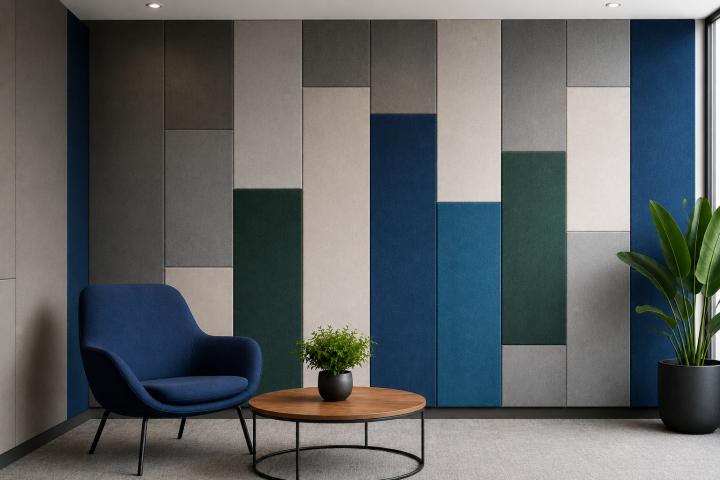
2. Acoustic Panels for Ceilings – Flat, Functional, and Fabulous
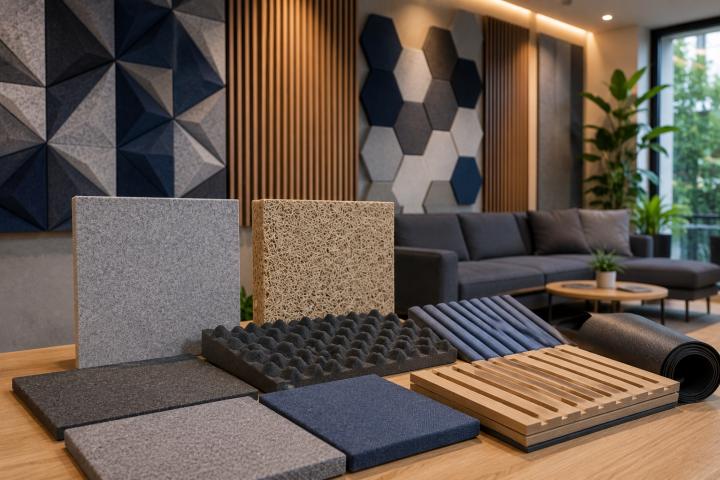
Flat doesn’t mean boring — at least not when we talk about acoustic panels for ceilings. These panels are typically mounted directly onto the ceiling surface, acting as effective sound absorbers while blending seamlessly with the room’s interior.
Perfect for conference rooms, libraries, hospitality spaces, and even residential areas, acoustic panels for ceilings come in a range of designs — from minimalist to bold prints. Their core materials vary from fiberglass and mineral wool to PET (recycled plastic), offering sustainable options for eco-conscious projects.
What makes these panels a favorite among interior designers and architects is their dual role: performance and aesthetics. They can mimic wood, fabric, or custom graphics, making them adaptable to any design theme.
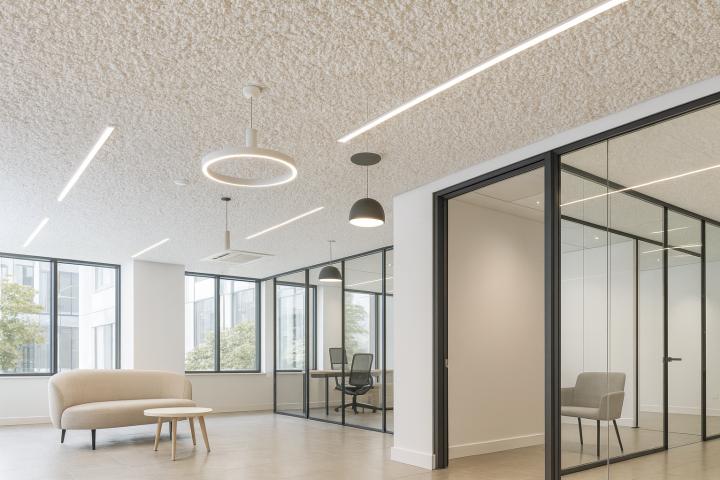
3. Acoustic Spray Ceiling – Smooth Looks with Invisible Power
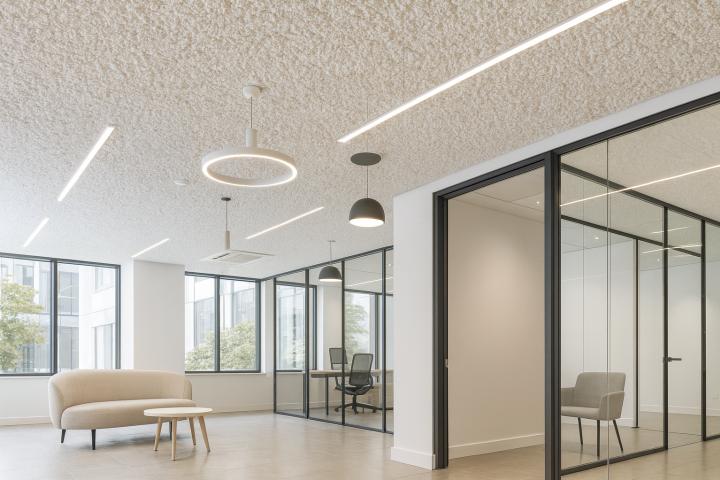
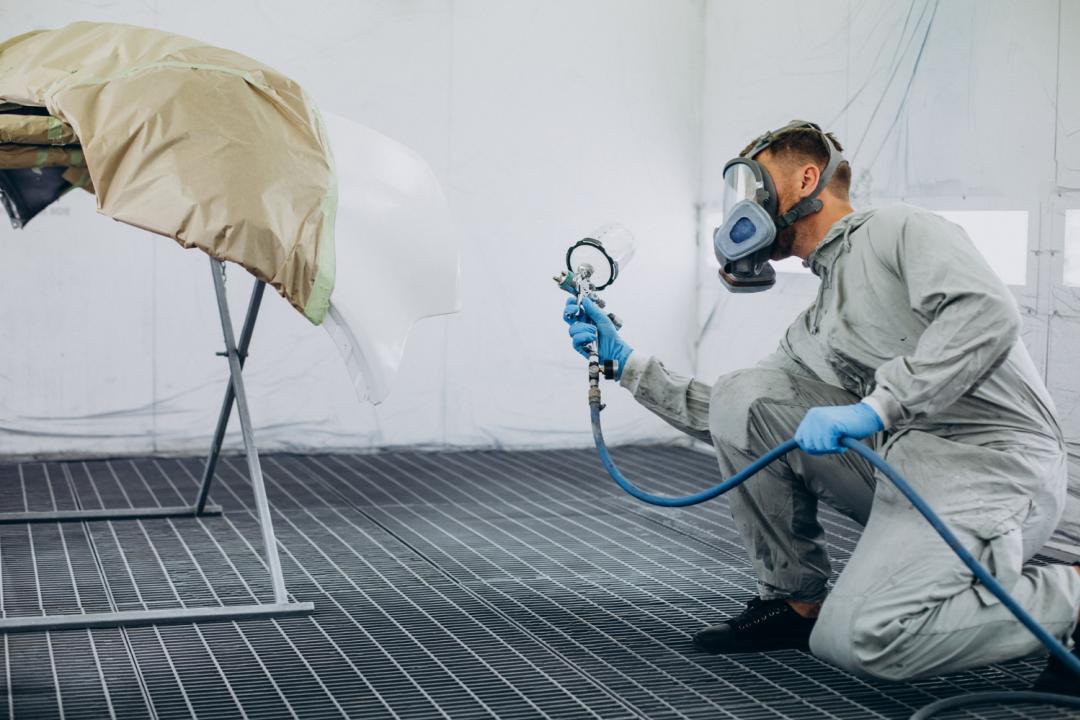
If your goal is to retain a clean, seamless ceiling aesthetic while still addressing acoustic performance, then the acoustic spray ceiling is your best bet. This solution involves spraying a specialized sound-absorbing coating directly onto the ceiling substrate.
It’s particularly effective in large-volume spaces such as airports, train stations, sports halls, and industrial buildings where traditional ceiling tiles or panels might not be feasible. The acoustic spray ceiling reduces noise and echo without changing the ceiling’s natural contour.
Another compelling advantage is its ability to cover irregular or historical architectural elements without compromising the building’s visual integrity. It’s a hero behind the scenes — working quietly, looking minimal, and performing exceptionally.
4. The Bigger Picture – Acoustic Treatment as a Design Philosophy
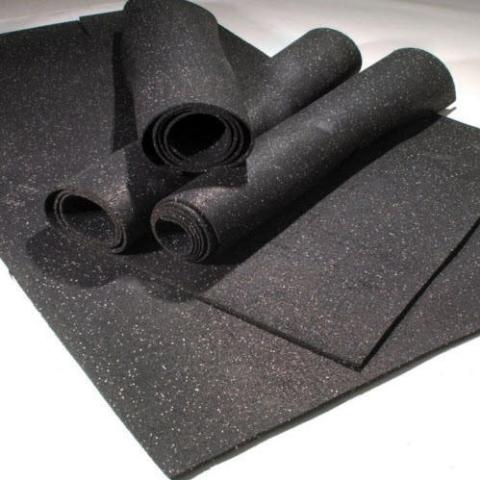
A single ceiling solution can make a difference, but true performance lies in adopting a holistic acoustic treatment strategy. This involves combining ceilings with wall panels, floor underlays, partitions, and furniture design to create a fully immersive acoustic experience.
In today’s hybrid work environments and multipurpose spaces, where sound zones fluctuate throughout the day, flexible and modular acoustic treatment solutions are more relevant than ever. And ceiling-based solutions, owing to their overhead placement, offer maximum surface area for acoustic management without consuming usable floor or wall space.
Benefits Beyond Sound
While the core purpose of acoustic ceilings is to enhance sound quality, their impact reaches far beyond:
Well-being: Reduced noise levels contribute to lower stress and better mental health.
Productivity: Improved speech intelligibility and fewer distractions help people focus.
Compliance: Many industries now mandate acoustic standards for better indoor environments.
Sustainability: With materials like PET and recycled cellulose, many ceiling solutions align with green building certifications.
Design Freedom: Whether you're aiming for a Scandinavian minimalism or a bold industrial vibe, acoustic ceilings can adapt and amplify the design story.
Final Thoughts
In the ever-evolving world of architecture and interior design, it’s often the subtle choices that create the loudest impact — quite literally. Acoustic ceilings, whether through the dynamic layout of an acoustic baffle ceiling, the precision of acoustic panels for ceilings, or the seamless approach of an acoustic spray ceiling, are revolutionizing how we think about space and sound.
By integrating thoughtful acoustic treatment into our spaces, we don’t just build better buildings — we build environments that speak softly, but powerfully. After all, the best designs don’t just look good; they sound good too.