In today’s fast-paced digital landscape, content has become the backbone of online business growth. From blogs and landing pages to eCommerce product descriptions and multimedia libraries, businesses need an efficient way to create, manage, and publish content across multiple channels. That’s where Content Management Systems (CMS) come in.
A CMS platform enables both technical and non-technical users to manage digital content with ease. Whether you’re running a small business or a global enterprise, CMS solutions streamline workflows, reduce development overhead, and improve content delivery speed. Interestingly, many organizations also rely on technologies like in CMS development to enhance scalability and performance. This growing demand has even led the top CMS development companies to work hand-in-hand with CMS providers to deliver optimized solutions.
In this article, we’ll explore how CMS platforms streamline content management, why they’re critical for businesses, and how the integration of modern frameworks like Node.js adds value.
1. Why Content Management Matters More Than Ever
Businesses today are producing more content than ever. Blogs, social media posts, case studies, podcasts, and videos all compete for audience attention. Without a proper system in place, managing these content assets becomes overwhelming.
Here’s why efficient content management is essential:
- Faster publishing cycles: Speed matters in the digital world, especially when competing with global brands.
- Consistency across channels: Brands need to maintain a unified voice and design across websites, apps, and social platforms.
- Collaboration and accessibility: Multiple teams (writers, editors, designers, marketers) must work on content simultaneously.
- Scalability: As businesses grow, the CMS should support increasing volumes of content without performance issues.
This is where CMS platforms shine by automating workflows and simplifying publishing.
2. The Role of CMS in Streamlining Content Management
a) Simplified Content Creation
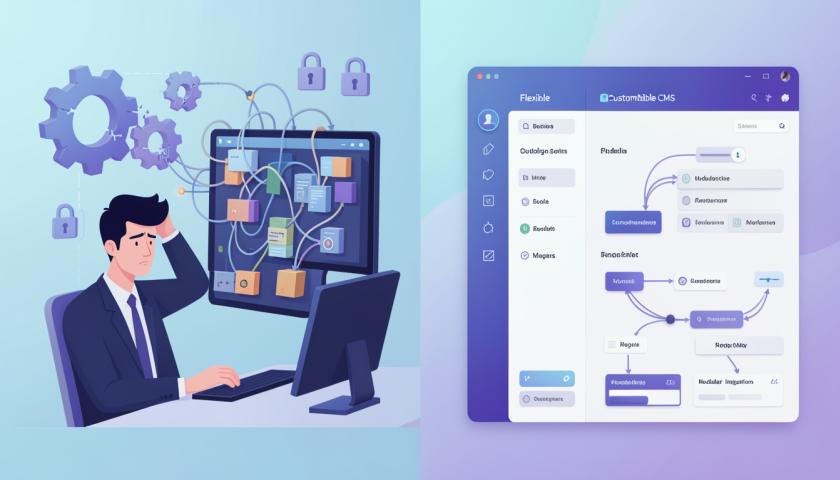
CMS platforms offer intuitive editors, often with drag-and-drop features, so even non-technical users can create and format content easily. WYSIWYG (What You See Is What You Get) editors eliminate the need for coding knowledge.
b) Centralized Content Storage
Instead of dealing with scattered files, a CMS stores all content—text, images, videos—in one place. This ensures easier management, accessibility, and updates.
c) Collaboration and Workflow Management
CMS platforms allow multiple users to work together. Writers draft articles, editors review them, and managers schedule publication—all within a single platform.
d) Version Control and Security
With built-in versioning, CMS tools track every change. If errors occur, content can be rolled back to previous versions. Access permissions ensure that only authorized users can modify sensitive content.
e) Multi-Channel Publishing
Modern CMS solutions support omnichannel strategies by publishing content across websites, apps, and even IoT devices.
These features make CMS an indispensable tool for organizations looking to manage large volumes of content efficiently.
3. Types of CMS Platforms
CMS platforms aren’t one-size-fits-all. Different organizations require different solutions:
- Traditional CMS (e.g., WordPress, Drupal): Handles content creation and presentation in a single platform.
- Headless CMS (e.g., Strapi, Contentful): Stores content centrally but delivers it through APIs for more flexible use across devices.
- Hybrid CMS: Combines traditional and headless approaches for more control and flexibility.
Interestingly, many modern CMS platforms built on Node.js (like Ghost and Strapi) are gaining popularity for their performance and scalability. Businesses often collaborate with the top Node.js development companies to customize these platforms for enterprise-level needs.
4. How Node.js Enhances CMS Platforms
Node.js has become a go-to choice for developers building scalable, high-performance applications, including CMS solutions. Here’s how it adds value:
- Real-Time Capabilities: Node.js allows real-time collaboration, ideal for CMS platforms where multiple users work on content simultaneously.
- Scalability: Its non-blocking architecture makes it perfect for managing growing volumes of content.
- Faster Performance: With Google’s V8 engine, Node.js ensures quick load times, essential for CMS-driven websites.
- Microservices Architecture: Node.js makes it easy to build CMS platforms with modular services for better flexibility.
This is why many businesses consult leading Node.js development firms when building or scaling CMS platforms.
5. Key Advantages of Using CMS Platforms
Adopting a CMS comes with clear business benefits:
- Time Efficiency: Faster publishing cycles reduce the gap between idea and execution.
- Cost Savings: Non-technical users can manage content without relying heavily on developers.
- Improved SEO: Most CMS platforms come with SEO-friendly features, from metadata editing to schema integration.
- Customization: CMS platforms offer themes, plugins, and integrations for tailored solutions.
- Analytics Integration: Track content performance directly from the dashboard.
For enterprises, the combination of a robust CMS and the expertise of the best Node.js development agencies can drive digital transformation.
6. Popular CMS Platforms in the Market
Some of the most widely used CMS platforms include:
- WordPress: Dominates the market for blogs and small business websites.
- Drupal: Popular among enterprises for complex websites.
- Joomla: Flexible for both simple and advanced websites.
- Ghost (Node.js-based): Designed for professional publishing.
- Strapi (Node.js-based): A leading headless CMS with API-first architecture.
The rise of Node.js-based CMS platforms highlights how top Node.js development companies play a pivotal role in shaping content management trends.
7. Choosing the Right CMS for Your Business
When selecting a CMS, businesses should consider:
- Business Goals: Is the focus on blogging, eCommerce, or enterprise content?
- Scalability Needs: Will the CMS handle future content expansion?
- Technical Requirements: Does the CMS support APIs, integrations, and advanced workflows?
- Budget and Resources: Consider licensing, hosting, and development costs.
- Customization Options: Check if the CMS supports plugins, themes, and advanced configurations.
Often, companies consult the best CMS and Node.js development agencies to make the right choice and implement solutions aligned with their growth strategy.
8. Future of CMS Platforms
The future of CMS is shifting toward headless and decoupled architectures. With content being distributed across apps, smart devices, and new digital channels, businesses need flexible CMS solutions.
Node.js will continue to play a significant role in this evolution, thanks to its scalability, speed, and adaptability. The expertise of leading Node.js development firms ensures businesses can adopt modern CMS strategies without compromising performance.
Conclusion
CMS platforms have become the backbone of efficient content management, enabling businesses to streamline creation, collaboration, and publishing. From traditional systems like WordPress to modern Node.js-based platforms like Ghost and Strapi, organizations have endless choices to meet their unique needs.
By partnering with the top Node.js development companies, businesses can go beyond standard CMS solutions and build tailored, scalable platforms that enhance digital experiences. As content continues to drive brand success, having the right CMS strategy backed by the right technology is no longer optional—it’s a necessity.