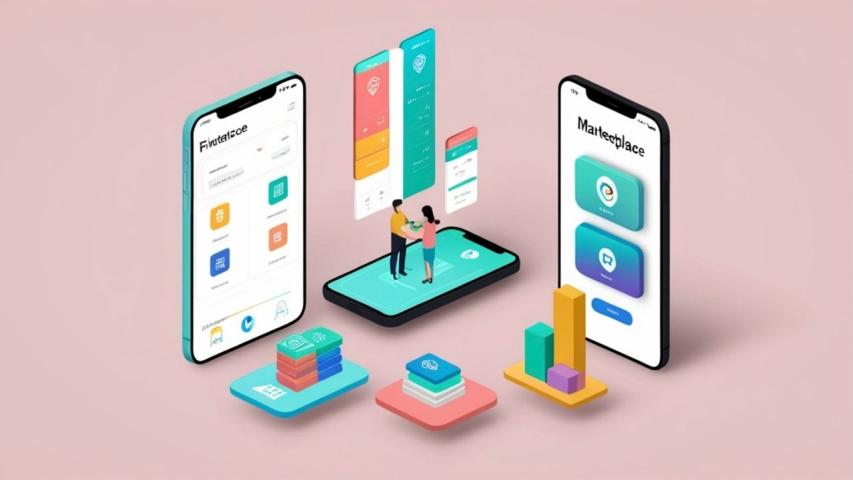

One of the main reasons for the spectacular development of the food delivery market in Australia, is the growing need for convenience, the development of the digital ecosystem, and the influence of consumer behavior in the post-pandemic period. Professionals with hectic schedules, students, families—everyone has found food delivery the easiest way to have their meals, which have become almost a necessity of daily life. Companies throughout Australia, whether they are neighborhood eateries or big food chains, are using the power of smartphone apps to get more customers quickly, improve their brand image, and make their work easier.
As a result, food delivery app development in Australia is evolving into a critical business strategy rather than just a technological investment. With businesses seeking custom mobile app development services in Australia, the integration of artificial intelligence, real-time tracking, and personalized user interfaces has become paramount. These apps are setting new benchmarks in digital dining experiences, transforming how restaurants connect with customers and manage operations. This article explores how food delivery app development is transforming Australia's on-demand economy, what technologies are powering this innovation, and how businesses can capitalize on this growing trend in 2025 and beyond.
1. The Rising Popularity of On-Demand Food Delivery in Australia
Australia has witnessed a huge change in consumer behavior for food delivery over the last couple of years. Various market reports suggest that the Australian online food delivery market will be worth more than USD 4.2 billion by the year 2025. Also, the user penetration is anticipated to be more than 30%. The change has been facilitated by various factors such as the convenience of mobile apps, contactless delivery options, and the popularity of different cuisines.
Delivery of food to your doorstep used to be a service for the privileged living in urban areas, but now it has become a mainstream necessity throughout the country. People living in smaller cities and regional towns are equally benefiting from these apps as they can order meals, groceries, and beverages without any hassle. Food delivery platforms attract customers of all demographics with their competitive pricing, loyalty programs, and real-time delivery updates.
For developers and restaurant owners, this presents a lucrative opportunity to innovate. Custom food delivery app development allows businesses to tailor features according to their brand, customer base, and operational model, ensuring maximum efficiency and engagement.
2. Key Benefits of Developing a Food Delivery App for Businesses
Food delivery app development is a great idea for a business as it opens up a multitude of potentials for enterprises especially in the Australian market where the digital transformation is changing almost all the industries at a rapid pace. The most notable benefits are listed here:
a) Enhanced Customer Reach
The tailored app enables companies to have a one-to-one relationship with the users without the need of third-party aggregators, like UberEats or DoorDash. Restaurants gain the ability to manage the consumer experience, charging, and branding by themselves. Moreover, it also permits sending notifications about targeted offers which is effective in customer retention and loyalty development.
b) Streamlined Operations
The latest food delivery apps designed with backend features likeinventory, POS, and delivery management tools integration help the business to be error-free, and track orders easily and in the process of automating repetitive ones, such as handing payments and giving driver allotment. In such a case, the productivity level will be increased together with the organization's cost-effectiveness.
c) Data-Driven Insights
The tailored app is an opportunity to collect the priceless resource of information about customer preference, purchase frequency, and location-based trends. When the data is successfully mined, the market strategies will be much more effective, the delivery zones will be optimized and the menu will be improved further.
d) Improved Brand Recognition
Branded mobile apps, in essence, are a great way to elevate your business persona. They support a loyalty system through customized experiences, membership schemes, and simple interfaces. Users will most likely return to brands offering easy and delightful app interactions.
3. Core Features of a Food Delivery App That Works
Functioning and user experience have to be considered if a food delivery app wants to survive the Australian market. Here is a list of core features that make a food delivery platform modern and successful:
a) Intuitive User Interface
Good UI makes the app attractive and user-friendly, thus the user does not struggle with ordering food, he simply selects items from the menu and places an order. To provide an efficient experience the interface has to be upgraded with recommendations, filters, and navigation options.
b) Real-Time Tracking
Now it is not an option but a necessity for customers to be given the ability to track their order and delivery in real-time. They want to be updated on the location of their food at every stage, that is, from store to delivery. With GPS and live map updates, transparency can be elevated and thus the trust level of the customer can be strengthened.
c) Multiple Payment Options
By having multiple secured payment gateways like by credit cards, PayPal, Google Pay, and Apple Pay one assures that users can choose where they feel comfortable with. Some customers might want to pay in cash when the product is in their hands or simply use the "wallet balance" method, so catering to these customers is a nice practice.
d) Push Notifications and Promotions
By letting the customers know of the changes in the menu, their order confirmation, and most importantly, the discounts through regular notifications - you lure them in to repeat the interaction with your brand. Push notifications help marketers reach their goals mostly by driving up the number of repeated and loyal orders.
e) Ratings and Reviews
Very important to service quality are the voices of the customers. The app should provide the feature of letting the end-user grade the delivery service and express their opinion via review writing, which will make the community trust grow and give the business a continuous improvement insight thanks to feedback.
f) Driver Management Module
It is an efficient way to manage delivery routes, time tracking, and communication by having delivery personnel operate in a separated module. Such features as route optimization and real-time delivery updates lead to a smoother process.
4. How Technology Is Transforming Food Delivery App Development
Technology integration at its best in food delivery apps is resulting in smart, fast, and responsive apps. Thus, the application of technology in this field is attraction to a great extent in the following way:
a) Artificial Intelligence (AI) and Machine Learning (ML)
Through AI and ML, applications can deliver the customer what he wants by providing food suggestions, predicting food orders, and delivery times optimization. Moreover, by these means, organizations improve their decision-making by reviewing data trends more accurately and implementing automatic answers to frequent questions.
b) Cloud Computing
Cloud computing-based technologies facilitate the work of apps in handling large data by making sure that they are scalable and perform seamlessly even during the times of high traffic. Moreover, the apps are capable of real-time communication among restaurants, delivery agents, and customers this way.
c) Internet of Things (IoT)
IoT is the main enabler of smart kitchen management and the live tracking of the delivery vehicles. For instance, to ensure the meals are delivered fresh to the customers, temperature sensors can even monitor the food during the delivery process.
d) Blockchain Integration
By using blockchain technology, a few Australian food startups intend to make their supply chain more transparent. The blockchain is an excellent instrument for verifying data in transactions and it can follow the origin of the ingredients, so it is effective in gaining trust of customers who care about their health.
e) Voice and Chatbot Assistance
What the customers want is made possible by voice ordering plus AI chatbots interaction. The customers can easily reorder their favorite food, check on their order status, or ask for discounts by issuing simple voice commands or text requests.
5. Why Australia Is a Thriving Market for Food Delivery Apps
Australia, being a tech-friendly place with a strong startup culture and a population that is digitally engaged, is a perfect market for food delivery app innovation. Besides, the major cities like Sydney, Melbourne, and Brisbane are experiencing an increase in the number of tech firms that specialize in on-demand app solutions. Meanwhile, smaller areas are not far behind due to better network coverage and improved logistics.
Moreover, Australia's high smartphone penetration rate (more than 90% of adults owning a smartphone) is a very strong base for mobile-first experiences. Consumers are willing to make digital payments and are very conscious of the time, thus they see food delivery apps as a perfect solution to their life>
What means the most for Australia to become a food delivery market of apps is the cultural diversity in the country. There are many different cuisines like the Asian fusion, Mediterranean, or the Australian contemporary, which in turn causes an endless supply of menu options and app interfaces. Developers can utilize this diversity to design localized user experiences and language-based personalization features.
6. Challenges in Developing a Food Delivery App in Australia
While opportunities are abundant, building a successful food delivery app in Australia also comes with challenges that require careful planning and execution.
a) Market Competition
The Australian market is dominated by major players such as Uber Eats, Menulog, and DoorDash. Competing with these giants requires unique value propositions such as niche targeting, faster delivery, or better loyalty programs.
b) Logistics Management
Managing timely deliveries across vast geographic regions is complex. Integrating smart route optimization, dynamic driver assignment, and local partnerships can help overcome these logistical hurdles.
c) Cost of Development
Developing a high-quality, feature-rich food delivery app involves considerable investment. Businesses need to budget for design, backend development, maintenance, and marketing. However, working with experienced Australian developers can optimize costs and reduce risks.
d) Regulatory Compliance
Food safety standards, delivery protocols, and data privacy laws must be followed strictly. Non-compliance can lead to penalties or loss of customer trust. Partnering with a development company that understands local legal requirements ensures a smooth rollout.
7. Cost Breakdown of Food Delivery App Development in Australia
Developing a robust food delivery app in Australia involves several cost components that depend on complexity, features, and the choice of development partner. On average, creating an MVP (Minimum Viable Product) can cost between AUD 35,000 and 70,000, while advanced apps with AI, analytics, and multi-platform support may range from AUD 100,000 to 200,000 or more.
The total cost usually covers UI/UX design, backend development, frontend coding, API integration, testing, and post-launch maintenance. Additional elements such as cloud hosting, third-party payment gateways, GPS tracking, and marketing integration also affect the final budget.
Businesses can reduce costs by adopting a hybrid or cross-platform framework like Flutter or React Native instead of building separate native apps for iOS and Android. Outsourcing certain development tasks to specialized Australian teams or leveraging on-demand developers can further optimize spending while maintaining quality.
8. Design Trends Defining Modern Food Delivery Apps
In 2025, app design plays a crucial role in driving customer retention and brand loyalty. Users expect visually appealing yet functional interfaces that simplify the ordering process without clutter. Below are the most prominent design trends shaping Australia's food delivery apps.
a) Minimalist Layouts with High Readability
Clean interfaces that emphasize essential information such as menus, pricing, and delivery time improve usability. Developers are using neutral colors, large images, and clear typography to create a modern yet welcoming feel.
b) Personalized User Interfaces
AI-driven personalization helps apps adapt to each user's preferences. By analyzing past orders and browsing habits, the app can suggest favorite dishes, restaurant types, or promotions, enhancing user satisfaction and retention.
c) Dark Mode and Adaptive Themes
As users spend long hours on screens, dark modes have become essential for reducing eye strain. Many apps also offer adaptive color themes that change based on the time of day or user preference.
d) Interactive Animations and Micro-Interactions
Subtle animations—such as order status progress, menu hover effects, and button feedback—add a sense of liveliness and guidance to the user experience without causing distraction.
e) Accessibility and Inclusive Design
Inclusion is a key focus in modern app design. Developers ensure apps are accessible to users with disabilities through voice commands, screen reader compatibility, and adjustable text sizes.
9. Monetization Strategies for Food Delivery Apps
For startups and restaurants entering the digital delivery space, it is crucial to build a sustainable business model. Here are several popular monetization approaches used by Australian food delivery apps.
a) Commission-Based Model
This is the most common method where the app charges a percentage fee from each order placed through the platform. Rates typically range between 10% and 30%, depending on partnership agreements and order volume.
b) Subscription Plans
Offering monthly or annual subscriptions for free deliveries, priority service, or exclusive discounts helps generate steady income and fosters customer loyalty. Services like Deliveroo Plus have successfully implemented this model in Australia.
c) Advertising and Featured Listings
Restaurants can pay to appear at the top of search results or home screens. This model not only creates revenue for the platform but also provides visibility for small businesses seeking to reach local audiences.
d) Delivery and Service Fees
Charging a nominal delivery fee or dynamic pricing based on distance and demand helps offset operational costs while remaining transparent to customers.
e) Data-Driven Partnerships
Apps can collaborate with grocery brands, beverage suppliers, or marketing agencies to create co-branded campaigns. This approach leverages consumer insights for targeted promotions and shared profits.
10. Choosing the Right Development Partner in Australia
Selecting the right technology partner can make or break a food delivery startup. Australia has a thriving ecosystem of mobile app development companies offering expertise in custom solutions, UI/UX design, and AI-driven integration. Here's what to consider when hiring a developer or agency.
a) Experience in On-Demand App Development
Look for companies with proven experience in building on-demand or delivery-based applications. They understand complex features like GPS tracking, multi-vendor support, and real-time notifications.
b) Portfolio and Client Feedback
Check past projects, reviews, and case studies to evaluate the developer's capabilities. A transparent portfolio demonstrates reliability and quality of work.
c) Technology Stack and Scalability
Ensure the development partner uses modern frameworks such as Flutter, React Native, or Node.js that allow flexible updates and scalable architecture as your business grows.
d) Cost and Timeline Transparency
Request detailed proposals with cost breakdowns and project milestones. Clear communication around deadlines and pricing prevents future disputes and budget overruns.
e) Ongoing Support and Maintenance
App development doesn't end at launch. Choose a company that offers long-term technical support, security updates, and feature enhancements to ensure smooth performance.
11. Case Study: Australian Success Stories in Food Delivery Innovation
Several Australian companies have made a significant mark in the on-demand food delivery space, demonstrating how technology and strategy can combine to create impactful business models.
a) Menulog
As one of the earliest players in Australia's food delivery ecosystem, Menulog has used advanced data analytics and personalized recommendations to improve customer experience. Its integration of AI tools for predictive ordering and route optimization shows how traditional platforms can stay competitive through continuous innovation.
b) Deliveroo Australia
Deliveroo set a benchmark for real-time delivery tracking and subscription-based loyalty programs. The platform's collaboration with local restaurants and its "Deliveroo Editions" cloud kitchen concept have expanded the market for virtual brands.
c) HungryPanda and EASI
Both platforms target specific demographics, particularly Asian communities in major cities. Their success proves the potential for niche-focused apps that deliver localized menus and language-based interfaces.
d) Start-Ups and Emerging Players
New entrants like HeyYou and OrderUp are leveraging AI chatbots, contactless payments, and hyper-local logistics to offer faster and more efficient services. These startups highlight how innovation continues to reshape the Australian food tech sector.
12. The Future of Food Delivery App Development in Australia
The future of food delivery in Australia is driven by continuous technological innovation and changing consumer expectations. The next generation of apps will focus on sustainability, automation, and hyper-personalization.
a) Sustainability and Eco-Friendly Delivery
Australian consumers are becoming increasingly environmentally conscious. App developers and delivery companies are exploring electric bikes, eco-packaging, and carbon-neutral delivery models to reduce environmental impact.
b) AI-Powered Automation
From predicting demand patterns to automating customer support, AI will play a pivotal role in streamlining operations. Machine learning can help optimize pricing, inventory management, and driver allocation in real time.
c) Integration with Wearables and Voice Assistants
Future apps will integrate with smartwatches, voice assistants, and connected cars, allowing users to place orders hands-free or track deliveries through voice commands and push notifications on wearable devices.
d) Cloud Kitchens and Virtual Restaurants
Cloud kitchens will continue to thrive as they reduce overhead costs and expand market reach without physical storefronts. App developers will create platforms that connect multiple cloud brands to a single ordering interface.
e) Hyper-Localization and AI Menus
By analyzing regional data, apps will offer AI-generated menus tailored to local tastes and trends. For example, users in Melbourne may see a different set of featured restaurants compared to those in Perth.
13. How Businesses Can Leverage These Innovations
Companies that want to expand their business in the food delivery market should think ahead and beyond. Along with developing a working app, they should also consider building a viable ecosystem that is in harmony with logistics, marketing, and customer engagement.
Spending money on data analytics to understand user behavior, using AI for personalization, and making sure that there is a smooth connection with restaurant POS systems are the main moves to win in the game. Moreover, partnering with veteran Australian app developers not only guarantees local standard compliance but also facilitates cross-platform performance optimization.
Emphasizing heavily on UI/UX design, security, and user feedback channels is the way to keep customers loyal and create a brand that can be trusted in the saturated digital market.
Conclusion
The rise of food delivery app development in Australia is a major factor in the country's move to digital convenience and personalized consumer experiences. Powered by tech, innovation, and a lively startup scene, Australia is a leader in on-demand solutions not only in 2025 but in the years to come.
Creating a bespoke food delivery app for a business is now just the barest of necessities—what used to be called a luxury is no longer required to be competitive in a market that is changing very fast. By the use of AI, IoT, cloud computing, and cutting-edge design techniques, firms will be able to develop platforms that provide not only speed and efficiency but also an excellent user experience.
The future belongs to brands that understand their customers, embrace technology, and deliver value beyond the transaction. Whether you're a restaurant owner, entrepreneur, or enterprise looking to transform your digital presence, partnering with expert development teams like Dev Story can help turn your vision into reality. As Australia continues to embrace on-demand innovation, food delivery apps will remain a central pillar of its digital economy—reshaping how people eat, connect, and experience convenience in the modern world.