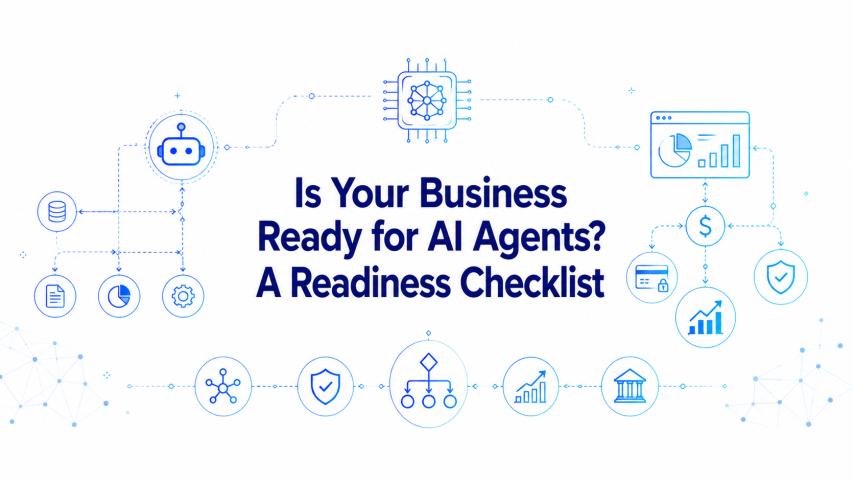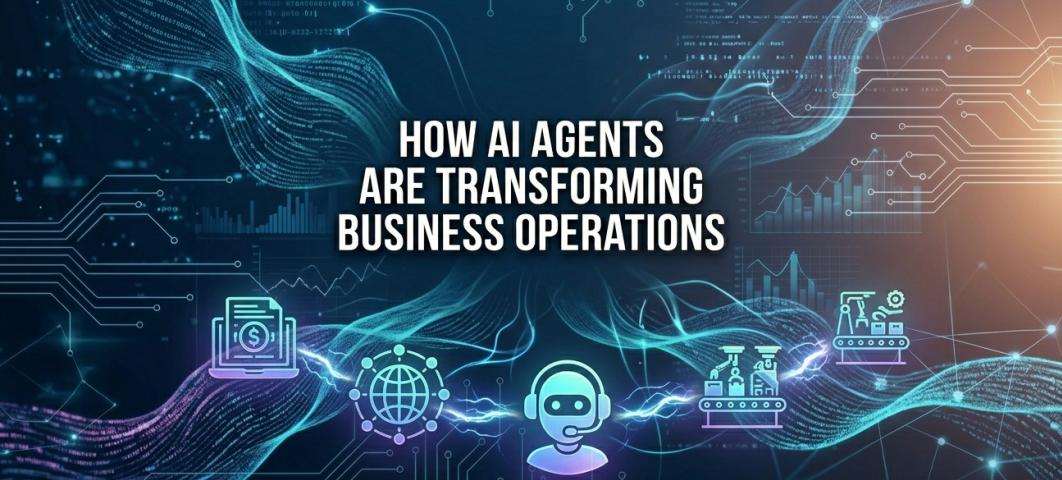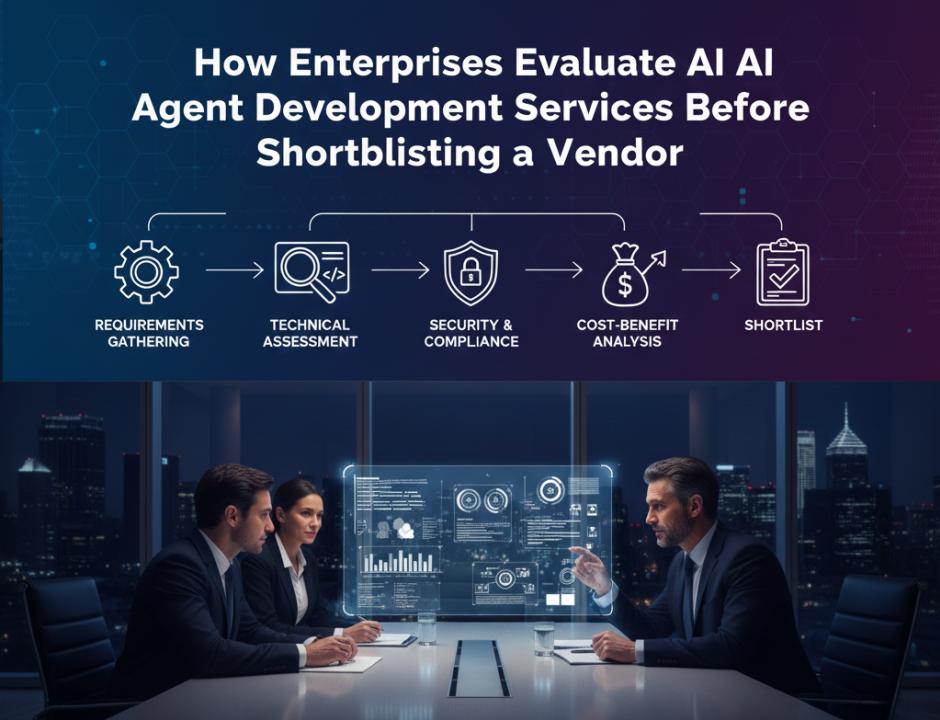
Enterprises and well funded startups are approaching AI adoption with far more structure than before. Leaders no longer rely on surface level demos. They want proof that AI Agent Development Services can support scale, security, governance, and measurable business outcomes. The evaluation process often involves reviewing technical depth, operational maturity, and the vendor’s ability to support long term growth. This article explores how decision makers compare providers and what criteria influence whether an AI Agent Development Company reaches the shortlist. These insights help teams reduce risk while selecting development partners that can deliver reliable enterprise grade outcomes.
How do enterprises assess strategic and technical readiness in AI agent projects
Before choosing a vendor, companies evaluate whether the provider offers genuine engineering strength and long term strategic direction. This assessment goes far beyond basic capability descriptions. Buyers want evidence that the vendor has experience designing complex agent workflows, integrating advanced reasoning, and connecting multiple enterprise systems. Technical readiness is often judged by the vendor’s ability to articulate architecture choices clearly and the presence of real implementation examples.
Decision makers commonly review:
- Previous deployments in similar enterprise environments
- Strength of the solution blueprint and documentation
- Quality of data handling controls
- Experience with Conversational AI Agents
- Integration support across legacy and cloud platforms
- Approach to scalability
- Vendor’s clarity on delivery methodology
These criteria help enterprises identify which partners can provide predictable outcomes and which may carry higher implementation risk.
What proof of ROI and operational efficiency do leaders expect from a vendor
Enterprises expect vendors to show real performance improvements and not just promising descriptions. This includes metrics that demonstrate how agent driven automation improves workflows, reduces manual hours, and elevates decision quality. Buyers want measurable indicators that confirm whether the vendor understands enterprise KPIs and can deliver outcomes tied directly to operational targets.
During evaluation, leaders examine:
- Time to deploy and time to value
- Sample ROI calculations
- Case studies showing impact on productivity
- Clarity around ongoing optimization support
- Methods for validating accuracy and reliability
- Expected reduction in repetitive workloads
- Benchmarks against industry norms
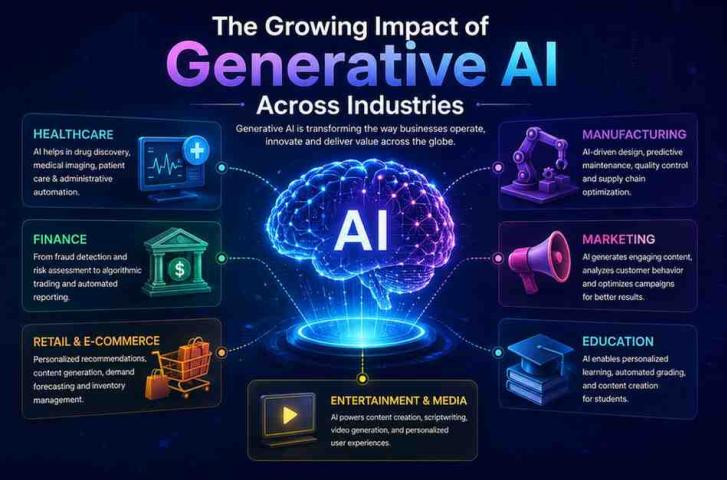
Many companies also look for examples where Generative AI Agents improved cross departmental coordination or boosted customer engagement.
How do security, compliance, and governance influence vendor shortlisting
Security is a core part of enterprise decision making because agent systems often interact with sensitive data. Vendors are expected to meet internal policies and external regulatory standards. Enterprises also evaluate how the vendor manages data isolation, workflow permissions, and identity controls. A vendor that cannot demonstrate complete transparency in its security model rarely makes the shortlist.
Key areas usually reviewed include:
- Compliance certifications relevant to the enterprise sector
- Data encryption standards
- Incident response maturity
- Governance structure for multi agent workflows
- Vendor policies for model training and storage
- Access control models
- Clarity around integration of monitoring systems
Some organizations also consult external audits or third party assessments before engaging further.
What delivery capabilities do enterprises look for when comparing vendors
Beyond technical strength, enterprises want to understand whether the vendor can deliver consistently across multiple stages. This includes planning, development, integration, deployment, and optimization. Teams also check if the provider has enough engineering capacity and whether clients can Hire Skilled AI Agent Developers directly for ongoing support. Delivery maturity often decides whether the vendor is evaluated as a long term strategic partner or a short term executor.
Enterprises typically examine:
- Project management frameworks
- Quality assurance methods
- Documentation standards
- Support for multi platform integration
- Availability of in house development talent
- Speed of iterations
- Flexibility in accommodating enterprise workflows
Some enterprises even conduct pilot engagements to validate delivery capability firsthand.
Why evaluation of consulting strength matters for long term adoption
AI agent systems require continuous refinement because business processes evolve. Vendors with strong advisory capacity are more likely to support the enterprise in designing multi year AI strategies. Leaders often look for firms that provide Generative AI Consulting to help guide architecture improvements, capability expansion, and future planning. Consulting depth ensures the enterprise receives not only implementation but also ongoing strategic direction.
During evaluation, companies assess:
- The vendor’s ability to forecast technology shifts
- Maturity of its advisory frameworks
- Effectiveness of its performance analytics
- Recommendations for future proofing systems
- Experience with phased enterprise wide adoption
- Willingness to work collaboratively with internal teams
This helps enterprises confirm whether the vendor can support them beyond the initial deployment period.
FAQs
1. What should enterprises check first when evaluating AI Agent Development Services
They usually start with architecture clarity, integration readiness, and proof of past enterprise deployments. This helps confirm whether the vendor can support scale, performance goals, and long term AI adoption without operational risks.
2. How does the choice of an AI Agent Development Company affect project success
A strong vendor provides stable engineering processes, governance, and experience with enterprise systems. This ensures smoother delivery, better reliability, and fewer delays during implementation or expansion phases.
3. How do Conversational AI Agents improve enterprise workflows
They automate responses, streamline internal queries, and reduce manual support load. Enterprises often evaluate accuracy, integration quality, and analytics visibility before choosing a vendor that builds such conversational systems.
4. Why do enterprises request examples of Generative AI Agents during evaluation
They want to see real use cases that demonstrate reasoning quality and content generation accuracy. These examples help decision makers assess whether the vendor can deliver agents that meet enterprise grade performance standards.
5. How do consulting capabilities influence Generative AI Consulting selection
Enterprises prefer vendors that offer strategic guidance, governance planning, and long term scaling support. Strong consulting ensures the AI ecosystem evolves with changing business needs.
6. When should companies Hire Skilled AI Agent Developers from an external team
They do this when projects require faster execution or specialized integration skills. External developers help enterprises accelerate workflows without burdening internal teams.
Conclusion
Enterprises and strong startups evaluate AI vendors with a structured approach that balances strategy, security, delivery capability, and measurable ROI. They prioritize technical maturity and operational clarity while assessing whether the provider can support long term AI growth. Teams that review these factors early make better decisions and reduce project risks.