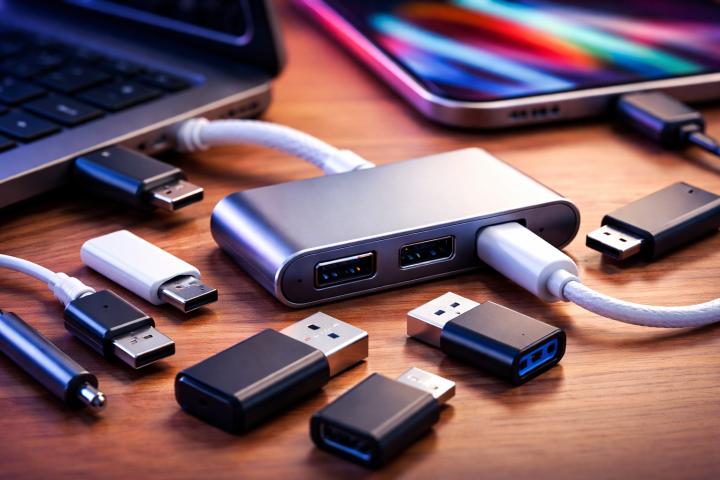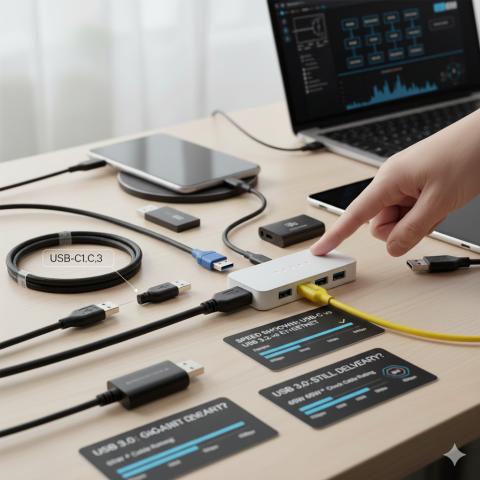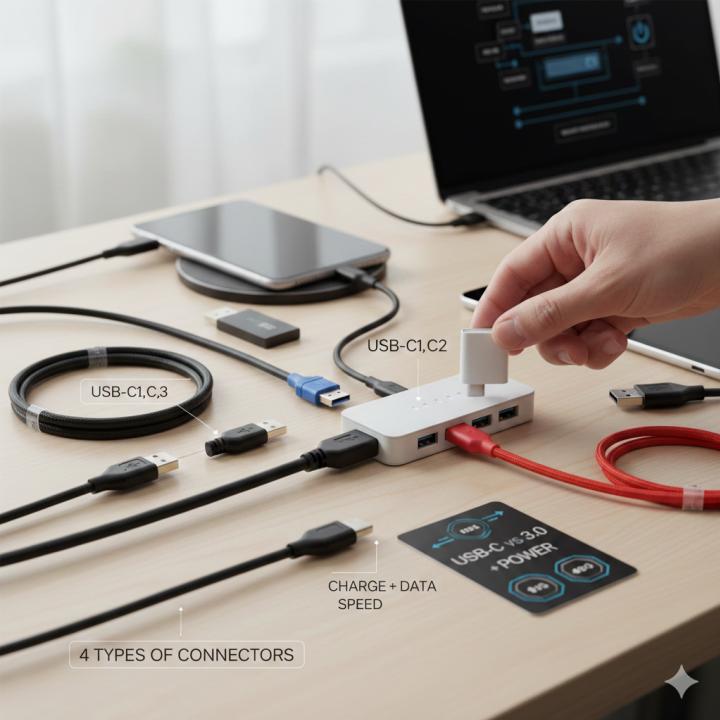
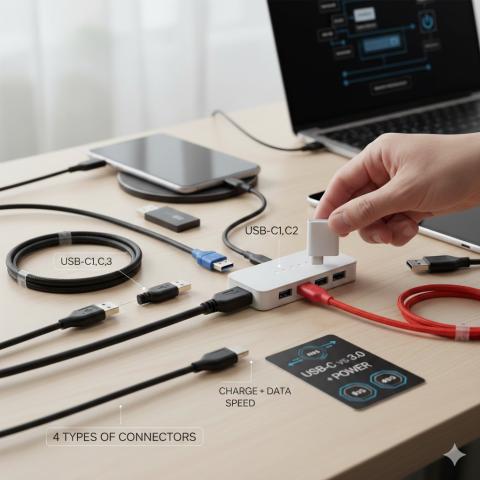
USB-C has become the universal standard for charging, connectivity, and high-speed data transfer. But if you look closely at product specs, you may see labels like USB C1, C2, or C3. These versions often confuse users because they are not officially defined by the USB-IF but are widely used in the market to indicate different capabilities. Understanding what they mean helps you choose the right cable for your smartphone, laptop, gaming console, or monitor.
So, what exactly are USB C1, C2, and C3? Let’s break down these terms in simple words and explore how they affect performance, power, compatibility, and your daily usage.
Understanding USB-C and Why Versions Matter
The USB-C connector is the same across devices, but the features inside the cable can vary widely. Some cables only support charging; some offer high-speed data transfer; others carry video signals for 4K or even 8K monitors. This is why USB-C versions matter. They help you know what the cable can do before you buy it.
Manufacturers use USB C1, C2, and C3 as simplified categories to represent different functionality levels. Think of them as tiers indicating speed, power, and supported features.
What is USB C1?
USB C1 usually refers to the most basic category of USB-C cables. These cables support USB 2.0 data transfer speeds and standard charging.
USB C1 cables are generally used for basic tasks such as:
-
Charging smartphones and tablets
-
Simple data transfer
-
Connecting low-power accessories
They are great when you only need to charge your device or transfer small files. However, they are not ideal for high-speed data tasks or video output.
In most cases, USB C1 cables do not support monitor connectivity. So if you need to connect to a display, a USB C1 cable will not be enough.
What is USB C2?
USB C2 is the next level and usually represents cables that support USB 3.x speeds. These cables offer much faster data transfer, better performance, and often support higher power delivery.
Typical features of USB C2 cables include:
-
Faster data speeds (up to 5Gbps or 10Gbps)
-
Higher charging power
-
Support for more powerful devices
-
Better internal construction
USB C2 cables are suitable for external hard drives, newer smartphones, docking stations, and other devices that need fast transfer rates.
Some USB C2 cables may also support video output, especially when labeled as USB-C with DisplayPort Alternate Mode. If you're looking for a usb c video cable for connecting laptops to monitors, a USB C2 cable with video capability is a good starting point.
What is USB C3?
USB C3 represents the most advanced category of USB-C cables on the market. These cables are usually equivalent to USB 4 or Thunderbolt-class cables, offering top-tier speed, power, and multifunctional support.
USB C3 cables are built for tasks that require high performance such as:
-
4K or 8K video output
-
High-performance data transfer
-
Fast charging for laptops and gaming devices
-
Running external GPUs
-
Connecting multiple displays via docking stations
A USB C3 cable is ideal if you work with large files, edit videos, or want a single cable to charge your laptop and connect your monitor. Many USB C3 cables are also marketed as usb c video cable products because they support advanced video transmission technologies like DisplayPort 1.4 or higher.
Why Do These Versions Exist?
The official USB standards can be confusing. For example:
-
USB 3.2 Gen 1
-
USB 3.2 Gen 2
-
USB 4 Gen 2
-
USB 4 Gen 3
-
Thunderbolt 3
-
Thunderbolt 4
Manufacturers use simpler labels like C1, C2, and C3 to make it easier for consumers to understand the performance level. While not official, these terms help categorize cables by speed, power, and capability.
C1 = Basic charging + low-speed data
C2 = Mid-range speed + moderate power
C3 = High-end speed + full-function capability
Key Differences Between USB C1, C2, and C3
1. Speed
C1 cables are slow because they rely on USB 2.0, while C2 cables are much faster with USB 3.x speeds. C3 cables offer the highest performance with USB 4 or Thunderbolt speeds.
2. Charging Capability
C1 supports basic power delivery.
C2 supports moderate levels of fast charging.
C3 supports full Power Delivery, making them suitable for laptops and power-hungry devices.
3. Video Support
C1: No video output
C2: May support video depending on type
C3: Always supports video output, making it ideal as a usb c video cable
4. Compatibility
C1 is for simple devices.
C2 works with a wide range of modern accessories.
C3 offers universal compatibility with high-performance devices.
Which USB-C Version Should You Choose?
The best version depends on what you plan to do with the cable.
Choose USB C1 if:
-
You only need to charge your phone
-
You transfer simple files
-
You want a low-cost cable
Choose USB C2 if:
-
You use external drives
-
You need faster speeds
-
You want reliable charging
-
You connect modern accessories
Choose USB C3 if:
-
You work with video output
-
You need a usb c video cable for monitors
-
You use laptops, docking stations, or multi-display setups
-
You want the highest performance
How to Identify the Right Cable
Since many cables look similar, you should check:
-
Speed rating (USB 2.0, USB 3.x, USB 4)
-
Power rating (Wattage or PD label)
-
Video support (DisplayPort Alt Mode, Thunderbolt)
-
Build quality (shielding, thickness, certification)
If you need a video-capable cable, always look for terms like “DisplayPort Alt Mode,” “4K/8K video support,” or simply look for a high-performance usb c video cable.
Are USB C1, C2, and C3 Future-Proof?
Among the three, USB C3 is the most future-proof due to its speed and wide compatibility. As more devices adopt high-resolution displays and USB 4 technology, C3 cables will remain relevant for years.
USB C1 and C2 cables will still work, but they may not support the increasing demands of modern electronics.
Final Thoughts
USB C1, C2, and C3 labels help simplify a complicated USB ecosystem. While they are not official standards, they clearly indicate different capability levels. Knowing the differences helps you choose a cable that matches your needs—whether it’s simple charging, fast data transfer, or high-resolution video output.
If you want a dependable usb c video cable, choose a USB C3 cable because it supports advanced video, speed, and power features.
Sources: https://techbii.com/7-key-usb-adapter-features-for-better-connectivity/
https://sfcable.hashnode.dev/what-are-the-key-features-of-usb