The digital age has transformed how we live, work, and communicate. Yet in many parts of the world, education systems still rely on models designed for the industrial era. Standardised curricula, one-size-fits-all teaching methods, and limited access to personalised support continue to challenge students and educators alike.
Artificial Intelligence (AI) is not just another technology trend; it is a catalyst for meaningful educational reform. With the right strategy and partnership with the Best AI development company, institutions can reimagine learning to be more adaptive, inclusive, and future-ready.
The Shift from Traditional to Intelligent Learning
Traditional classrooms often struggle to accommodate diverse learning >
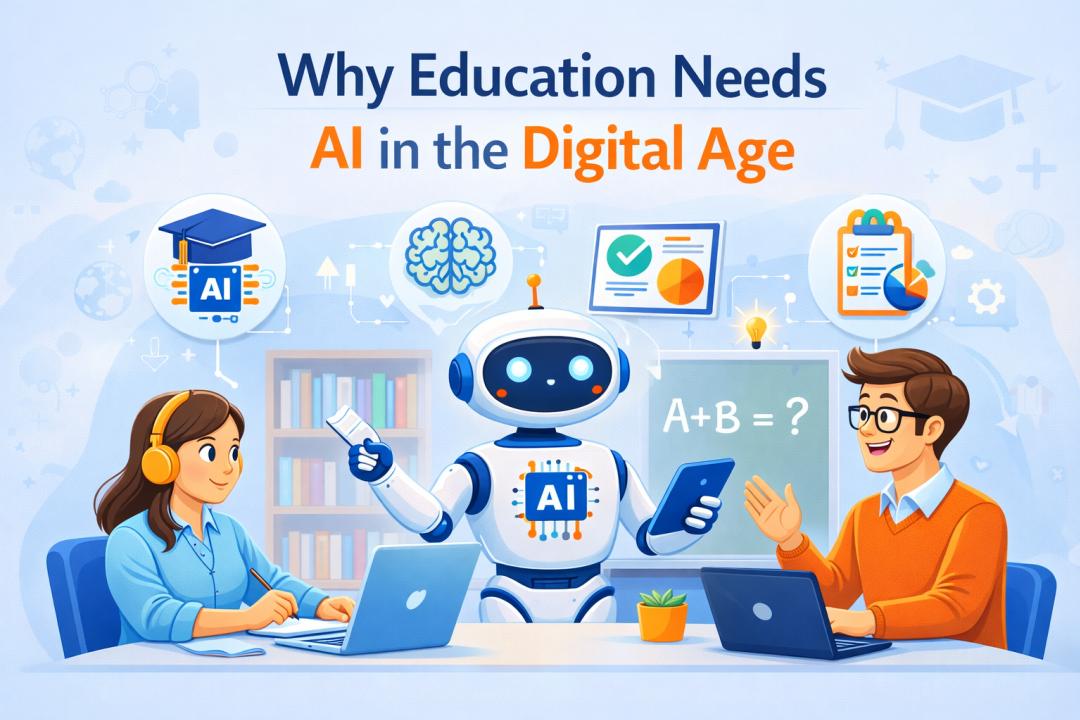
This is where AI services in Education play a critical role. Intelligent tutoring systems, adaptive learning software, and AI-driven assessments enable a personalised learning journey for every student. Rather than replacing teachers, AI enhances their ability to focus on what matters most: mentorship, creativity, and human connection.
For example, platforms like Khan Academy have begun integrating AI tools to offer tailored recommendations and instant feedback. Similarly, Duolingo leverages AI to customise lessons based on user progress and behaviour patterns. These examples illustrate how AI can make learning more responsive and engaging.
Personalisation at Scale
One of education’s biggest challenges is scalability. How do you provide individualised attention in classrooms with dozens or even hundreds of students?
AI solves this by processing vast amounts of data instantly. It can track attendance, participation, test scores, and even engagement levels to generate actionable insights. Teachers gain dashboards that highlight which students need additional support and which are ready for advanced material.
When institutions collaborate with the Best AI development company, they gain access to custom-built solutions that align with curriculum goals, compliance standards, and institutional values. Off-the-shelf tools can help, but tailored AI systems unlock deeper transformation.
Personalisation also extends beyond academics. AI can recommend career pathways, extracurricular opportunities, and skill development programs based on individual strengths and market trends. In a world shaped by automation and rapid technological change, this guidance is invaluable.
Bridging Accessibility and Inclusion Gaps
Education must be inclusive. AI-powered speech recognition, real-time translation, and text-to-speech tools break down barriers for students with disabilities or language differences.
Imagine a classroom where a student with hearing impairment receives instant transcription, or a non-native speaker accesses real-time translation. These are not futuristic concepts they are present-day realities made possible by AI services in Education.
By integrating AI responsibly, schools and universities can expand access to quality learning across geographic and socioeconomic boundaries. Remote and underserved communities, in particular, stand to benefit enormously.
Data-Driven Decision Making
Educational institutions generate enormous amounts of data. Historically, much of it has remained underutilised. AI changes that by converting raw data into meaningful insights.
Administrators can forecast enrolment trends, optimise resource allocation, and improve curriculum design based on predictive analytics. AI can also identify early warning signs for student dropout risks, allowing timely intervention.
The same analytical precision that powers AI services in banking, where fraud detection, risk assessment, and customer insights depend on advanced algorithms, can be applied to education. In both sectors, data-driven intelligence enhances efficiency, accuracy, and strategic planning.
Enhancing Teacher Productivity, Not Replacing It
A common misconception is that AI will replace educators. In reality, AI serves as a powerful assistant.
Tasks such as grading multiple-choice exams, generating performance reports, and organising administrative workflows consume significant teacher time. Automating these processes allows educators to focus on interactive teaching, mentoring, and innovation.
When supported by the Best AI development company, institutions can deploy AI tools that align with ethical standards, ensure data privacy, and maintain transparency. Responsible implementation is key to building trust among teachers, students, and parents.
Preparing Students for an AI-Driven Workforce
The future job market is increasingly influenced by automation, machine learning, and data analytics. Companies like Google, Microsoft, and IBM continue to invest heavily in AI innovation, reshaping industries across the globe.
Education systems must evolve to prepare students for this reality. Integrating AI into classrooms not only improves learning processes but also familiarises students with emerging technologies. Exposure to AI tools fosters digital literacy, critical thinking, and adaptability skills essential in the modern workforce.
By leveraging AI services in Education, institutions can introduce coding platforms, data science modules, and AI ethics discussions early in the curriculum. This ensures that students are not merely consumers of technology but creators and informed users.
Ethical Considerations and Responsible Implementation
While the benefits are immense, AI adoption must be thoughtful. Data privacy, algorithmic bias, and transparency require careful oversight. Schools should implement strict governance policies and work with trusted partners to ensure compliance with regional regulations.
Choosing the Best AI development company means selecting a partner who prioritises ethical AI frameworks, secure data management, and long-term scalability. Education is a sensitive domain, and trust is paramount.
The Road Ahead
AI is no longer optional in the digital age; it is essential. From personalised learning and improved accessibility to predictive analytics and workforce readiness, AI offers transformative potential for education systems worldwide.
The parallels with AI services in banking demonstrate how advanced analytics can revolutionise traditional sectors. If financial institutions can leverage AI to manage billions of transactions securely and efficiently, educational institutions can harness the same intelligence to nurture millions of minds.
Ultimately, the goal is not to digitise education for the sake of innovation, but to humanise it. By automating routine tasks and enabling data-driven insights, AI empowers educators to focus on creativity, empathy, and inspiration, the qualities that define truly impactful teaching.
In partnership with the Best AI development company, the education sector can move beyond outdated frameworks and build intelligent ecosystems designed for the learners of today and the leaders of tomorrow.