Scaling business operations means growing your capacity to serve more customers, process higher volumes of data, and expand into new markets without proportionally increasing costs. A custom AI app development company enables this scaling by building intelligent systems that handle larger workloads, automate repetitive processes, and adapt to changing business conditions. Unlike traditional software that often struggles under increased demand or becomes expensive to expand, custom AI solutions grow with your organization, learning from more data and becoming more efficient over time. Whether you operate in healthcare, finance, retail, or any other industry, custom AI app development services provide the infrastructure and intelligence needed to scale operations effectively and maintain competitive advantage as your business grows.
This article explains how organizations leverage custom AI solutions to scale, the specific mechanisms that make this possible, and practical examples across different sectors.
Understanding Scalability in the Context of Custom AI Solutions
Scalability in business traditionally means adding more servers, hiring more staff, or building additional facilities to handle growth. These approaches are expensive and eventually hit physical or financial limits. Custom AI app development transforms scalability by automating tasks, improving decision-making efficiency, and extracting maximum value from existing resources. A custom AI app solution can process thousands of transactions, analyze millions of data points, and serve millions of users with a small team managing the system. As your data volumes grow, the AI model becomes more accurate and valuable rather than less efficient. The infrastructure can typically scale with software changes rather than requiring major capital investments. This means organizations can grow revenue without growing operating costs at the same rate, improving profitability as they scale.
Custom AI app development companies design systems specifically for scale from the beginning. Rather than building a solution for 100 users and hoping it somehow works for 10,000 users, these companies architect systems that handle exponential growth. This includes designing databases that distribute data across multiple servers, building APIs that accept high transaction volumes, and creating algorithms that maintain performance even as they process more data. The custom approach means the architecture matches your specific scaling needs rather than forcing you into a generic framework that may or may not work well for your particular situation.
Scaling Healthcare Operations with Custom AI Applications
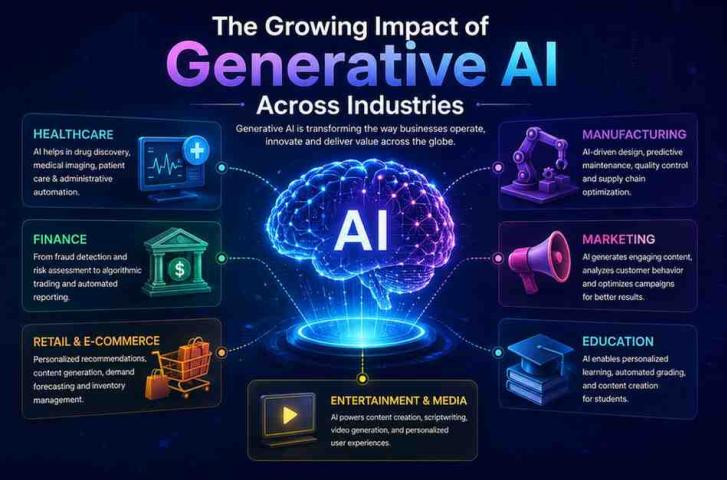
Healthcare organizations face unique scaling challenges because clinical standards cannot be compromised even as volume increases. A hospital system opening new facilities needs to ensure the same quality of care and efficiency in each location. Custom AI app development services address this by creating standardized clinical systems while allowing necessary local customization. An AI diagnostic system trained on thousands of patient cases can be deployed across multiple hospitals, with each facility adding local data to improve accuracy for their specific patient population. Custom AI solutions eliminate the manual processes that become bottlenecks during growth—appointment scheduling, patient intake, lab result analysis, and medication management all become automated.
Automating Patient Care Workflows Across Multiple Facilities
As healthcare networks expand, managing patient information across locations becomes complex. Custom AI app solutions create unified patient records accessible by authorized providers at any facility, reducing duplicate testing and improving continuity of care. When a patient visits a hospital outside their primary network, relevant medical history is immediately available. This prevents dangerous drug interactions, unnecessary repeated tests, and inefficient treatment delays. The custom AI system learns from outcomes across all facilities, continuously improving its diagnostic and treatment recommendations. A rare condition identified at one facility immediately becomes part of the knowledge base used at all other facilities. This distributed learning accelerates improvement and ensures best practices spread quickly throughout the network.
Custom appointment scheduling systems powered by AI reduce no-show rates and optimize provider schedules across multiple locations. The system learns which patients are likely to miss appointments based on historical patterns, allows for automatic rescheduling reminders, and predicts the ideal appointment duration for different types of visits. As a health system adds new facilities, clinics, and providers, the AI system automatically balances patient flow across locations based on provider availability, patient location preferences, and travel time. During periods of high demand like flu season, the system dynamically allocates resources and adjusts schedules to manage volume without sacrificing quality.
Scaling Diagnostic Capabilities Without Hiring More Specialists
Medical specialists are expensive, time-consuming to train, and geographically concentrated in major cities. A custom AI diagnostic system trained by expert pathologists or radiologists can analyze medical images and reports with accuracy approaching specialist-level performance. This allows healthcare systems in remote or underserved areas to provide specialist-quality diagnostics without hiring additional specialists. The system works alongside existing providers, alerting them to findings they might miss and speeding up the diagnostic process. As more diagnostic data flows through the system, it learns from this real-world experience, becoming more accurate and capturing more edge cases. This creates a virtuous cycle where the system serves more patients, learns from more cases, and becomes more valuable.
Managing Growth in Patient Volume Without Proportional Staff Increases
Healthcare staffing is one of the largest operating expenses. Custom AI app development solutions automate clerical and administrative tasks, freeing clinical staff to focus on direct patient care. Automated insurance verification, pre-authorization requests, billing code assignment, and claims submission reduce administrative overhead. Patient intake chatbots gather medical history, medications, and reason for visit before the patient sees the provider, shortening appointment times and allowing providers to be more productive. As patient volume grows 50%, the administrative and clinical systems scale to handle the increase without requiring a 50% increase in staff. This dramatically improves unit economics and profitability.
Scaling Financial Services Through Custom AI Development
Financial institutions operate on thin margins where efficiency improvements directly impact profitability. A custom AI app development company helps banks, investment firms, and insurance companies scale by automating complex decision-making processes that were previously done by highly paid specialists. A risk assessment system that takes minutes to manually analyze becomes instantaneous with AI, allowing loan officers to process more applications per day. Trading algorithms can execute thousands of transactions per minute, far beyond human capability. Insurance underwriting systems analyze tens of thousands of data points to make underwriting decisions more consistently and fairly than human underwriters. These automation capabilities allow financial services companies to grow transaction volume, serve more customers, and expand into new markets without proportionally increasing staffing costs.
Expanding Loan Portfolio While Managing Risk
Banks looking to grow their loan portfolio face a fundamental challenge: volume growth can come with increased risk if credit quality deteriorates. Custom AI app solutions address this by improving credit risk assessment. The system analyzes hundreds of variables about applicants to predict default probability more accurately than traditional credit scores. As the bank originates more loans, the system learns from actual outcomes, continuously improving its risk predictions. The bank can expand its customer base with confidence because the AI system maintains rigorous credit standards across all loans. Some banks use custom AI to identify profitable market segments that were previously underserved—for example, excellent credit risks in lower income categories who were rejected by traditional scoring models.
When a financial institution acquires another bank or enters a new market, custom AI systems quickly integrate the new institution's data and customers into the risk assessment framework. The system learns the characteristics of customers in the new market and the economic factors affecting that region. Within weeks, the system is making loan decisions as confidently in the new market as in established markets. This speed of integration enables faster merger and acquisition integration compared to trying to manually retrain staff on new policies and procedures.
Scaling Customer Service and Relationship Management
As a financial institution grows and serves more customers, maintaining personal relationships becomes difficult. Custom AI-powered chatbots and virtual advisors provide 24/7 customer service, answering routine questions about account balances, recent transactions, payment processing, and common policies without human intervention. These systems handle the 80% of inquiries that are routine, freeing human advisors to focus on complex questions and relationship building with high-value customers. When customer volume doubles, the AI system doubles its capacity without additional cost. The system learns from interactions, improving its ability to understand customer intent and provide accurate information. Customer satisfaction improves because service is available immediately rather than requiring customers to wait for business hours or hold on the phone.
Rapid Expansion into New Geographic Markets
Financial institutions expanding internationally face challenges of learning new regulations, understanding local customer preferences, and building risk models for unfamiliar markets. Custom AI app development solutions accelerate this expansion by quickly learning local patterns from available data. The system analyzes transactions, market data, and economic conditions in the new market to understand local customer behavior and risk patterns. Rather than sending experienced staff to the new market to manually establish systems and train local teams, the custom AI system can be deployed quickly with local data integrated. This reduces the cost and complexity of international expansion while maintaining consistent quality standards across locations.
Scaling Retail Operations with Custom AI App Solutions
Retail organizations face a different scaling challenge: managing increasingly complex supply chains, customer expectations, and product catalogs as they grow. A custom AI app development company enables retailers to scale by automating inventory management, personalizing customer experiences at scale, and optimizing pricing across thousands of products and locations.
Managing Exponential Growth in Product Complexity
As retailers add product categories, expand into new markets, and acquire other retailers, the number of distinct products grows exponentially. A small retailer might manage 10,000 SKUs (stock keeping units), while large retailers manage hundreds of thousands. Manually forecasting demand, setting prices, and allocating inventory for each product becomes impossible. Custom AI solutions handle this complexity by treating each product as an optimization problem. The system analyzes historical sales, seasonality, competitor pricing, and current inventory to recommend the optimal stock level and price for each product. As the retailer adds new products, the system applies patterns learned from similar existing products to make good recommendations even before the new product has a sales history. When the retailer expands into a new market or acquires a competitor, the system quickly learns the different customer preferences and competitive dynamics in that market.
Personalizing Customer Experience at Massive Scale
Large retailers serve millions of customers, making it impossible to provide personalized service to each one without AI. Custom AI app development solutions analyze customer history, preferences, and behavior to show each customer the products most relevant to them. Website visitors see different product recommendations based on their browsing history and what customers like them have purchased. Loyal customers receive personalized offers tailored to their preferences. Email marketing campaigns feature products each customer is likely to buy rather than showing the same products to everyone. This personalization increases conversion rates, average order value, and customer loyalty as retailers scale. The system learns continuously from customer interactions, becoming better at understanding preferences and making relevant recommendations.
Coordinating Supply Chain Across Multiple Facilities
Retailers with multiple distribution centers, warehouses, and retail locations face complex logistics challenges that worsen as they grow. A custom AI supply chain solution optimizes inventory allocation across the network, predicting which products will be needed at which locations. Rather than each location managing its own inventory independently, the system coordinates across the network, moving slow-moving inventory from one location to another where it will sell faster. This reduces the total inventory investment needed to serve all customers while reducing stockouts and markdowns. As the retailer opens new locations or enters new markets, the system quickly models the demand patterns in those locations and optimizes inventory allocation. During peak seasons like holidays or major sales events, the system dynamically reallocates inventory multiple times per day based on current sales velocity at each location.
Scaling Workforce Productivity and Scheduling
Retail stores are labor-intensive operations where scheduling efficiency directly affects profitability. Custom AI scheduling systems optimize staff schedules across hundreds of locations based on predicted customer traffic, available inventory, and employee preferences. The system learns which times of day are busy, which days have special events that drive traffic, and how sales associates' productivity varies by time of day and type of merchandise. It schedules more staff during busy periods and fewer during slow times, while respecting employee scheduling preferences and constraints. When a retailer opens new locations, the system uses patterns from similar locations to forecast customer traffic and recommend initial staffing levels. As the location operates, the system learns local patterns and adjusts forecasts and recommendations. This prevents the costly mistake of over-staffing new locations while ensuring adequate service quality.
Key Scaling Mechanisms Provided by Custom AI Development
Understanding how custom AI enables scaling reveals why these solutions are so valuable for growing organizations.
Automation Without Linear Cost Growth
Traditional business growth requires hiring more people to handle more volume—more loan officers to process more loans, more clinicians to see more patients, more cashiers to process more transactions. Custom AI automates these tasks, allowing one person to manage the work of many. The cost to process one additional transaction or serve one additional customer approaches zero once the system is deployed. This inverts the economics of growth—adding revenue no longer requires proportionally adding costs.
Learning Systems That Improve With Scale
Custom AI solutions become more valuable as they process more data and learn from more examples. A machine learning model trained on 1,000 patient cases is less accurate than one trained on 100,000 cases. A recommendation engine trained on 10,000 customer transactions is less effective than one trained on millions. Organizations growing in scale have an inherent advantage because their larger data volumes make their AI systems more capable. This creates a virtuous cycle where larger scale leads to better AI performance, which attracts more customers and grows the business further.
Consistent Quality and Standards Across Locations
When a healthcare system opens a new hospital, a bank enters a new market, or a retailer launches new stores, custom AI systems ensure consistent quality standards across all locations. The system applies the same diagnostic protocols, loan approval criteria, or pricing logic everywhere, preventing the quality variation that often occurs when expanding rapidly. This protects brand reputation and customer trust during growth.
Rapid Adaptation to Changing Conditions
Markets change, customer preferences shift, competitors introduce new offerings, and economic conditions fluctuate. Custom AI systems trained on continuous streams of data adapt automatically to these changes. A recommendation system adjusts product suggestions as fashion trends shift. A demand forecasting system accounts for economic downturns or booms. A risk assessment system adjusts for new fraud tactics. This adaptability prevents the performance degradation that often accompanies rapid growth and market change.
Scaling Challenges That Custom AI Solutions Address
Growing organizations face specific challenges that become more severe as they scale. Custom AI app development companies have developed solutions to these common problems.
Data Quality and Integration Across Systems
As organizations grow through organic expansion or acquisitions, they accumulate data in multiple systems with different formats, definitions, and quality standards. A large bank might have customer information in dozens of different systems from various acquisitions. Before any AI can work effectively, this data must be unified and cleaned. Custom AI development companies specialize in data integration, creating unified data platforms that bring disparate sources together. They establish data quality standards that apply across the organization, identifying and fixing data problems before AI systems use that data.
Regulatory Compliance at Scale
Regulations become more complex and important as organizations grow. A healthcare system with five hospitals faces more complex compliance challenges than one with a single hospital. A financial institution operating in multiple countries must comply with different regulations in each jurisdiction. Custom AI app development companies build compliance into their systems from the beginning, ensuring that as organizations scale, they maintain regulatory compliance. They understand the specific compliance requirements in different industries and geographies, designing systems that meet those requirements even as operations expand.
Managing Multiple Teams and Stakeholders
Large-scale AI implementations involve multiple teams—data scientists, engineers, business analysts, clinicians or finance professionals, and IT operations. Custom AI development companies manage this complexity, establishing clear communication, defining roles and responsibilities, and creating processes that work even as team sizes grow. They provide documentation and training so internal teams understand the systems and can manage them independently over time.
Real-World Scaling Examples
Healthcare Network Expansion
A regional healthcare system consisting of three hospitals and twenty clinics wants to expand to twenty hospitals and two hundred clinics within five years. Instead of hiring proportionally more staff, they deploy a custom AI diagnostic system across the network. The system analyzes X-rays, pathology slides, and EKG recordings, reducing the burden on specialist physicians who are the bottleneck to capacity growth. They also deploy a custom scheduling system that automatically optimizes appointment availability across all locations, automatically referring patients to the most appropriate facility for their needs. They implement a custom patient experience system that manages intake, follow-up, and compliance. The result: they achieve the expansion target while maintaining or improving clinical outcomes and actually reducing the cost per patient served.
Fintech Expansion
A financial technology company starts in one market serving one customer segment with a custom loan origination platform. As the business succeeds, they want to expand to new customer segments and new geographic markets. Rather than rebuilding their system for each market, their custom AI solution applies the patterns learned from the first market to new markets. The system learns local customer behavior, economic factors, and competitive dynamics quickly. They expand from serving 100,000 customers in one market to serving 5 million customers across twenty markets without the traditional cost and complexity of expansion. The AI system maintains consistent loan quality across all markets while continuously improving as it learns from larger data sets.
Multi-Channel Retail Growth
A clothing retailer with ten physical stores launches an e-commerce platform, then enters new product categories, then acquires competitor retailers. Each expansion would normally require rebuilding systems and creating new processes. Instead, their custom AI solutions handle all the changes seamlessly. Their inventory system manages products across physical and online channels, coordinating stock allocation to maximize revenue. Their pricing system sets prices across all channels and categories, adapting to local competition and demand. Their customer experience system personalizes recommendations whether customers shop online, in stores, or across channels. As they continue to grow and add channels and categories, their AI systems continue to scale while providing better personalization and inventory optimization than the accumulated manual processes would.
Technical Architecture for Scaling
Custom AI app development companies design technical architecture specifically for scale. This typically includes cloud infrastructure that can handle variable workloads, distributed databases that spread data across multiple servers, APIs that accept millions of requests per second, and machine learning platforms that can train and retrain models efficiently. Rather than building the minimum viable product and hoping it scales, these companies build systems engineered to handle 10x or 100x growth without architectural changes. This requires more investment upfront but saves the massive cost and disruption of rebuilding systems when growth happens.
Building a Scalable Organization with Custom AI
Organizations planning for growth should start building custom AI solutions early rather than waiting until growth creates bottlenecks. The longer you operate with manual processes and inefficient systems, the harder it is to change once you are growing rapidly. Starting with custom AI app development allows you to build operational muscle memory around data-driven decision-making and automated processes. By the time you are scaling, these approaches are routine rather than revolutionary. Custom AI development also provides the infrastructure and analytics that help you understand what's working and what needs improvement—critical information when managing rapid growth.
Organizations should view their custom AI app development company not as a vendor but as a strategic partner in growth. The best partnerships involve close collaboration between your team and the development team, with clear communication about business objectives and technical constraints. As your business evolves, your AI solutions should evolve with you, continuously improving and expanding to address new challenges.
Future Implications of AI-Enabled Scaling
As custom AI technology becomes more mature and accessible, the ability to scale efficiently becomes a baseline competitive expectation rather than a differentiator. Organizations that cannot scale through AI will struggle to compete against those that can. Future growth in most industries will be limited not by the number of staff you can hire but by how effectively you can deploy AI to multiply the productivity of those staff. In healthcare, financial services, retail, and every other industry, the organizations that grow fastest and most profitably will be those that successfully integrate custom AI into their core operations.
Custom AI app development companies will increasingly become partners in business strategy rather than just technology vendors. They will help organizations think through how their business model needs to change to take advantage of AI capabilities, how to reorganize processes and teams around AI systems, and how to maintain culture and values during AI-driven transformation. The most successful growing organizations will be those that view AI scaling not as a technology project but as a business transformation.
Final Thoughts
Scaling a business successfully requires more than ambitious growth targets and smart marketing. It requires building operational systems capable of handling exponential growth while maintaining quality and controlling costs. Custom AI app development enables this scaling by automating decisions and processes, learning from larger data sets, and adapting to changing conditions. Rather than scaling through adding headcount and facilities, organizations increasingly scale through deploying intelligent systems that multiply the productivity of their people and assets. A custom AI app development company that understands your business and industry can design and build the systems that allow you to achieve aggressive growth targets while improving profitability. For organizations planning significant growth over the next three to five years, investing in custom AI solutions should be a core strategic priority. Start Your AI Transformation Now.