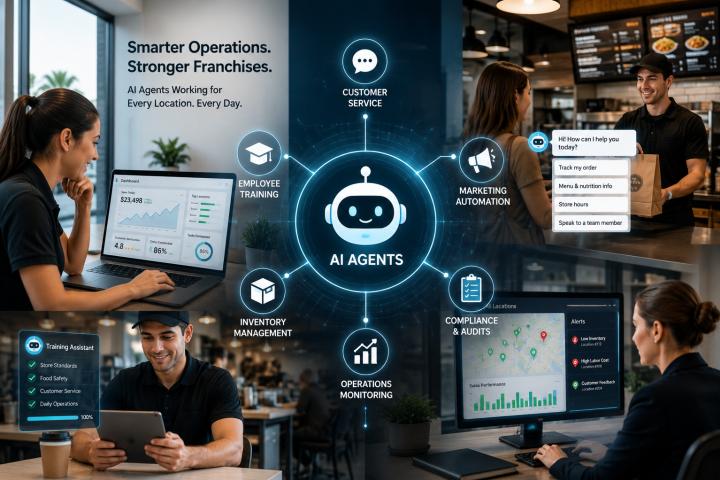
AI tools are now used everywhere, from customer support and marketing to education, software development, and business operations. But as AI becomes more advanced, many people get confused by two common terms: AI agents and chatbots.
At first, they may look similar. Both can chat with users, answer questions, and use artificial intelligence to understand language. But they are not the same.
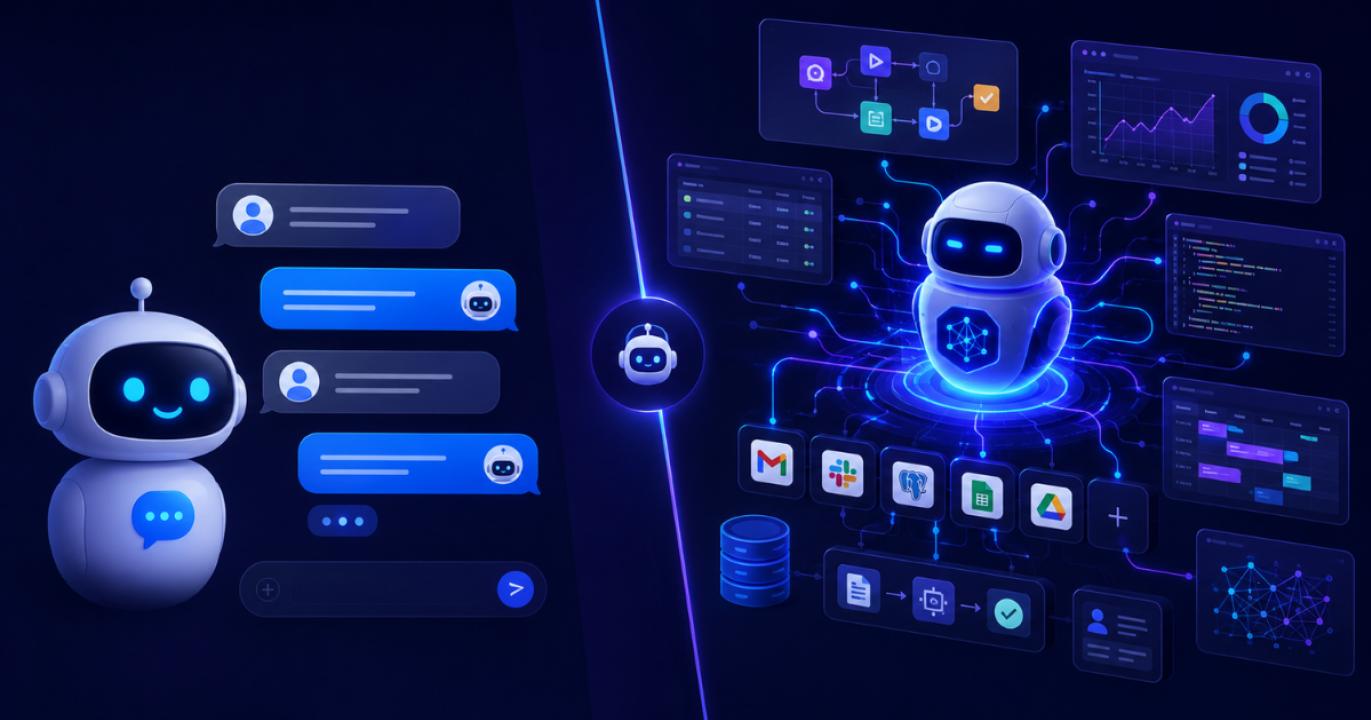
A chatbot mainly responds to user messages. An AI agent can go further. It can understand a goal, make decisions, use tools, complete tasks, and sometimes work across multiple steps without needing constant human guidance.
In simple terms, a chatbot talks. An AI agent acts.
Understanding the difference between AI agents and chatbots is important because businesses need to choose the right solution. A simple chatbot may be enough for answering FAQs, but an AI agent may be better for handling workflows, research, planning, and automation.
What Is a Chatbot?
A chatbot is a software program designed to communicate with users through text or voice. It is usually built to answer questions, guide users, or provide information based on a fixed set of rules or AI-powered responses.
Traditional chatbots follow predefined scripts. For example, if a customer asks, “What are your business hours?” the chatbot gives a prepared answer. If the customer asks something outside the script, the chatbot may fail or give a generic response.
Modern AI chatbots are more flexible. They can understand natural language better and generate more human-like replies. They can answer questions, summarize information, explain topics, and support users in a conversational way.
Chatbots are commonly used for:
- Customer support
- Website live chat
- FAQ answering
- Appointment booking
- Product recommendations
- Lead generation
- Basic troubleshooting
- Order tracking
A chatbot is useful when the goal is mainly communication.
What Is an AI Agent?
An AI agent is a more advanced AI system that can work toward a goal. Instead of only responding to messages, it can plan steps, make decisions, use external tools, and complete tasks.
For example, a chatbot may answer, “Here are some project planning tips.” But an AI agent may help create a project plan, organize tasks, check deadlines, connect with tools, update files, and suggest next actions.
AI agents can be designed to:
- Understand a user goal
- Break the goal into steps
- Use tools or software
- Make decisions based on context
- Remember progress
- Take action
- Improve results through feedback
This makes AI agents more useful for complex workflows.
For example, an AI agent for marketing could research competitors, find content gaps, create topic ideas, prepare a content calendar, and suggest SEO improvements. A chatbot may only answer questions about marketing.
The Main Difference Between AI Agents and Chatbots
The biggest difference is action.
A chatbot mainly gives responses. An AI agent can take action to complete a goal.
For example, imagine a user says:
“I want to plan a product launch.”
A chatbot may reply with a list of steps:
- Research your audience
- Create a launch plan
- Prepare marketing content
- Set a budget
- Track results
An AI agent may go deeper. It could ask for product details, create a launch timeline, organize tasks by week, prepare campaign ideas, suggest tools, and help manage the workflow.
That is the difference.
The chatbot explains. The AI agent helps execute.
AI Agents Are More Goal-Oriented
Chatbots are usually conversation-focused. They respond to what the user asks.
AI agents are goal-focused. They try to understand what the user wants to achieve and then work toward that outcome.
For example, if you ask a chatbot, “How do I improve customer support?” it may give you suggestions.
If you ask an AI agent the same thing, it may analyze support tickets, identify repeated customer problems, suggest automation workflows, create response templates, and recommend process improvements.
This goal-oriented behavior makes AI agents more powerful for business use cases.
AI Agents Can Handle Multi-Step Tasks
One of the strongest features of AI agents is their ability to manage multi-step tasks.
A chatbot usually handles one question at a time. It may answer your current message, but it may not always manage a full process from start to finish.
An AI agent can work across multiple steps.
For example, if the task is “Plan a business event,” an AI agent can help with:
- Event goal
- Audience research
- Budget planning
- Venue options
- Agenda creation
- Marketing plan
- Guest communication
- Task assignment
- Follow-up actions
This makes AI agents useful for planning, automation, research, and operations.
Chatbots Are Better for Simple Conversations
Even though AI agents are more advanced, chatbots are still useful. In many cases, a chatbot is the better choice.
For example, if a business only needs to answer common customer questions, a chatbot may be enough.
A chatbot is suitable for:
- Answering FAQs
- Giving basic product information
- Collecting customer details
- Guiding users to the right page
- Providing simple support
- Responding quickly to repeated questions
Chatbots are usually easier to set up, cheaper to maintain, and safer for simple tasks because they do not need to take complex actions.
AI Agents Are Better for Workflow Automation
AI agents are better when a task needs more than a simple reply.
For example, a business may use an AI agent to:
- Manage customer onboarding
- Analyze documents
- Create reports
- Plan marketing campaigns
- Support sales teams
- Automate internal workflows
- Help with project management
- Assist software development
- Organize research
These tasks require planning, decision-making, and action. That is where AI agents are stronger than basic chatbots.
Tool Use Is a Major Difference
Another important difference is tool use.
A chatbot may answer questions based on its training, rules, or connected knowledge base. But an AI agent can often use external tools to complete tasks.
For example, an AI agent may connect with:
- Email tools
- Calendar apps
- CRM systems
- Project management platforms
- Databases
- Search tools
- Documents
- Spreadsheets
- API
This allows the AI agent to do more than talk. It can help update systems, retrieve information, organize files, schedule tasks, and support real work processes.
Memory and Context
Chatbots can sometimes remember parts of a conversation, but many are limited. They may forget earlier details or fail to connect information across long conversations.
AI agents are often designed with stronger memory and context handling. This allows them to track progress, remember goals, and continue working through a process.
For example, if an AI agent is helping with a project, it may remember:
- The project goal
- Tasks already completed
- Pending items
- Team responsibilities
- Deadlines
- Changes made during planning
This makes AI agents more useful for ongoing work.
Decision-Making Ability
Chatbots usually follow a response pattern. They answer based on user input.
AI agents can make decisions within a defined boundary. They can choose the next step based on the goal, available data, and previous results.
For example, if an AI agent is helping with content marketing, it may decide that a blog topic should come before a social media campaign because the blog can support SEO and provide content for later posts.
Of course, AI agents still need human supervision, especially for important decisions. But compared to chatbots, they are much better at handling decision-based workflows.
Business Examples of Chatbots
A chatbot is useful in many business situations.
For example, an eCommerce store can use a chatbot to answer questions like:
Where is my order?
What is your return policy?
Do you offer discounts?
How can I contact support?
What payment methods do you accept?
A university website can use a chatbot to answer:
What courses are available?
How do I apply?
What are the entry requirements?
When is the deadline?
Where can I find the fee structure?
In these cases, the chatbot saves time by answering repeated questions quickly.
Business Examples of AI Agents
AI agents are useful for more advanced tasks.
For example, a sales AI agent can help qualify leads, summarize customer conversations, update CRM records, and suggest follow-up actions.
A project management AI agent can break down project goals, assign tasks, track progress, and remind teams about deadlines.
A research AI agent can read documents, summarize findings, compare information, and create structured reports.
A marketing AI agent can generate campaign ideas, analyze competitors, plan content, and suggest improvements based on performance. For businesses building an online presence, AI agents can also support planning tasks related to branding, content structure, user experience, and Website Design by organizing ideas into a clear workflow.
These examples show how AI agents can support real business workflows, not just conversations.
AI Agents vs Chatbots: Simple Comparison
Chatbots are mainly built for conversation. AI agents are built for goal completion.
Chatbots respond to questions. AI agents can plan and act.
Chatbots are useful for simple support. AI agents are useful for complex workflows.
Chatbots usually follow predefined paths. AI agents can make decisions based on context.
Chatbots are easier to build. AI agents need better design, control, and monitoring.
Chatbots are good for FAQs. AI agents are good for automation, research, planning, and task execution.
Are AI Agents Replacing Chatbots?
AI agents are not fully replacing chatbots. Instead, they are expanding what AI systems can do.
Many businesses will still use chatbots for simple customer support because they are fast, affordable, and easy to manage.
But for more advanced tasks, businesses may use AI agents. In some cases, the two can work together. A chatbot can handle basic conversations, and an AI agent can take over when the task becomes more complex.
For example, a chatbot may answer a customer’s first question. If the customer needs help with a refund, the AI agent may check order details, confirm policy rules, prepare the refund request, and update the support system.
This combination can create a better customer experience.
Which One Should Your Business Choose?
The right choice depends on your goal.
Choose a chatbot if you need to answer repeated questions, support website visitors, collect basic information, or provide simple guidance.
Choose an AI agent if you need to automate workflows, manage multi-step tasks, analyze information, connect with tools, or support decision-making.
For many businesses, the best approach is to start with a chatbot and later add AI agent features when the workflow becomes more advanced. If your business needs custom AI agents, workflow automation, or advanced chatbot solutions, working with an experienced AI development company can help you build the right solution based on your goals.
Challenges of AI Agents
AI agents are powerful, but they also come with challenges.
They need clear instructions, proper limits, secure access, and human review. Since they can take action, businesses must make sure they do not make incorrect updates, send wrong messages, or access sensitive information without control.
Some common challenges include:
- Accuracy issues
- Security risks
- Tool access problems
- Poor task instructions
- Wrong decisions
- Lack of human oversight
- Integration complexity
This is why businesses should design AI agents carefully. They should start with small tasks, test the workflow, and keep humans involved for important decisions.
The Future of AI Agents and Chatbots
The future of AI will likely include both chatbots and AI agents.
Chatbots will continue to improve and become more natural in conversation. AI agents will become better at planning, automation, and working across tools.
Businesses will use chatbots for quick communication and AI agents for deeper workflow support.
In the future, many AI systems may combine both. They will be able to talk like a chatbot and act like an agent.
This means users will not only ask questions. They will give goals, and AI systems will help complete them.
Conclusion
AI agents and chatbots may look similar, but they are designed for different purposes.
A chatbot is mainly used for conversation. It answers questions, gives information, and supports users through simple interactions.
An AI agent goes further. It can understand goals, plan steps, use tools, make decisions, and help complete tasks.
For simple customer support, a chatbot may be enough. For advanced automation, planning, research, and workflow management, an AI agent is more powerful. This is especially useful for software teams involved in Mobile App Development, where planning features, managing workflows, and connecting design, frontend, backend, and QA tasks clearly can improve the full development process.
The key difference is simple: chatbots respond, while AI agents act.
As businesses continue to use AI, understanding this difference will help them choose the right tool, save time, improve productivity, and build smarter workflows.