
Syringes are essential tools in modern medicine, used in hospitals, clinics, laboratories, and home care settings. They play a vital role in delivering medications, vaccines, and fluids safely and accurately. Choosing the right type of syringe is important for ensuring effective treatment and patient safety.
What is a Medical Syringe?
A medical syringe is a device used to inject fluids into the body or withdraw them for diagnostic purposes. It consists of three main parts: the barrel, which holds the liquid; the plunger, which controls the flow; and the tip or needle, which delivers or extracts the fluid. Different syringe designs are created to meet specific medical needs.
Hypodermic Syringes
Hypodermic syringes are the most commonly used type. They are widely used for administering vaccines, giving intravenous and intramuscular injections, and drawing blood samples. Their versatility makes them a standard choice in most healthcare settings.
Insulin Syringes
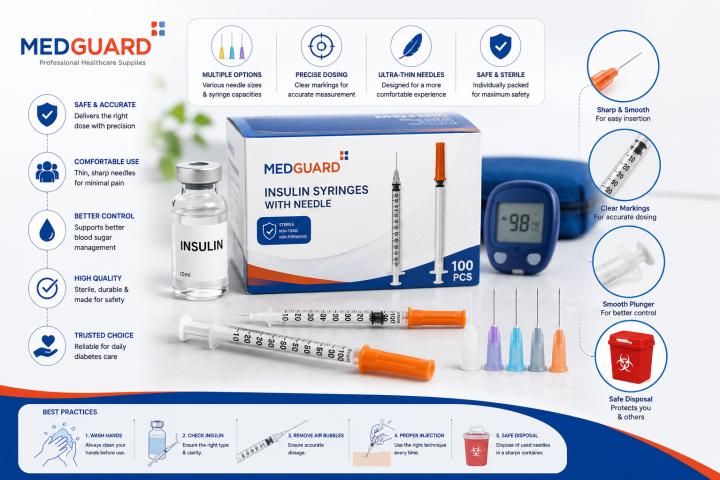
Insulin syringes are specially designed for people with diabetes. These syringes are smaller in size and feature fine needles that reduce discomfort during injection. They are calibrated in insulin units, allowing for precise dosing. Insulin syringes are commonly used for daily self-administration, and reliable options from Medguard help ensure accuracy and comfort for patients managing their condition.
Tuberculin Syringes
Tuberculin syringes are used when small and precise measurements are required. Typically holding up to 1 ml, they are commonly used for tuberculosis testing, allergy testing, and pediatric injections. Their detailed markings make them ideal for low-dose applications.
Luer Lock and Luer Slip Syringes
Luer lock syringes are designed with a threaded tip that allows the needle to be securely attached. This prevents leakage and ensures a firm connection, making them suitable for high-pressure injections and thicker medications. In contrast, Luer slip syringes have a push-fit design that allows for quick attachment and removal of needles, making them convenient for routine procedures.
Catheter Tip Syringes
Catheter tip syringes have a wider tip and are not used with needles. They are commonly used for wound irrigation, tube feeding, and flushing medical equipment. These syringes are especially useful in both hospital and home care environments.
Oral Syringes
Oral syringes are needle-free and are used to administer liquid medications by mouth. They are particularly useful for children and elderly patients, as they provide accurate dosing and are easier to use compared to traditional measuring cups.
Safety Syringes
Safety syringes are designed to reduce the risk of needle-stick injuries and prevent reuse. They often include features such as retractable needles or protective shields. These syringes are widely used in vaccination programs and clinical environments where safety is a top priority. Many healthcare providers rely on safety syringes from Medguard to maintain hygiene standards and protect both patients and medical staff.
Syringes by Size
Syringes are also categorized by size. Smaller syringes, such as 1 to 3 ml, are used for standard injections, while medium sizes like 5 to 10 ml are used for moderate fluid administration. Larger syringes, ranging from 20 to 60 ml, are typically used for irrigation and feeding purposes.
Why Choosing the Right Syringe Matters
Choosing the right syringe is essential for accurate dosage, patient comfort, and overall safety. Using the wrong type can lead to incorrect dosing, leakage, or increased risk of infection. For this reason, healthcare professionals must carefully select the appropriate syringe based on the procedure and patient needs.
Conclusion
From insulin syringes used in daily diabetes care to advanced safety syringes designed to prevent injuries, each type serves a specific purpose in modern healthcare. High-quality products from trusted providers like Medguard ensure reliability, safety, and efficiency in medical practices.
Original Source :- https://trackcourier.xyz/different-types-of-syringes-and-their-medical-uses/