
Healthcare organizations are in the continuous production of how to work more efficiently and less administration. Workflow automation is one of the most important healthcare administration innovations. In medical billing, automation is reshaping the way clinics and healthcare professionals are managing claims, payments as well as handling complicated administrative functions.
Healthcare practices can also enhance accuracy, hasten the billing claim processing, and improve the overall financial performance by incorporating automated systems into the billing processes.
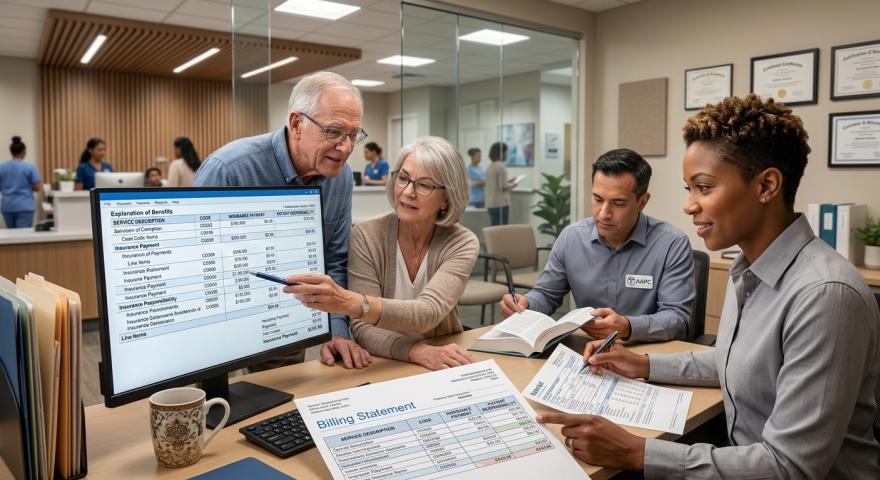
Medical billing processes entail a number of processes, which encompass patient registration, insurance check, codes, claim preparation and payment tracking. Most of these jobs used to be done manually and this normally resulted to errors, delays, and inefficiencies.
Automation of workflow automates these processes through the implementation of computer-aided tools and programs that in turn process repetitive administrative roles automatically.
Understanding Workflow Automation in Medical Billing
Workflow automation is a technology that is used to automatize the routine processes and be in control of them without necessarily being under direct manual control. Automation tools in medical billing have been used in the generation of claims, insurance eligibility, posting of payment, and in the case of a denial. The use of professional medical billing services by many healthcare providers incorporating automated systems also plays a crucial role in providing claim processing with proper revenue cycle management.
These systems will minimize human error and make billing processes to have a workflow. Through automation of repetitive processes, the health practitioners are able to minimize the administrative burden and concentrate more on patients.
Automation offers a better communication system between billing departments, insurance companies and healthcare providers as it can be ensured information flows easily across the systems.
Improving Accuracy in Billing Processes
Accuracy of coding and documentation are one of the greatest medical billing challenges. Minor errors in patient documentation or billing code may result in reimbursement or neglect of payments.
Automation of the workflow can be used to curb these errors through automatic validation of data prior to filing claims. Automation is able to identify the absence of information or misplaced codes or formatting and warn billing personnel prior to the claim being filed.
Such accuracy is a major boost on the acceptance rates of claims and saves time due to claims that would otherwise be rejected and the need to redraft such claims.
Faster Claim Processing and Reimbursements
The traditional system of billing tends to increase delays in making claims and payment. Employees are required to read paperwork, compile claims and manual monitoring of payment status; this may cause delays.
The automated billing processes can speed up these processes by sending the claims electronically and retrieving the claims in real-time. The insurance verification and updates on the status of claims can be automated, and so the billing teams can be able to detect a problem promptly.
This means that healthcare providers will receive reimbursement at a quicker pace and have a more steady cash flow.
Enhanced Revenue Cycle Management
Revenue cycle management entails handling all matters related to patient care such as appointments, and final payments. Automation of workflow is very relevant in enhancing this process.
Electronic systems will monitor all activities done in the billing process and generate comprehensive financial statements. With the aid of these reports, healthcare administrators are able to know the trends in revenues, detect billing problems, and make wise financial decisions.
Revenue cycle management results in a more stable financial condition of healthcare practices.
Reducing Administrative Workload
Medical billing consumes a lot of administrative work. Employees can work hours in going through the patient records, checking on the insurance cover, and claims.
Automation of workflow can lessen this burden by automating repetitive work. As an illustration, automated mechanisms can be used to check the eligibility of the patients, claim and generate invoices without human intervention.
It will enable the administrative personnel to engage in more complicated work and will enhance the overall productivity of the healthcare practice.
Strengthening Compliance and Data Security
There are strict regulatory standards that healthcare organizations have to adhere to in dealing with patient information and in making insurance claims. Legal action and financial fines should be prevented by ensuring compliance.
Automated billing systems are useful in assuring compliance by standardizing documentation and ensuring safe records. These systems also monitor billing operations and offer audit trails of the activities that assist health care providers to achieve regulatory provisions.
Also, automation minimizes the chances of data breach since the systems of handling patient information are secure digital systems.
Supporting Scalable Healthcare Operations
The increases in the healthcare practices make their billing operations more complicated. More efficient billing processes are demanded by the increased volumes of patients and more services.
Workflow automation offers scalability where efficiency allows the administrative workload to be managed by increasing the flow of claims. With automated systems, several tasks can be processed at the same time and the operations of the billing process will be efficient as the practice is scaled up.
This scaling enables the healthcare organizations to concentrate on expansion without incurring losses on unproductive financial management.
FAQs:
1.What is medical billing workflow automation?
In medical billing, workflow automation is the digital implementation of tools and software to automate administrative functions which includes claim submission, insurance checking, and making payments.
2.What is the way automation enhances medical billing accuracy?
Automating systems authenticate billing data prior to the submission of claims and assist in the detection of mistakes in coding or documentation and decreases rejections of claims.
3.Is workflow automation capable of accelerating insurance claims?
Yes. The automated systems send claims electronically and monitor their progress in real time, and this assists healthcare providers to receive payments faster.
4.Is small healthcare appropriate to use workflow automation?
Yes. The automation tools can be configured to suit both small clinics and big healthcare organizations and assist them to document the billing processes more efficiently.
5.Does it decrease the work load of the administration with automation?
Robots can perform routine functions, and the healthcare workers will be able to attend to patients and have more high-level tasks.
Conclusion
Medical billing operations are being altered with automation of workflow by enhancing efficiency, accuracy, and financial management. Automating regular billing functions also enable healthcare organizations to decrease administrative workload, decrease mistakes, and expedite the processing of claims.
Better revenue cycle management, adherence to healthcare regulations as well as valuable financial insights are also possible with automated billing systems. With the further implementation of digital technologies in healthcare, the workflow automation will become a more significant factor that will allow medical practices to become more efficient and at the same time, generate good profits