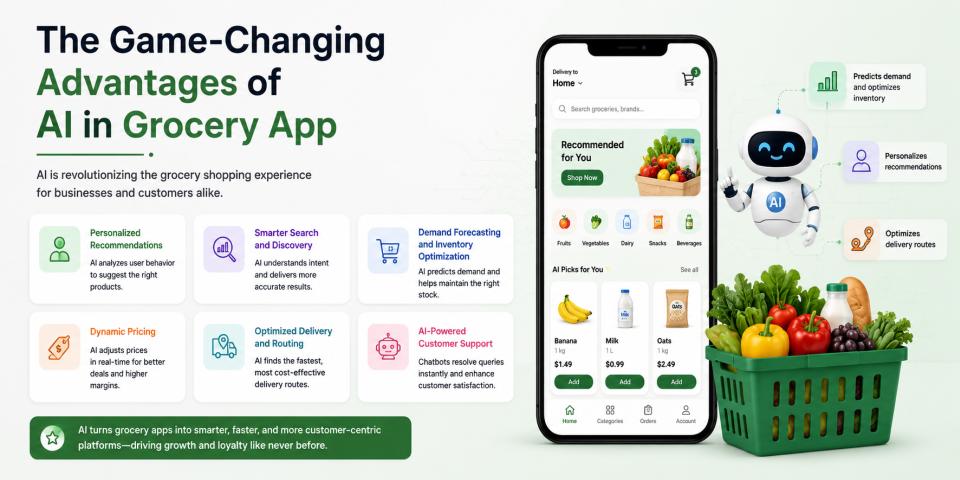
There is a revolution happening within the grocery industry through continuous change by AI that is changing how consumers purchase their groceries and how companies conduct their operations. In many ways, AI has enabled faster services from grocery platforms, including personalized product recommendations and customer support systems.
Indeed, companies are adopting AI-based technology in their solutions for the Grocery App. This is because the trend toward online grocery purchasing is on the rise, and AI will continue to play an important role in the process.
What is AI in Grocery?
AI in Groceries is all about applying various artificial intelligence tools, such as machine learning, predictive analytics, natural language processing, and computer vision in order to increase efficiency within the grocery shopping experience and in the business itself. The mentioned technologies allow analyzing customers' behavior and making business decisions based on these insights.
The implementation of AI can lead to a better understanding of customer demands, more efficient delivery, and optimized inventory management.
Top Advantages of AI in Grocery Shopping
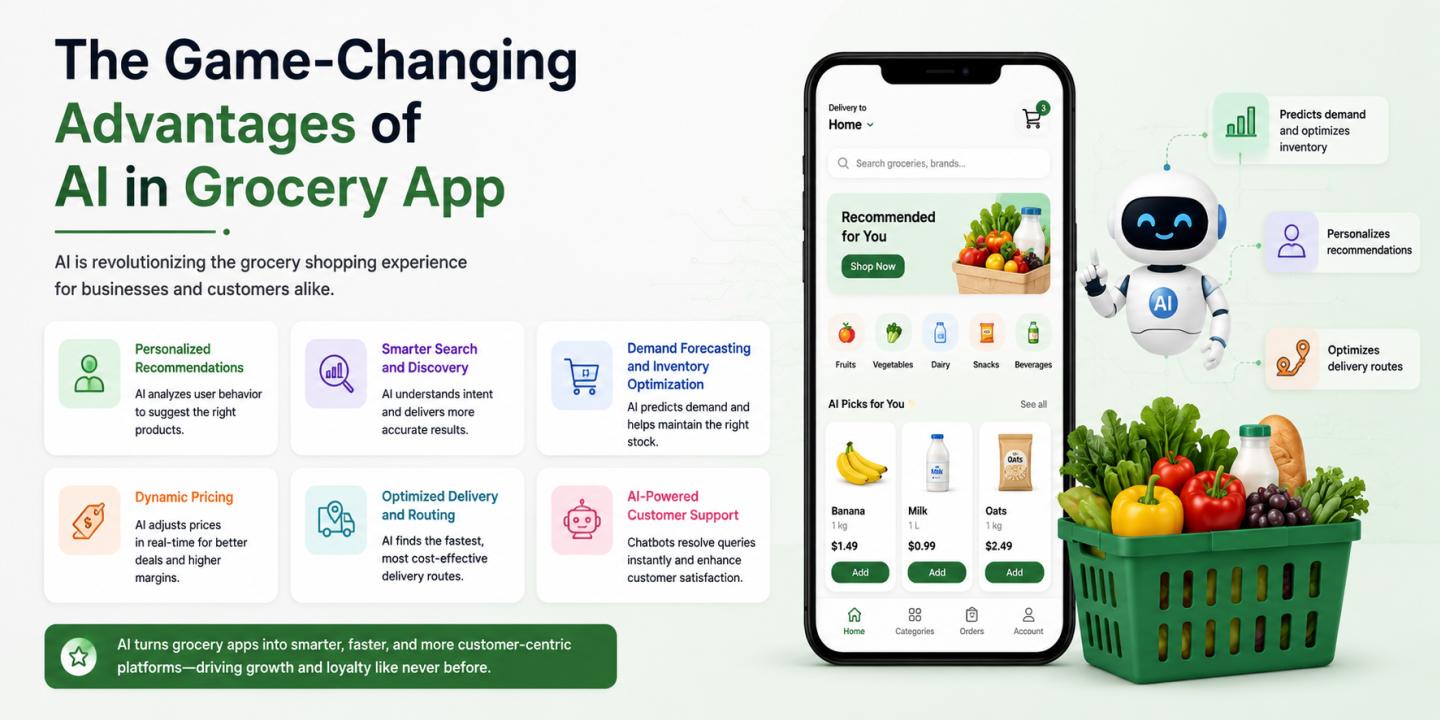
1. Personalized Product Recommendations
One of the most significant benefits of AI in Grocery Shopping is the ability to provide personalized recommendations. AI analyzes customer purchase history, browsing behavior, and preferences to suggest relevant products.
Benefits include:
- Improved customer engagement
- Increased average order value
- Better shopping experiences
- Higher customer retention rates
Customers appreciate receiving suggestions that match their needs, making shopping faster and more convenient.
2. Smarter Inventory Management
Managing inventory is one of the biggest challenges for grocery businesses. AI helps predict demand patterns and stock requirements based on historical sales data, seasonal trends, and customer behavior.
Advantages include:
- Reduced stock shortages
- Minimized product wastage
- Improved inventory accuracy
- Better supply chain management
This ensures customers can find the products they need while businesses avoid overstocking.
3. Faster Search and Product Discovery
AI-powered search functionality allows customers to quickly find products using voice search, natural language queries, or image recognition.
Features include:
- Intelligent search suggestions
- Voice-enabled shopping
- Product categorization
- Faster navigation
This improves the overall user experience and reduces the time spent searching for products.
4. Enhanced Customer Support
AI chatbots and virtual assistants provide instant responses to customer inquiries, helping businesses offer round-the-clock support.
Benefits include:
- Immediate assistance
- Reduced support costs
- Faster issue resolution
- Improved customer satisfaction
- AI-powered support systems can handle common questions related to orders, deliveries, refunds, and product availability.
5. Improved Delivery Efficiency
AI helps optimize delivery operations by analyzing traffic conditions, delivery locations, weather patterns, and driver availability.
Benefits include:
- Faster deliveries
- Lower transportation costs
- Better route planning
- Improved customer satisfaction
These capabilities are particularly valuable for businesses operating an on-demand grocery delivery app where timely delivery is critical.
6. Dynamic Pricing Strategies
AI can automatically adjust product pricing based on demand, competitor pricing, inventory levels, and market conditions.
Advantages include:
- Increased profitability
- Better pricing competitiveness
- Improved sales performance
- Optimized promotional campaigns
Businesses can make informed pricing decisions without constant manual intervention.
7. Fraud Detection and Secure Payments
AI systems monitor transactions in real time and identify suspicious activities that may indicate fraud.
Benefits include:
- Enhanced payment security
- Reduced financial risks
- Improved customer trust
- Faster fraud prevention
Secure transactions help build confidence among customers using online grocery platforms.
8. Predictive Analytics for Business Growth
AI analyzes large volumes of data to identify future trends and customer demands.
Businesses can use predictive analytics to:
- Forecast sales
- Plan marketing campaigns
- Improve inventory purchasing
- Enhance operational efficiency
These insights help grocery businesses make smarter strategic decisions.
The Impact of AI in Online Grocery Shopping
The integration of AI in online Grocery Shopping has transformed the way customers expect things and the new way businesses will operate. Today’s consumers expect personalized services, instant help, relevant recommendations, and timely delivery.
Through the use of AI in the grocery shopping platform, such expectations can be achieved with minimal complications and at a profit.
Why Businesses Should Invest in AI-Powered Grocery Apps
The grocery sector is becoming more digitized, and companies are always on the lookout for new ways to offer better experiences and make their business more efficient. One of the best technologies for such a purpose is AI in grocery apps. With the help of artificial intelligence, businesses can analyze customers' preferences, automate operations, and provide more personal service.
An AI-enabled grocery app can offer users personalized recommendations based on their purchase history, forecast demand trends, efficiently manage inventory, and make deliveries more efficient. This can help to decrease the cost of business operations and increase customer satisfaction and loyalty. AI can also help build an efficient search system, implement chatbot technology, and offer personalized discounts.
With rising customer expectations, companies need to use more innovations in order to compete. Professional services of Grocery Delivery App Development can help businesses implement all the latest AI technologies.
By introducing AI technologies to grocery apps, companies can increase efficiency, improve earnings, and ensure that customers get a great shopping experience.
Future of AI in Grocery Apps
The future of grocery applications will be increasingly driven by artificial intelligence. Emerging technologies such as autonomous delivery systems, advanced demand forecasting, visual product recognition, and hyper-personalized shopping experiences will continue to reshape the industry.
Businesses that embrace AI early will be better positioned to attract customers, improve efficiency, and drive long-term growth.
Conclusion
AI has become a key factor in changing the grocery industry due to the improved customer experience, process optimization, and improved decision-making. There are numerous advantages of using AI in the grocery sector for both customers and businesses.
Given that customers have increasingly higher demands, businesses need to ensure that they use AI-based apps in the grocery sector to compete in their specific market niche.