There's a sound most drivers dread, that high-pitched squeal every time the brake pedal goes down. Some people turn up the radio. Others tell themselves it'll go away on its own. It never does.
Brakes don't fix themselves, and the longer the warning signs get ignored, the more expensive the eventual repair becomes.
Most people don't avoid brake work because they don't care, they avoid it because they don't know what it's going to cost. Walking into a shop without a clue is uncomfortable, and nobody wants to feel overcharged.
Here's a straightforward breakdown of brake pads and rotors replacement cost, what's typical, what pushes the price up, and how to make sure the money spent is actually worth it.
What These Parts Actually Do
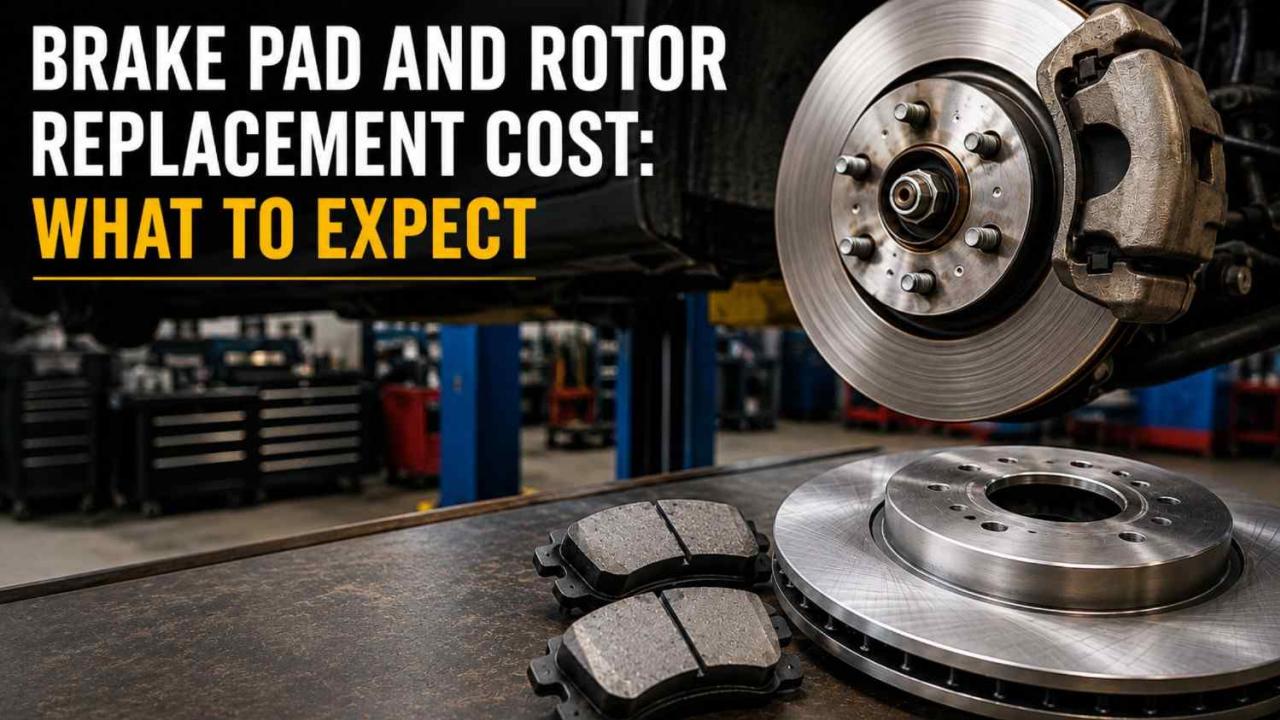
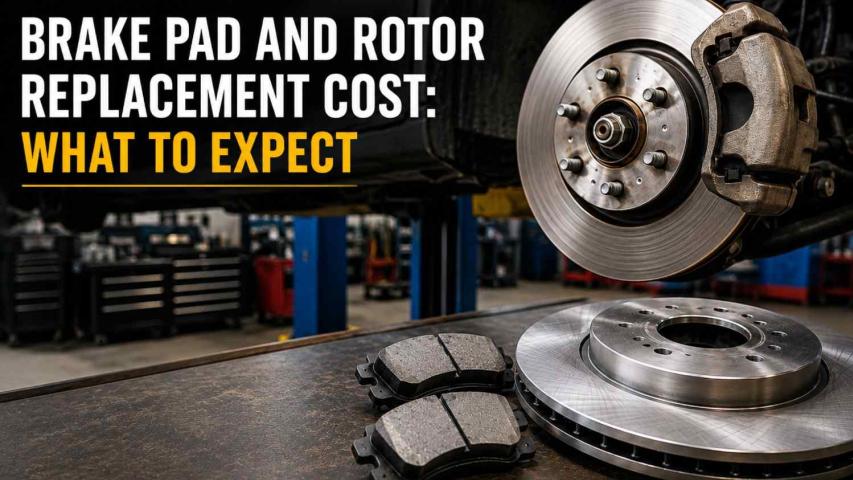
Brake pads are the components that create friction when the pedal is pressed. They clamp against the rotors, large metal discs attached to each wheel, and that friction is what slows the car down.
Both parts wear down over time. Pads thin out gradually with every stop. Rotors can warp from heat, develop grooves from worn-out pads, or wear past their safe thickness after years of use.
When either one goes, the other usually isn't far behind, which is why shops often recommend replacing them together.
What Does It Actually Cost?
Prices vary depending on location, labor rates in a major city can be noticeably higher than in a smaller town. Here are realistic ballpark figures:
Service | Typical Cost (Per Axle) |
Brake pads only | $250 – $475 |
Rotors only | $150 – $350 |
Pads + Rotors together | $400 – $800 |
Full brake job (all 4 wheels) | $700 – $1,500+ |
Front brakes tend to cost more than rear because they handle roughly 70% of stopping force and wear faster.
For trucks, SUVs, and performance vehicles, expect to pay toward the higher end. Luxury and European vehicles can push well past $1,000 per axle once specialized parts are involved.
Why the Price Varies So Much
Two people can bring the same vehicle to two different shops and get quotes that are hundreds of dollars apart. Here's why.
The vehicle itself, a compact sedan and a full-size pickup don't use the same brake components. Bigger, heavier vehicles need heavier-duty parts, and those cost more.
Parts quality — there's a real spectrum here:
Economy parts — cheap upfront, wear out faster
OEM parts — factory-spec, reliable mid-range option
Premium aftermarket — longer-lasting, worth the extra spend for most drivers
Performance parts — built for sport or tow use, highest cost
A shop quoting a suspiciously low price is often using economy parts. Not always a dealbreaker, but worth asking about.
Where the work gets done, dealerships charge the highest labor rates, often 30–40% more than independents. Independent repair shops typically offer the best value. Chain service centers sometimes run promotions, but parts quality can be inconsistent.
When searching for the best brake replacement near me, call a couple of places, ask what brand of parts they install, and get a written estimate before anything gets started.
How to Tell It's Time to Replace
Brake wear doesn't happen overnight. The car usually gives plenty of warning before things get serious.
Sounds that shouldn't be ignored:
Squealing while braking — pads have built-in wear indicators that make noise when they're getting thin. It's the car asking for attention.
Grinding or scraping — the pads are gone. Metal is contacting metal, and the rotors are likely already taking damage.
Clicking or rattling — loose hardware or uneven wear; worth getting checked either way.
Things that feel off:
Pulsing through the pedal — almost always warped rotors
Car pulling to one side when stopping — sticking caliper or uneven pad wear
Stopping distances getting longer — a sign the braking system is losing efficiency
Looking through the wheel spokes can also tell a lot. If the brake pad visible against the rotor looks thinner than a quarter-inch, it's past time to replace.
Should Pads and Rotors Be Replaced Together?
Not always, but often, yes.
If the rotors are still within minimum thickness, have no warping, and aren't grooved or scored, replacing just the pads is perfectly fine. It keeps costs lower and the rotors still have useful life left.
But if rotors are worn thin, visibly scored, or warped from heat, putting new pads on them is a mistake. New pads on bad rotors wear unevenly and fail faster, spending a little less now means spending again much sooner.
It's also worth asking about rotor resurfacing — machining the surface flat instead of replacing it. It's only possible when enough material remains, but when it's an option, it saves money.
A proper brake inspection service will measure rotor thickness before making any recommendation. If a shop pushes rotor replacement without showing measurements, ask why.
Finding a Shop Worth Trusting
The best place for brake repair isn't necessarily the closest or the cheapest. A few things that actually matter:
Get two or three estimates — it takes 20 minutes and can save $150 or more
Ask what parts brand they use — economy parts at a low price may cost more when replacement frequency is factored in
Look for ASE-certified technicians — a recognized certification that means something
Ask about warranty coverage — at minimum, 12 months on parts and labor
Check recent reviews — specifically for honest communication and fair pricing
The shops worth returning to are the ones that explain what needs to be done and what can wait.
Don't Skip Tire Service While You're At It
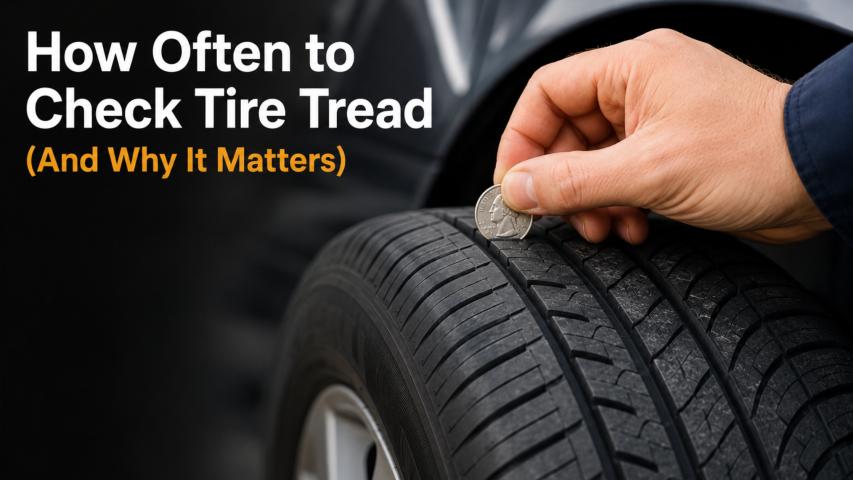
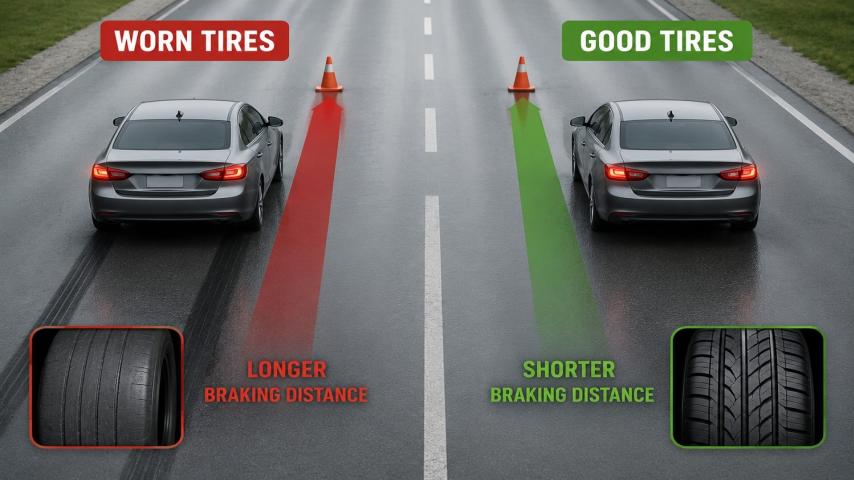
Any visit for brakes and rotors service is the right time to think about tire service as well. Brakes and tires work together, worn or underinflated tires extend stopping distances even when the brake system is perfectly healthy. Many shops bundle a tire rotation with brake work for little or no additional labor charge.
A Few Ways to Make Brakes Last Longer
Don't wait on warning sounds — catching squealing pads before they score the rotors is the biggest money-saver in brake maintenance
Combine services — scheduling brake work alongside a tire rotation or oil change often reduces the total labor bill
Change brake fluid on schedule — fluid absorbs moisture over time (typically every 2–3 years), reducing braking efficiency and accelerating wear
Ease into stops — coasting before braking and maintaining a safe following distance meaningfully extends pad and rotor life
Brake Pads and Rotors Replacement Cost: Fix It Early, Spend Less
Brake pads and rotors replacement cost isn't a mystery, most standard vehicles land between $400 and $800 per axle for a combined job.
Region, vehicle type, and parts quality all shift that number, but the ballpark holds for the majority of everyday cars and trucks.
What doesn't change is the logic: fixing brakes early always costs less than fixing them after the damage spreads. A shop offering transparent pricing and warranty-backed brakes and rotors service is always worth more than whoever promises the lowest number over the phone.
If brakes are squealing, vibrating, or grinding, schedule an inspection before minor wear turns into major repair costs.