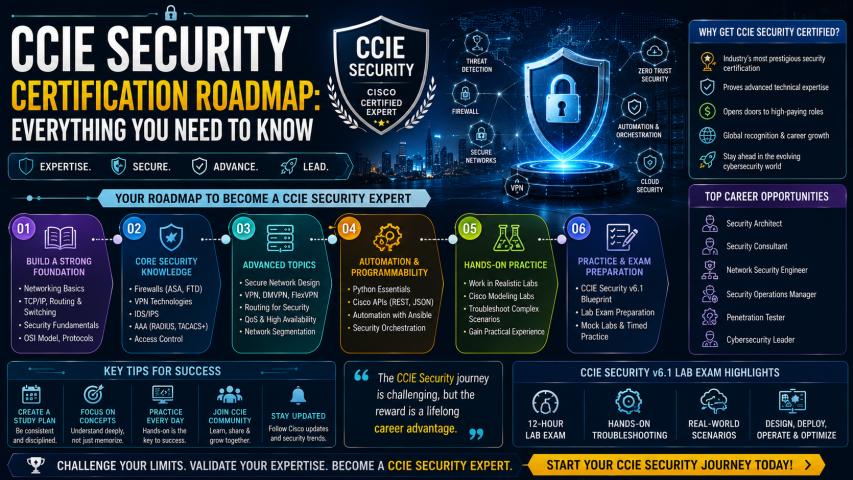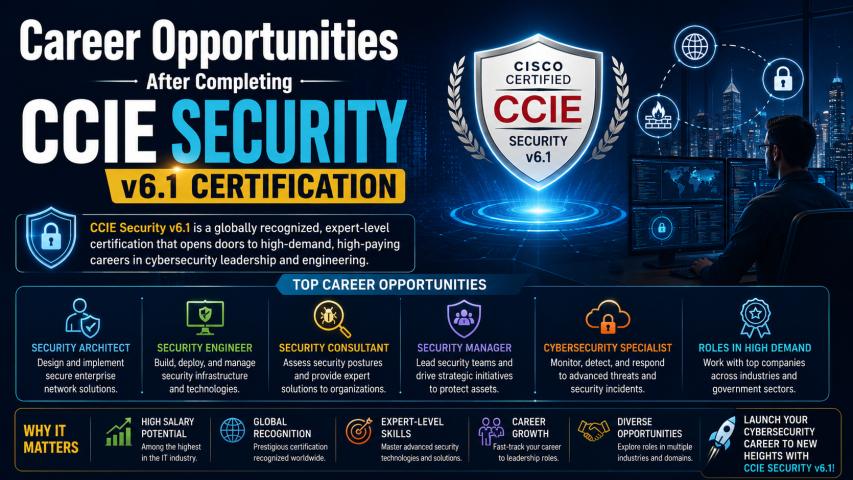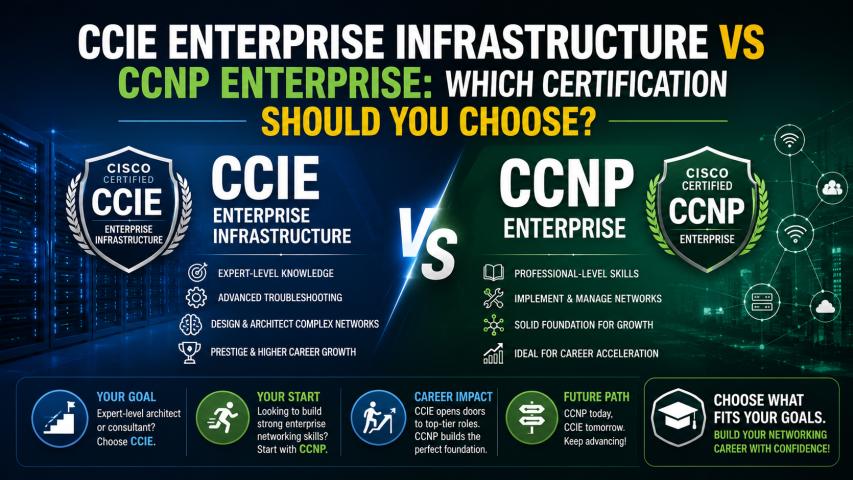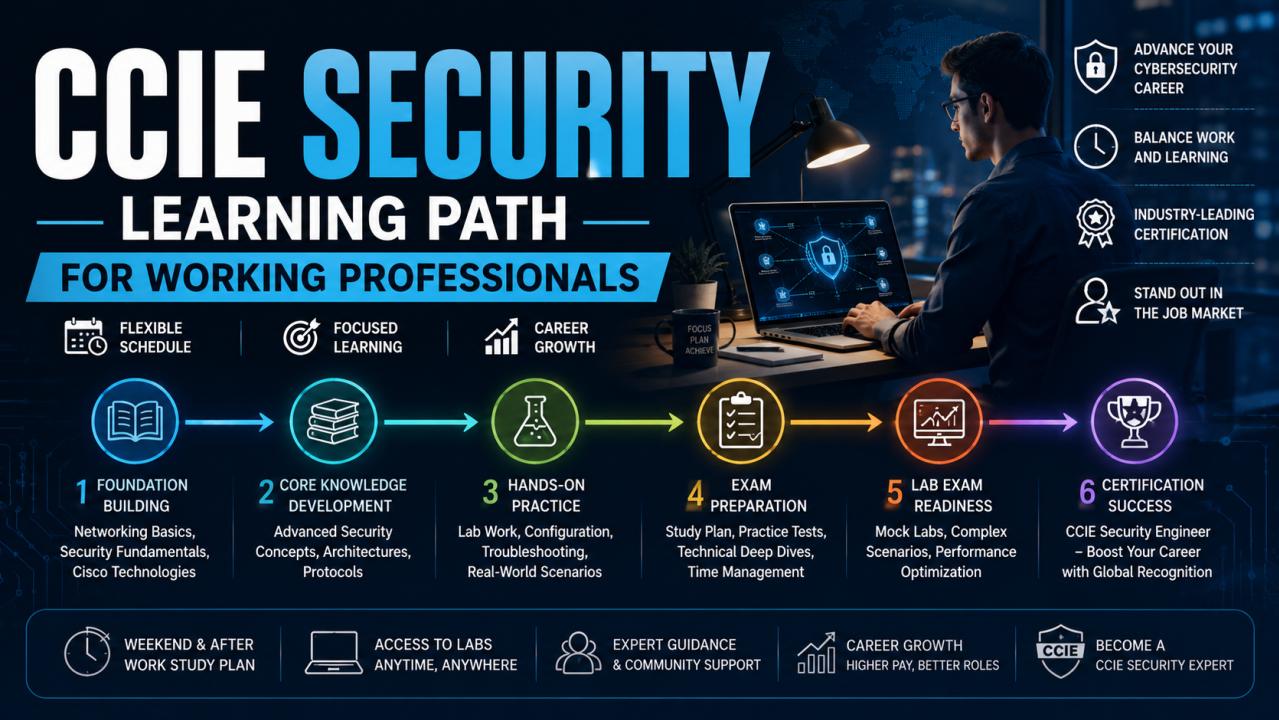
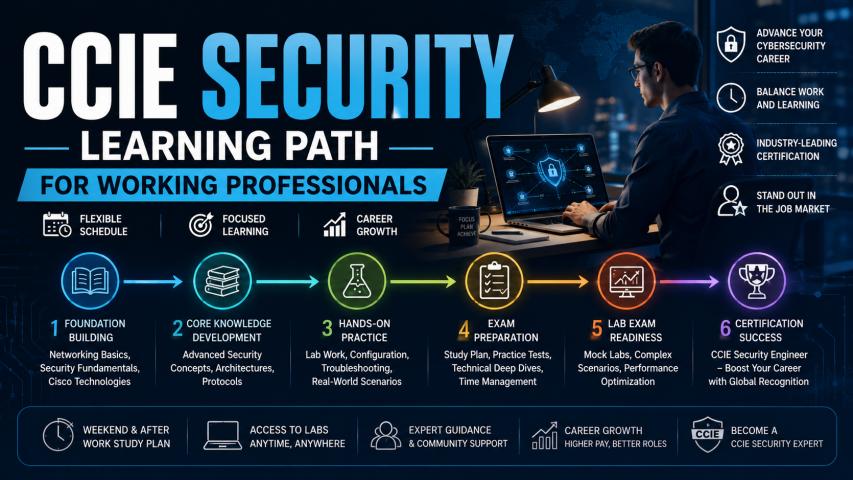
Balancing a full-time job while preparing for an advanced networking certification can be challenging, but it is entirely achievable with the right strategy. The CCIE Security course in Bangalore is an excellent option for working professionals who want to enhance their cybersecurity expertise without interrupting their careers. Designed to build advanced enterprise security skills, the certification equips candidates with the knowledge and practical experience needed to secure modern network infrastructures and tackle complex cybersecurity challenges.
For professionals already working in networking, system administration, or cybersecurity, following a structured learning path can make preparation more efficient and manageable. This guide outlines a practical roadmap to help working professionals successfully prepare for the CCIE Security certification while balancing work and personal commitments.
Why CCIE Security Is a Valuable Certification for Working Professionals
Employers seek experts who can design, implement, secure, and troubleshoot enterprise security environments.
CCIE Security certification helps professionals:
Develop advanced enterprise security skills.
Validate practical networking expertise.
Strengthen technical problem-solving abilities.
Improve career advancement opportunities.
Increase credibility with employers.
Stay updated with modern security technologies.
For experienced professionals, this certification represents an opportunity to build expertise that aligns with evolving industry requirements.
Evaluate Your Current Skill Level
Before beginning your preparation, assess your existing technical knowledge.
Consider your understanding of:
Enterprise networking
Routing and switching
Network security fundamentals
VPN technologies
Firewall administration
Troubleshooting methodologies
Identifying strengths and weaknesses allows you to create a realistic learning plan.
Understand the Certification Blueprint
A successful preparation strategy begins with understanding the certification objectives.
Review the exam blueprint carefully and become familiar with major technology areas, including:
Secure network infrastructure
Cisco Secure Firewall
Identity services
Virtual Private Networks
Network automation
Secure access technologies
Enterprise security operations
Knowing the exam scope helps you organize your study schedule more effectively.
Create a Realistic Study Plan
Working professionals often have limited study time, making structured planning essential.
Set Weekly Learning Goals
Instead of attempting to cover multiple technologies in a short period, divide your preparation into smaller milestones.
Examples include:
One networking topic per week.
One lab exercise each day.
Weekly revision sessions.
Monthly progress assessments.
Consistent progress is more effective than irregular intensive study sessions.
Establish a Fixed Study Schedule
Reserve dedicated study time outside work hours.
Many professionals succeed by studying:
Early mornings
Evenings after work
Weekends for extended lab practice
Maintaining a regular schedule improves knowledge retention.
Build Strong Networking Fundamentals
Advanced security concepts rely heavily on networking knowledge.
Strengthen your understanding of:
Routing Technologies
Focus on:
Dynamic routing protocols
Route redistribution
Policy-based routing
High availability
Switching Technologies
Develop expertise in:
VLANs
Layer 2 switching
Layer 3 switching
Spanning Tree Protocol
Link aggregation
Strong networking fundamentals simplify advanced security learning.
Master Enterprise Security Concepts
After strengthening networking skills, move toward enterprise security technologies.
Study topics such as:
Firewall deployment
Secure network architecture
Conclusion
Preparing for an advanced networking certification while managing professional responsibilities requires discipline, consistency, and a well-structured learning plan. By building strong networking fundamentals, mastering enterprise security technologies, practicing hands-on labs, improving troubleshooting skills, and learning automation, working professionals can steadily progress toward certification success without disrupting their careers. Combining practical experience with continuous learning also helps professionals adapt to the evolving cybersecurity landscape and remain competitive in the job market. For individuals seeking expert guidance, flexible schedules, and comprehensive practical training, CCIE Security training in Bangalore provides a structured pathway to develop advanced cybersecurity skills and achieve long-term career growth.