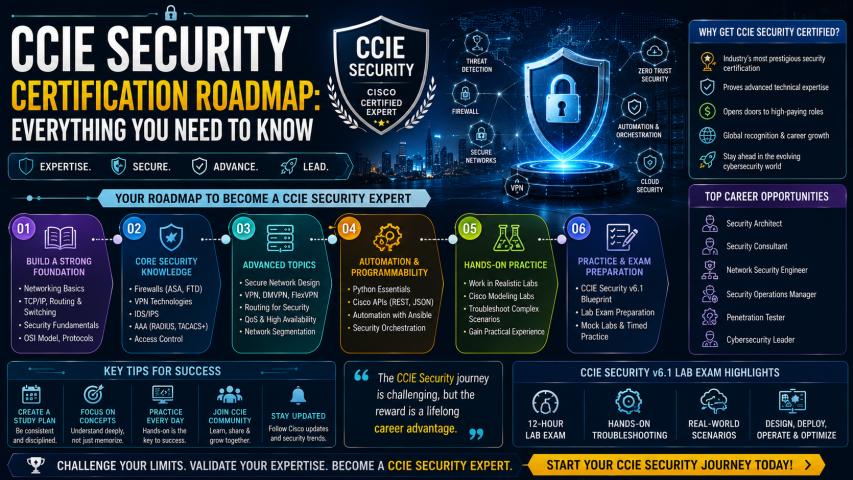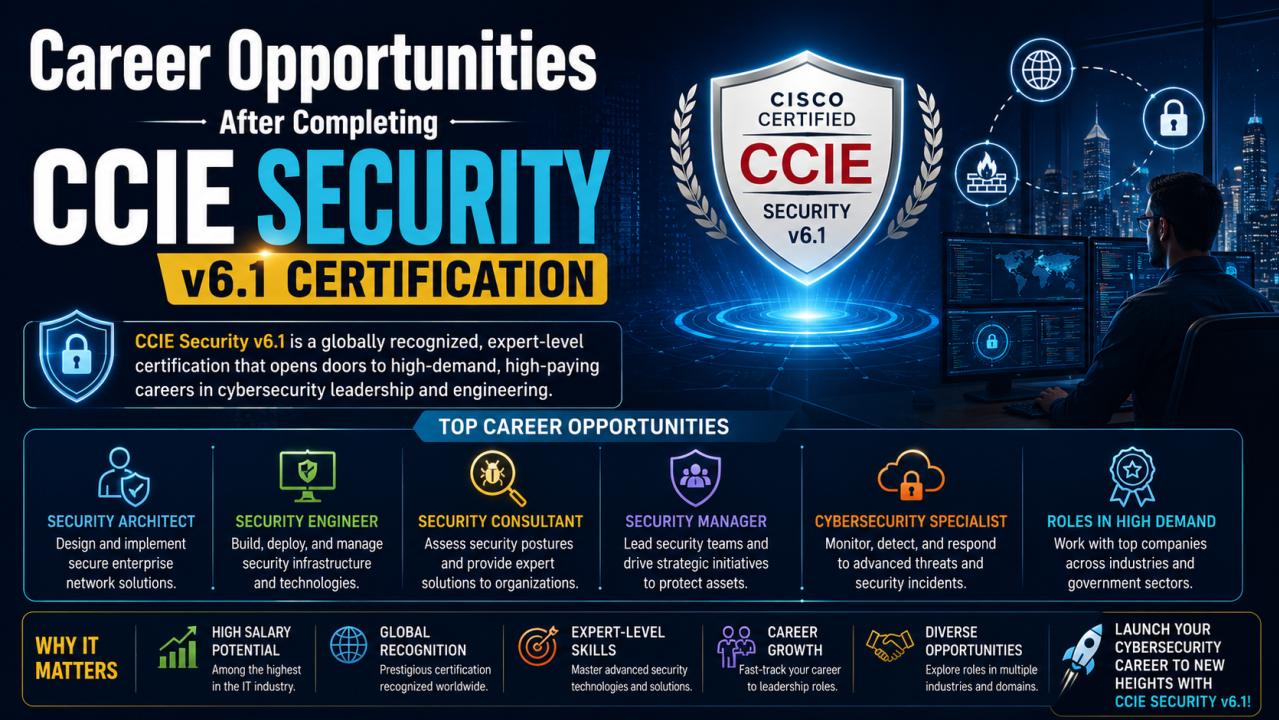
The demand for cybersecurity professionals continues to grow as organizations face increasingly sophisticated cyber threats. Businesses across industries are investing heavily in securing their networks, applications, cloud environments, and critical data. Earning a CCIE Security certification demonstrates advanced expertise in designing, implementing, managing, and troubleshooting enterprise security solutions, making it one of the most respected credentials in the networking and cybersecurity industry.
Completing the CCIE Security v6.1 certification not only validates your technical knowledge but also opens the door to a wide range of rewarding career opportunities. Whether you aspire to work for multinational corporations, cloud service providers, financial institutions, or government organizations, this certification equips you with the practical skills needed to excel in today's competitive cybersecurity landscape.
Why CCIE Security v6.1 Certification Is Highly Valued
CCIE Security is recognized worldwide as Cisco's expert-level certification for network security professionals. Unlike entry-level certifications, it focuses on advanced technologies, hands-on problem-solving, and real-world enterprise security scenarios.
Organizations value certified professionals because they can:
Design secure enterprise networks
Implement advanced security architectures
Protect critical business infrastructure
Troubleshoot complex security issues
Improve regulatory compliance
Support digital transformation initiatives
These capabilities make certified professionals valuable assets across multiple industries.
Industries Hiring CCIE Security Professionals
Cybersecurity is no longer limited to technology companies. Every industry that relies on digital infrastructure requires skilled security professionals.
Information Technology
IT companies employ CCIE Security professionals to secure enterprise networks, cloud environments, and customer infrastructure.
Financial Services
Banks, insurance companies, and financial institutions require advanced security expertise to protect customer information and financial transactions.
Healthcare
Hospitals and healthcare providers depend on secure networks to safeguard patient records and ensure uninterrupted medical services.
Telecommunications
Telecom providers manage large-scale enterprise and customer networks that require robust security controls and continuous monitoring.
Government Organizations
Government agencies require experienced professionals to secure sensitive data, public infrastructure, and national information systems.
Manufacturing
Manufacturing companies implement cybersecurity measures to protect industrial systems, operational technology, and connected devices.
Network Security Engineer
One of the most common career paths after earning CCIE Security certification is becoming a Network Security Engineer.
Primary Responsibilities
Professionals in this role typically:
Configure enterprise firewalls
Secure network infrastructure
Implement VPN solutions
Monitor network traffic
Troubleshoot security incidents
Enforce security policies
Maintain high network availability
Infrastructure resilience
Professionals with advanced Cisco security expertise will remain well-positioned for long-term career opportunities.
Conclusion
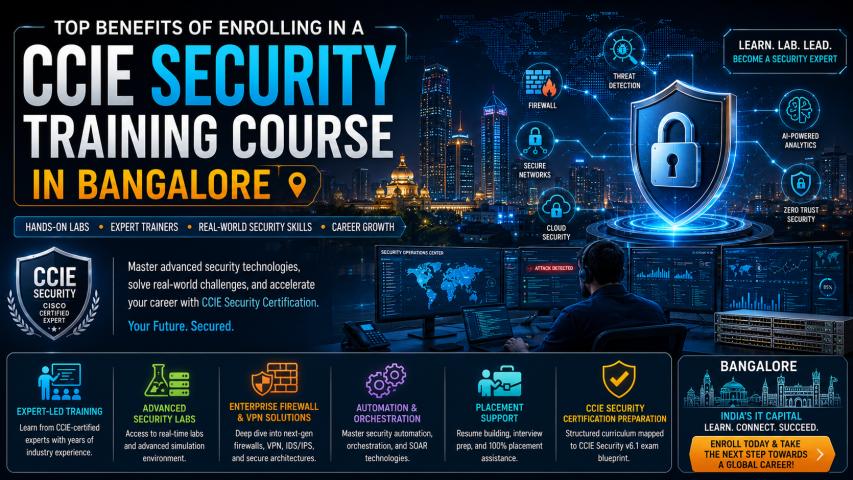
Completing the CCIE Security v6.1 certification is a significant achievement that prepares professionals for a wide range of advanced cybersecurity roles across industries. From Network Security Engineer and Cybersecurity Engineer to Security Architect, SOC Analyst, and Cloud Security Engineer, the certification validates the expertise needed to secure modern enterprise infrastructures. By combining deep technical knowledge with hands-on lab experience, professionals develop the skills required to protect organizations against evolving cyber threats and support critical business operations. Enrolling in a comprehensive CCIE Security Training program can further strengthen practical capabilities, enhance career prospects, and provide a solid foundation for long-term success in the dynamic field of enterprise cybersecurity.