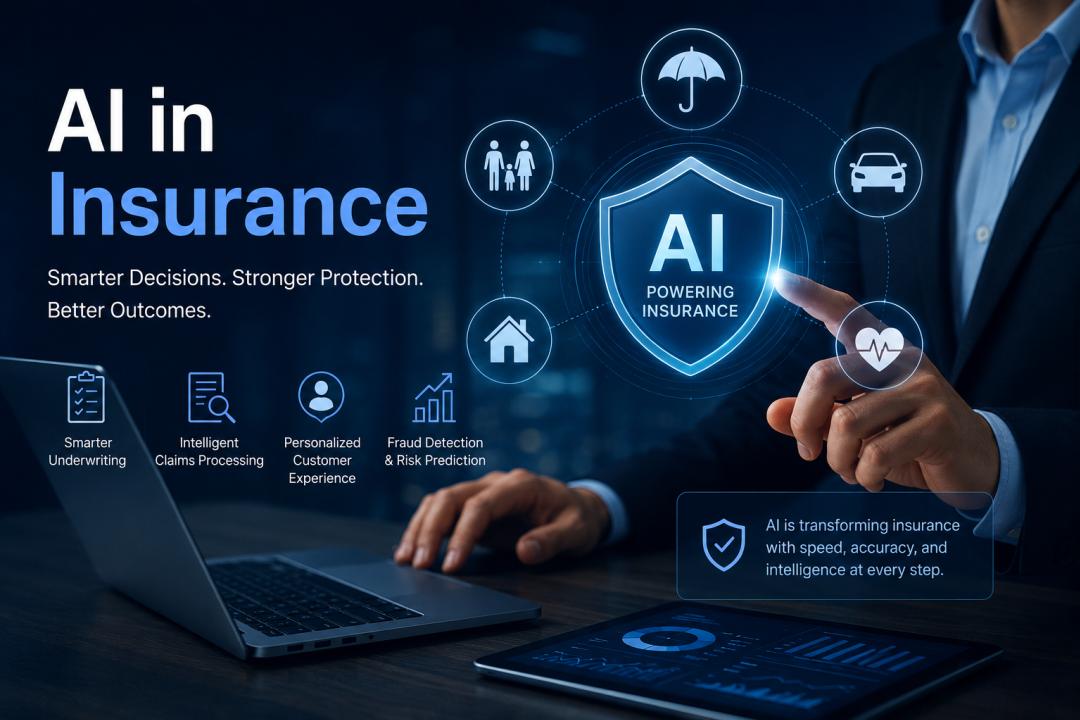
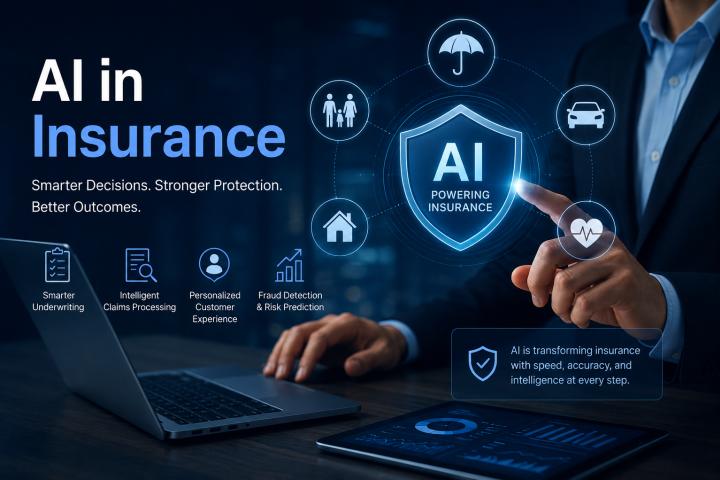
Generative AI is reshaping the insurance industry by enabling faster decisions, improving customer experiences, and automating time-consuming processes. From underwriting and claims processing to customer support and fraud detection, insurers are leveraging large language models (LLMs) and AI copilots to increase efficiency while reducing operational costs. However, realizing these benefits requires more than adopting advanced AI technologies—it demands a strong focus on governance, security, and compliance.
As insurance organizations embrace Generative AI, the challenge is no longer whether to use AI, but how to deploy it responsibly and safely.
Accelerating Underwriting and Risk Assessment
Traditional underwriting often requires reviewing lengthy applications, medical records, inspection reports, and historical claims data. Generative AI can rapidly summarize documents, identify relevant risk factors, and assist underwriters by generating preliminary assessments based on available information.
Rather than replacing human expertise, AI serves as a copilot that helps underwriters process more applications with greater consistency. Human reviewers remain responsible for validating recommendations and making final decisions, ensuring that AI supports—not replaces—professional judgment.
Enhancing Claims Processing
Claims handling is another area where Generative AI is delivering measurable value. AI assistants can summarize claim documents, extract information from photos and reports, draft customer communications, and recommend next steps based on policy guidelines.
This automation reduces administrative work and allows claims professionals to focus on complex cases that require human investigation. Faster claims processing improves customer satisfaction while helping insurers reduce operational expenses.
To ensure reliability, insurers should validate AI-generated summaries and recommendations before they influence claim outcomes, particularly for high-value or sensitive claims.
Improving Customer Service
Insurance customers increasingly expect instant, personalized support across digital channels. Generative AI-powered chatbots and virtual assistants can answer policy questions, explain coverage, assist with renewals, and guide customers through claims submissions at any time of day.
Unlike traditional rule-based chatbots, modern AI assistants understand natural language and provide conversational responses tailored to customer inquiries. This improves accessibility while reducing call center workloads.
However, customer-facing AI must operate within clearly defined guardrails. Responses should be monitored to prevent inaccurate policy interpretations, misleading advice, or disclosure of confidential customer information.
Strengthening Fraud Detection
Insurance fraud continues to evolve, making traditional detection methods less effective. Generative AI can assist investigators by analyzing claim narratives, identifying inconsistencies across documents, summarizing investigation findings, and highlighting unusual behavioral patterns for further review.
When combined with machine learning and analytics, AI helps investigators prioritize suspicious cases without replacing established fraud detection systems. Human oversight remains essential before taking enforcement actions or denying claims.
Supporting Employees with AI Copilots
Many insurers are deploying internal AI copilots that help employees search policy documents, summarize regulations, draft communications, and answer procedural questions.
These tools improve productivity by reducing time spent searching across multiple systems while ensuring employees have faster access to relevant information. When connected to trusted enterprise knowledge bases, AI copilots can significantly improve operational efficiency.
To minimize risk, organizations should implement role-based access controls and ensure AI systems only retrieve information employees are authorized to access.
Why Safe AI Deployment Matters
Despite its advantages, Generative AI introduces new operational and compliance risks. AI models may generate inaccurate information, misunderstand policy language, expose sensitive customer data, or produce responses inconsistent with regulatory requirements.
Insurance decisions often involve financial, legal, and ethical considerations. Even a single incorrect AI-generated recommendation can affect underwriting outcomes, claims decisions, customer trust, and regulatory compliance.
This makes governance a critical component of every enterprise AI initiative.
Building Trust Through AI Governance
Safe AI adoption requires continuous oversight throughout the AI lifecycle rather than one-time testing before deployment.
Organizations should establish governance frameworks that include:
Continuous monitoring of AI interactions and outputs.
Human review for high-impact underwriting and claims decisions.
Protection of personally identifiable information (PII) and confidential business data.
Detection of hallucinations, prompt injection attempts, and policy violations.
Comprehensive audit logs for compliance and internal reviews.
Regular model performance evaluations and retraining when business conditions change.
By embedding governance into production environments, insurers can identify emerging risks before they affect customers or business operations.
Preparing for Evolving Regulations
Insurance companies operate within highly regulated environments where transparency, accountability, and fairness are essential. Regulatory frameworks such as the EU AI Act, NIST AI Risk Management Framework (AI RMF), and ISO/IEC 42001 encourage organizations to implement ongoing monitoring, risk management, and documented governance processes for AI systems.
Organizations that establish robust governance today will be better prepared to meet future regulatory expectations while demonstrating responsible AI adoption to customers, partners, and regulators.
Looking Ahead
Generative AI represents one of the most significant technological shifts the insurance industry has experienced in decades. It has the potential to streamline underwriting, accelerate claims processing, improve customer engagement, strengthen fraud investigations, and empower employees with intelligent decision support.
Success, however, depends on balancing innovation with responsible oversight. Organizations that combine Generative AI with strong governance, continuous monitoring, and human accountability can unlock meaningful business value while maintaining customer trust and regulatory confidence.
As AI capabilities continue to evolve, insurers that prioritize safe deployment and enterprise governance will be best positioned to innovate responsibly, improve operational resilience, and deliver better outcomes for policyholders in an increasingly digital insurance landscape.