Insurance is fundamentally a data and contract-driven industry. Policies define rights and obligations, premiums create payment events, claims depend on evidence, and payouts often require multiple parties to validate the same information.
Yet traditional insurance infrastructure remains highly fragmented. Policy data may sit in core administration platforms, claims systems, CRM databases, spreadsheets, broker systems, and external data providers. Reconciliation between these systems creates delays, operational costs, and opportunities for errors.
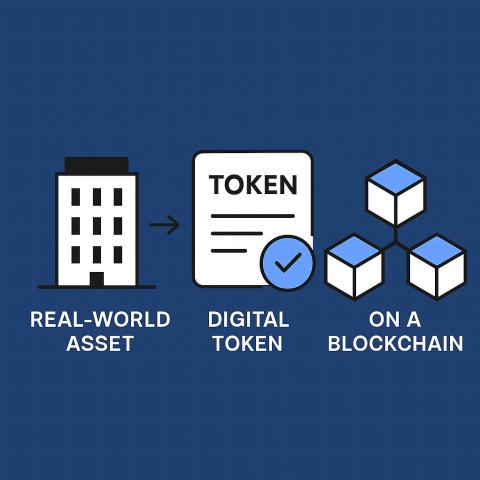
Insurance tokenization infrastructure offers a new architecture for connecting these fragmented processes through blockchain, smart contracts, oracles, digital identity, and compliance controls.
The objective is not to place an entire insurance policy on a blockchain. Instead, enterprises can create a programmable digital representation of selected insurance assets, rights, obligations, and lifecycle events while keeping sensitive information in appropriate off-chain systems.
This article explains the infrastructure required to build scalable and compliant insurance tokenization platforms.
What Is Insurance Tokenization Infrastructure?
Insurance tokenization infrastructure is the technology stack used to create, manage, transfer, monitor, and settle tokenized insurance-related assets.
It typically connects:
Insurance systems → data layer → identity and compliance → tokenization engine → smart contracts → oracle network → workflow automation → blockchain → settlement and reporting
A token can represent different things depending on the product structure.
Examples include:
Policy-linked right
Parametric insurance contracts
Reinsurance interests
Insurance receivables
Risk-pool participation
Insurance-linked securities
Coverage associated with tokenized real-world assets
The exact legal status of the token depends on the underlying contract, jurisdiction, product structure, and applicable regulation.
Why Insurance Needs Tokenization Infrastructure
Insurance processes involve numerous parties that need access to consistent information.
A commercial policy, for example, might involve:
Insurer → Broker → Policyholder → TPA → Reinsurer → Claims Adjuster → Payment Provider
Each participant may operate its own system.
This creates common problems:
Duplicate records
Manual reconciliation
Slow claims processing
Limited visibility
Delayed settlement
Data inconsistencies
Difficult audit trails
Fragmented compliance workflows
Blockchain-based infrastructure can create a shared and verifiable transaction layer while allowing enterprise applications to remain the primary systems of record for sensitive information.
The value comes from coordination and programmability, not from blockchain alone.
The Core Architecture of Insurance Tokenization
A robust insurance tokenization platform typically includes seven interconnected layers.
1. Insurance Data Integration Layer
The first layer connects existing insurance systems to the tokenization infrastructure.
Typical sources include:
Policy administration systems
Underwriting platforms
Claims management systems
Customer relationship management systems
Billing systems
Document management platforms
Broker systems
External data providers
APIs, event-driven integrations, and middleware can synchronize relevant information.
For example:
Policy approved → API event → tokenization platform → token created
The enterprise does not necessarily need to replace its existing core insurance platform.
Instead, tokenization infrastructure can act as a programmable layer around it.
2. Identity and Compliance Layer
Insurance tokenization requires strict participant management.
The platform should determine:
Who owns or controls a token
Whether the participant passed KYC
Whether AML checks are complete
Whether sanctions screening has passed
Whether the user is eligible for a particular product
Whether jurisdictional restrictions apply
Whether a transfer is permitted
This can be implemented as a compliance-aware transaction layer.
For example:
Transfer request → identity verification → sanctions screening → eligibility check → transfer authorization → blockchain transaction
This approach turns compliance from a purely post-transaction process into part of the asset lifecycle.
3. Blockchain Layer
The blockchain provides the shared transaction and state layer.
Insurance enterprises can choose between:
Permissioned Blockchain
A permissioned network provides controlled participation and can be appropriate for insurer, broker, reinsurer, or institutional ecosystems.
Solutions based on technologies such as Hyperledger Fabric can provide permissioned identities, access control, and enterprise-oriented transaction workflows.
Public Blockchain
Public networks can provide broader interoperability, wallet support, transparent transaction history, and access to digital-asset ecosystems.
They may be appropriate when the use case requires public blockchain settlement or interaction with other tokenized assets.
Hybrid Blockchain
A hybrid architecture can keep confidential insurance information inside enterprise infrastructure while using public blockchain rails for selected tokenized assets or transactions.
For many regulated institutions, this hybrid model can provide a practical balance between privacy and interoperability.
4. Tokenization Engine
The tokenization engine converts approved insurance-related rights or assets into digital tokens.
It should support the complete token lifecycle:
Create → Mint → Issue → Transfer → Freeze → Update → Redeem → Burn
The engine should also maintain relationships between the token and the underlying insurance record.
For example:
Token ID
↓
Policy ID
↓
Coverage Status
↓
Effective Date
↓
Expiration Date
↓
Ownership / Beneficiary Reference
↓
Transfer Restrictions
Sensitive policyholder information does not need to be embedded directly into the token.
Instead, the token can reference secure enterprise records.
5. Smart Contracts
Smart contracts provide the programmable layer of insurance tokenization.
They can automate predefined rules such as:
Policy activation
Premium confirmation
Coverage expiration
Eligibility
Transfer restrictions
Payout calculations
Escrow
Settlement
Policy status updates
For example:
Premium received + policy approved → activate coverage
Or:
Verified trigger + active policy + coverage conditions satisfied → initiate payout workflow
Smart contracts are particularly powerful for deterministic insurance products.
However, complex claims involving investigation and judgment should generally retain human oversight.
6. Oracle Infrastructure
Blockchains cannot independently access real-world information.
Insurance products often depend on exactly that information.
This creates the need for oracles.
An oracle connects external data to blockchain-based logic.
Possible insurance data sources include:
Weather stations
IoT sensors
Flight data
GPS systems
Commodity prices
Market data
Agricultural information
Disaster monitoring systems
Property data
Consider a parametric insurance policy covering extreme rainfall.
The workflow could be:
Weather provider → Oracle → Smart contract → Threshold evaluation → Payout workflow
If rainfall falls below or rises above the predefined threshold, the smart contract can execute the approved policy logic.
The oracle becomes part of the risk architecture, so data source quality, validation, redundancy, governance, and dispute procedures are critical.
7. Workflow and Settlement Layer
Tokenization becomes significantly more valuable when blockchain events are connected to enterprise workflows.
For example:
Claim submitted
↓
Eligibility verified
↓
External data validated
↓
Smart contract evaluates rules
↓
Human approval where required
↓
Settlement initiated
↓
Transaction recorded
This workflow can integrate with:
Banking systems
Payment gateways
ERP platforms
Claims platforms
Treasury systems
Accounting systems
The blockchain therefore becomes one component of a larger insurance automation stack.
Compliance Architecture for Insurance Tokenization
Compliance must be incorporated from the beginning rather than added after the token has been created.
KYC and AML
The platform should identify users and validate whether they are eligible to participate.
Sanctions Screening
Wallets and participants may need screening against applicable sanctions requirements.
Transfer Restrictions
Tokens may need rules controlling:
Who can hold them
Where they can be transferred
Which investor categories are permitted
Which jurisdictions are restricted
Data Privacy
Insurance can involve sensitive personal information.
An enterprise architecture should classify data into:
On-chain data
and
Off-chain confidential data
The blockchain can store hashes, references, transaction states, and identifiers while sensitive documents remain under controlled enterprise storage.
Legal Enforceability
The technical token model should align with the legal documentation.
Before production deployment, enterprises should determine:
What legal right does the token represent?
This is especially important when the token represents an economic interest, transferable asset, or insurance-linked investment.
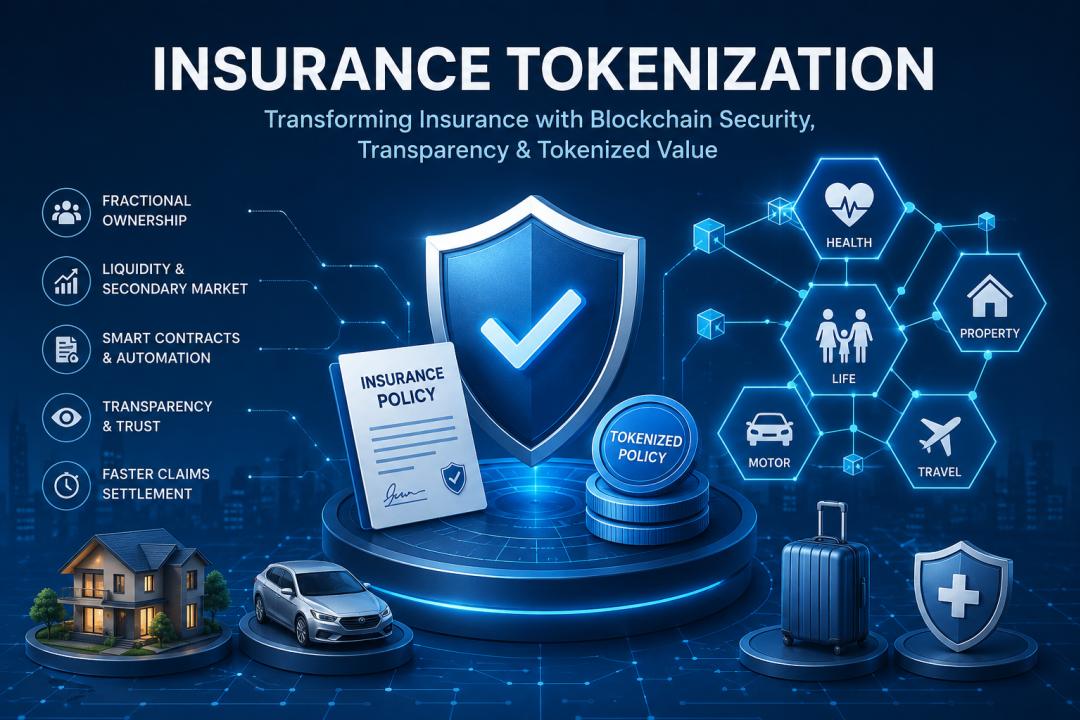
Key Insurance Tokenization Use Cases
Parametric Insurance
Parametric insurance is one of the strongest candidates for blockchain automation because predefined external events can be connected to smart contracts.
Potential products include weather, travel, agriculture, catastrophe, and event-based coverage.
Reinsurance
Tokenization can create digital representations of approved reinsurance interests, supporting exposure tracking, automated reconciliation, and settlement.
Insurance-Linked Securities
Tokenized representations of insurance-linked financial interests can potentially improve lifecycle management, ownership records, and settlement.
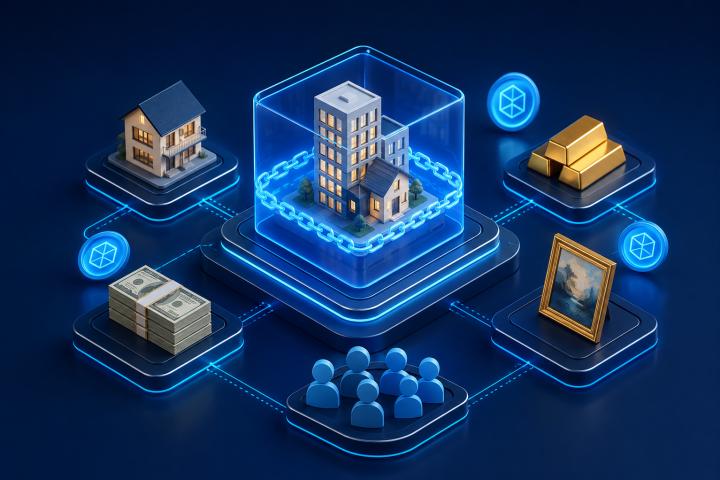
Insurance for Tokenized Real-World Assets
As real estate, commodities, equipment, artwork, and infrastructure become tokenized, the underlying assets still require coverage.
This creates an emerging category:
Insurance infrastructure for tokenized assets.
Embedded Insurance
Insurance can be embedded directly into digital transactions.
For example:
Real estate transaction → property coverage
Vehicle financing → insurance
Travel booking → travel protection
Equipment purchase → equipment insurance
Tokenization can provide the underlying programmable infrastructure for these integrated experiences.
Benefits of a Tokenized Insurance Infrastructure
Greater Transparency
Authorized participants can access a consistent transaction history.
Faster Processing
Programmable workflows can reduce certain manual steps.
Improved Reconciliation
Shared records can reduce discrepancies between participating organizations.
Automated Settlement
Eligible transactions can move through predefined workflows.
Better Auditability
On-chain events can create a tamper-resistant record of relevant transactions.
Programmable Assets
Tokenized insurance assets can interact with other digital assets and enterprise applications.
New Product Innovation
Insurers can experiment with parametric, embedded, and token-linked insurance models.
Challenges to Address
Insurance tokenization also introduces new risks.
Smart-Contract Risk
Software vulnerabilities can affect asset ownership, transfers, and payouts.
Oracle Risk
Incorrect external data can produce incorrect automated outcomes.
Regulatory Uncertainty
Rules surrounding tokenized insurance and financial assets can differ across jurisdictions.
Legacy Integration
Existing insurance systems must remain operational during modernization.
Data Privacy
Public blockchain transactions must be carefully designed around confidential insurance information.
Governance
Enterprises need clear policies for upgrades, disputes, emergencies, and unauthorized transactions.
How to Build an Enterprise Insurance Tokenization Platform
A practical implementation can follow five stages.
1. Select a high-value use case
Start with a process involving multiple parties, repetitive reconciliation, or deterministic events.
2. Define the token
Document exactly what the token represents and which rights, obligations, and restrictions apply.
3. Design the data architecture
Separate confidential off-chain information from blockchain transaction data.
4. Add compliance and automation
Build identity, KYC/AML, transfer controls, smart contracts, workflows, and oracle integrations into the platform.
5. Pilot and scale
Measure claims-processing time, settlement speed, reconciliation effort, manual interventions, and compliance exceptions before expanding the system.
Why Infrastructure Matters More Than the Token
The most important lesson for insurers is that tokenization is not a standalone feature.
A token without:
Identity
Compliance
Policy data
Smart contracts
Oracles
APIs
Workflow automation
Security
Governance
does not create a production-grade insurance solution.
The real transformation happens when these components operate as an integrated infrastructure layer.
Conclusion
Insurance tokenization infrastructure combines blockchain, smart contracts, oracles, policy data, digital identity, compliance, and workflow automation to create programmable insurance processes.
The most practical enterprise strategy is not to put every policy record on-chain. Instead, insurers can selectively tokenize insurance assets and lifecycle events while keeping sensitive policy and claims information in secure off-chain environments.
From parametric insurance and reinsurance to insurance for tokenized real-world assets, the technology creates opportunities to automate deterministic processes, improve reconciliation, increase transparency, and accelerate settlement.
For insurers, reinsurers, brokers, and financial institutions, the strategic question is no longer simply “How do we put insurance on blockchain?”
It is:
“Which insurance assets and processes become more efficient, transparent, and programmable when supported by tokenization infrastructure?”
That is where enterprise value begins.
FAQ
What is insurance tokenization infrastructure?
It is the technology stack that connects insurance systems with blockchain, tokenization engines, smart contracts, oracles, compliance, and workflow automation.
What blockchain is best for insurance tokenization?
There is no universal answer. Permissioned, public, and hybrid architectures can each be appropriate depending on privacy, governance, interoperability, and regulatory requirements.
What role do smart contracts play in insurance?
Smart contracts automate predefined and deterministic rules such as eligibility, policy states, transfer restrictions, and parametric payouts.
Why are oracles important?
Oracles provide verified external data that smart contracts need to evaluate real-world insurance events.
Can insurance policies be fully stored on-chain?
A complete on-chain record is not usually necessary. Sensitive personal and claims data can remain off-chain while blockchain stores selected references, states, and transactions.
What are the best insurance tokenization use cases?
Parametric insurance, reinsurance, insurance-linked assets, embedded insurance, and insurance for tokenized real-world assets are strong candidates.