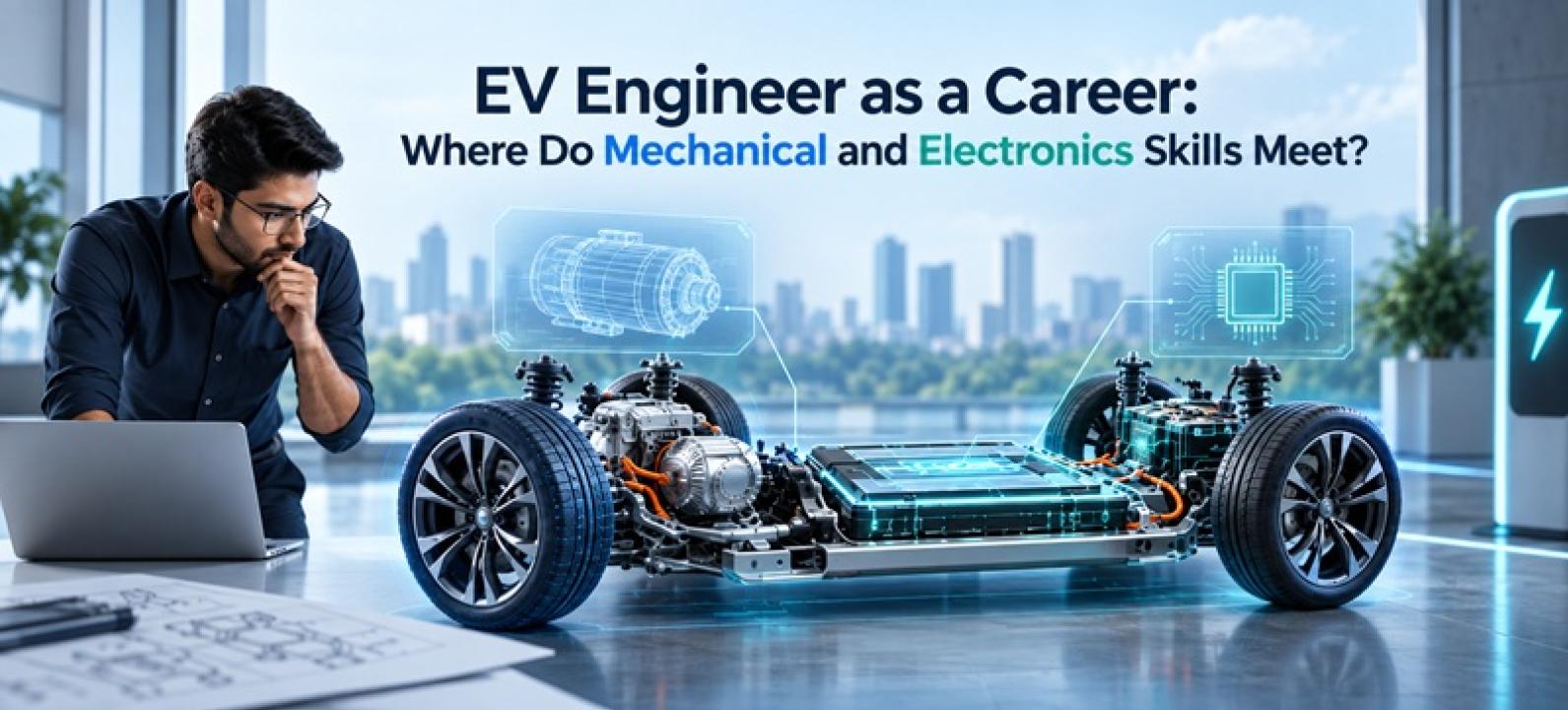
Electric vehicles bring together mechanical systems, electronics, software and energy technologies in one platform. An EV engineer might work on motors, batteries, thermal systems, control units, sensors or vehicle integration. This makes EV engineering an interdisciplinary career rather than a role belonging to only one engineering branch. Students interested in vehicle electronics and intelligent control systems may begin building relevant foundations through a bachelor of electronics and communication engineering.
What Does an EV Engineer Actually Do?
An EV engineer helps design, test or improve systems used in electric vehicles. The exact responsibilities depend on the engineer's specialisation.
Some engineers work on electric motors and vehicle structures. Others focus on battery management systems, embedded electronics, sensors, power systems or communication between electronic control units. Testing and simulation are also important because these individual systems must work reliably together.
Where Does Mechanical Engineering Fit Into EVs?
Electric vehicles still need strong mechanical engineering. Engineers work on vehicle design, materials, manufacturing, suspension, braking, aerodynamics and thermal management.
Battery packs and electric motors also generate heat. Mechanical engineers can contribute to cooling systems that help components operate within suitable temperature ranges. Students interested in design, manufacturing, thermal engineering and vehicle systems may therefore find EV opportunities after a bachelor of technology in mechanical engineering.
Where Do Electronics Skills Become Important?
Modern EVs depend heavily on electronic systems.
Sensors collect information about temperature, speed, current and other operating conditions. Controllers process this information and help manage different vehicle functions. Electronics engineers can also contribute to embedded systems, communication networks and battery monitoring.
These systems make it possible for mechanical components to respond intelligently to changing driving conditions.
What Is a Battery Management System?
A battery management system, or BMS, monitors and manages an EV's battery pack.
It uses information from sensors to track factors such as voltage, current and temperature. The system helps manage battery operation and provides information that supports safety and performance.
Developing such systems requires knowledge from multiple areas. Electronics professionals may work on sensing and control, while mechanical engineers can contribute to battery-pack design and thermal management.
Why Is Thermal Management Important?
Temperature affects several EV components, particularly batteries, motors and power electronics.
Engineers need to move heat away from components while considering vehicle weight, available space and energy use. Mechanical knowledge of heat transfer and fluid systems becomes valuable here.
At the same time, sensors and electronic controllers help monitor temperatures and regulate cooling. This is a clear example of the two disciplines working together.
Do EV Engineers Need Coding Skills?
Programming is becoming increasingly useful in automotive engineering.
Embedded software controls many vehicle functions, while simulation tools help engineers test designs before physical prototypes are produced. Data from vehicles can also be analysed to understand performance and identify problems.
An engineer does not necessarily need to become a full-time software developer. Basic programming and an understanding of embedded systems can make mechanical and electronics knowledge more versatile.
Which Engineering Path Should You Choose?
Your interests should guide the decision.
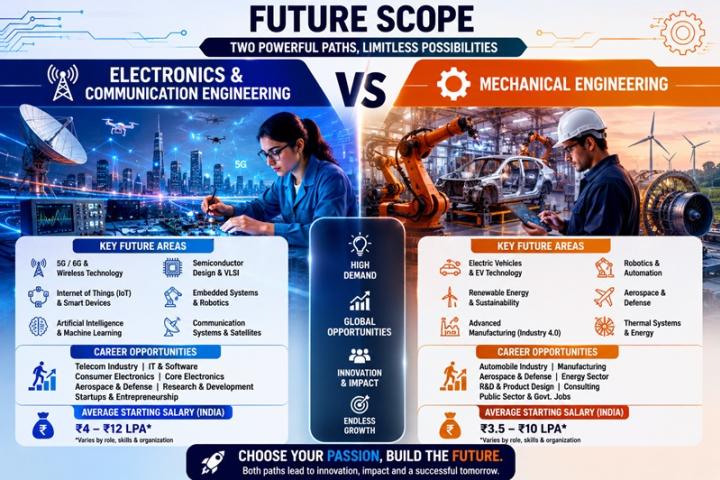
Mechanical engineering may suit you if you enjoy machines, design, manufacturing, thermodynamics and physical systems. Electronics and communication engineering may be more suitable if you enjoy circuits, sensors, embedded systems, communication and control technologies.
EV engineering creates opportunities for both because the finished vehicle depends on these systems working together.
Conclusion
EV engineering sits at the intersection of mechanical systems, electronics, control and energy technologies. Mechanical engineers contribute to areas such as vehicle design, thermal management, manufacturing and dynamics, while electronics engineers work with embedded systems, communication, sensors, control and power electronics. Together, these skills support the development of more integrated electric mobility systems.
At Somaiya Vidyavihar University, students in B.Tech Electronics & Telecommunication Engineering can choose minors such as Electric Vehicle, Robotics & AI, Mechatronics, Power Electronics & Industrial Drives, Robotics and Automation, and Drone Technology from the second year onward.
Mechanical Engineering students can also explore interdisciplinary learning through areas such as Electric Vehicle and Robotics and Automation, helping them connect core mechanical knowledge with emerging mobility and automation technologies. The dedicated EV minor covers automobile systems and vehicle dynamics, battery and energy sources, electric motors, power electronics, battery charging, battery management systems, safety and regulations, along with a mini project or internship.
This flexibility allows students to begin with the engineering discipline that matches their strengths and then build EV-focused expertise through minors, projects and practical learning.