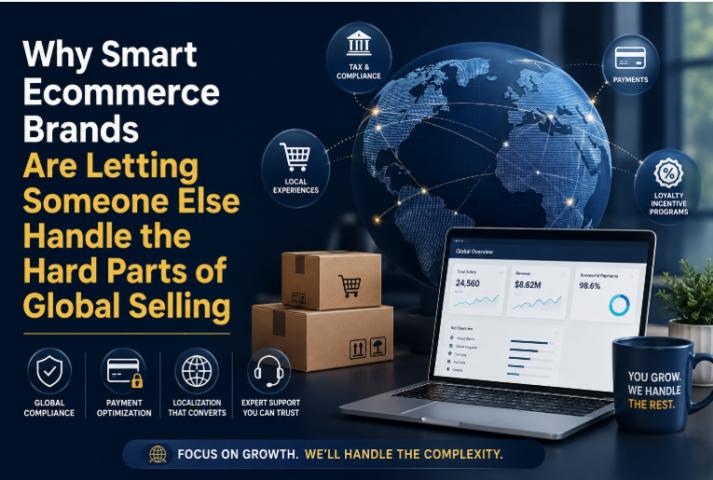

- A Merchant of Record (MoR) takes on legal responsibility for a sale, including tax collection, compliance, and chargeback risk, in exchange for a share of revenue
- SaaS and subscription software companies are the most common users of the MoR model because of complex, cross-border tax obligations
- App stores like Apple's App Store and Google Play function as a Merchant of Record for in-app purchases and mobile subscriptions
- Digital product and course platforms vary in whether they act as an MoR or as a payment processor only
- Traditional e-commerce businesses selling physical goods rarely need a full MoR setup unless they sell internationally at real scale
- Choosing an MoR model trades a percentage of revenue for reduced tax, compliance, and fraud liability
A founder selling software into a dozen countries eventually runs into the same wall: value-added tax registration in the EU, sales tax nexus rules across U.S. states, and refund and chargeback handling that differs by region. A standard payment processor moves the money but leaves all of that legal exposure with the business. A Merchant of Record takes it on instead. Understanding what that actually looks like is easier with real examples than with a definition alone, since the model plays out differently depending on the type of business selling through it.
What a Merchant of Record Actually Does
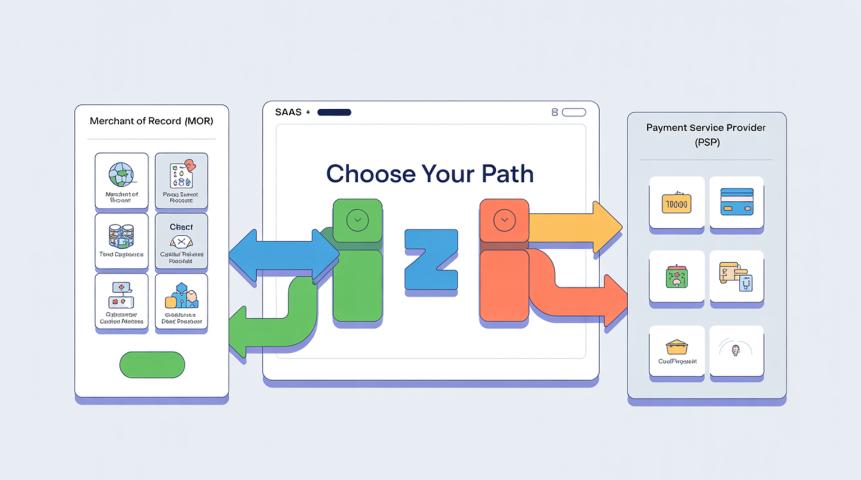
A payment processor authorizes and moves funds between a customer and a business, but the business remains the legal seller, responsible for its own tax registration, remittance, and any disputes. A Merchant of Record steps into the seller's legal position for the transaction. It collects the payment, remits applicable sales tax or VAT under its own registration, absorbs chargeback risk, and issues the receipt, while the underlying business receives a net payout after fees.
This distinction matters most for companies selling digital goods across borders, where tax obligations can trigger in dozens of jurisdictions with different thresholds and filing requirements. A domestic business selling one physical product line rarely needs this level of protection. A company selling software subscriptions to customers in forty countries usually does.
MoR Examples Across Software and SaaS Businesses
Seeing how the model plays out for real companies makes it easier to understand than a definition alone. Paddle and FastSpring are two of the most commonly cited MoR services example in the SaaS space, both handling VAT registration, sales tax remittance, and chargeback management on behalf of the software companies selling through them, in exchange for a percentage of each transaction.
For engineering teams, handing this responsibility to a Merchant of Record can boost web development efficiency, since developers integrate a single checkout and billing API instead of building and maintaining custom tax logic, invoicing, and compliance monitoring in-house. That trade-off is usually worth it for small teams whose core product isn't billing infrastructure.
How App Stores and Digital Marketplaces Act as an MoR
Apple's App Store and Google Play are two of the most visible cases of this model in practice, even though most users never think of them that way. When a customer buys an app or an in-app subscription, the platform is the legal seller of record. It collects the payment, remits tax under its own registration in each jurisdiction, and pays the developer a net amount after its commission. This is part of why app store fees cover more than just distribution.
Creator Platforms and Digital Product Sellers
Independent creator platforms show a similar pattern on a smaller scale. Gumroad, for instance, operates as a Merchant of Record by default, since most individual creators selling ebooks, templates, or courses don't have the resources to register for VAT across dozens of countries on their own. The platform absorbs that compliance work in exchange for its transaction fee.
Where Traditional E-commerce Fits
Physical goods e-commerce works differently. Many U.S. states now require large marketplaces such as Amazon, Etsy, and eBay to collect and remit sales tax as "marketplace facilitators," which functions similarly to an MoR arrangement for tax purposes even though the legal terminology differs. A standalone online store selling physical products domestically typically still handles its own sales tax directly, since the compliance burden is smaller than it is for digital, cross-border sales.
How to Decide if a Merchant of Record Model Fits Your Business
A few signals tend to point toward the MoR model over a standard payment processor:
- Selling digital goods or subscriptions across many countries with different tax rules
- Lacking in-house legal or finance resources to manage VAT and sales tax registration
- Willing to trade a percentage of revenue for meaningfully reduced compliance risk
- Needing to launch quickly without building custom billing and tax infrastructure first
None of these signals are absolute. A company with in-house finance capacity and lower transaction volume may still come out ahead handling tax directly and keeping the full margin a payment processor allows.
Conclusion
Across all of these MoR examples, from software platforms to app stores to creator marketplaces, the common thread is the same: someone has to own the legal and tax responsibility for a sale, and the Merchant of Record model lets a business pay to transfer that responsibility rather than build the capability internally. Whether that trade makes sense depends on transaction volume, the number of jurisdictions involved, and how much internal capacity exists to handle compliance directly.
Frequently Asked Questions
What is a Merchant of Record (MoR)? A Merchant of Record is the legal entity responsible for a sale, including tax collection and remittance, chargeback handling, and compliance, rather than the underlying business that created the product.
What is the difference between a Merchant of Record and a payment processor? A payment processor moves money between buyer and seller while the business remains legally responsible for taxes and disputes. A Merchant of Record takes on that legal and tax responsibility itself.
Do I need a Merchant of Record for my SaaS business? It depends on scale and reach. Businesses selling subscriptions across many countries often benefit from an MoR's tax handling, while smaller, single-market businesses may not need one yet.
Is Stripe a Merchant of Record? Standard Stripe Payments is a payment processor, not a Merchant of Record. Stripe does offer a separate product, Stripe Tax and certain billing configurations, but full MoR responsibility typically requires a dedicated MoR provider or platform.
How does a Merchant of Record handle sales tax and VAT? The MoR registers for tax in the relevant jurisdictions under its own name, calculates and collects the correct tax at checkout, and files and remits it directly, removing that obligation from the underlying business.