
In today’s competitive job market, efficiency and accuracy are paramount for both recruiters and candidates. Resume extractors—AI-driven tools that streamline the resume screening process—have revolutionized the way businesses handle recruitment. These tools automate the extraction of key information from resumes, saving recruiters countless hours of manual labor and providing a more precise method for candidate selection.
In this guide, we will dive deep into resume extractors, their functionality, key features, benefits, and limitations. We’ll also cover how you can choose the right extractor for your recruitment needs and integrate it into your current workflow. Let’s explore the future of recruitment powered by AI and automation.
What is a Resume Extractor?
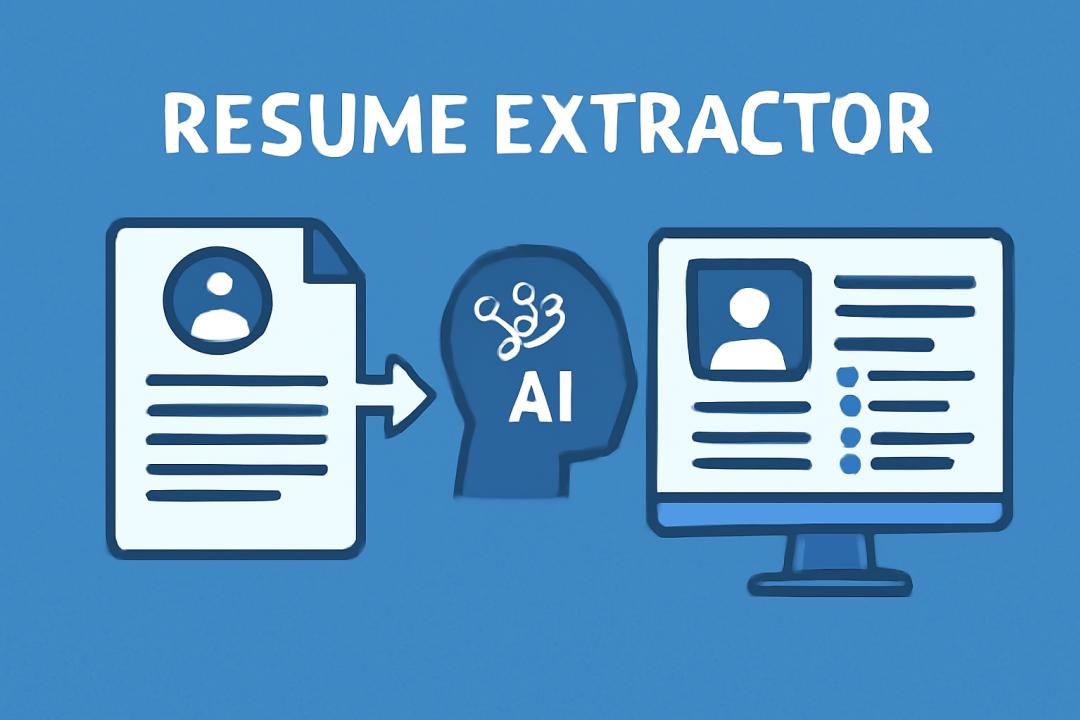
A resume extractor is an AI-powered software tool designed to automate the process of extracting information from resumes. It identifies and parses key details such as the candidate's name, contact information, work experience, education, and skills from resumes, converting them into structured, searchable data. This automation significantly reduces the manual work involved in processing resumes, allowing recruiters to focus more on engaging with candidates rather than sorting through endless documents.
Resume extractors utilize Natural Language Processing (NLP) and Machine Learning (ML) algorithms to understand the context of the information in the resumes. This allows them to handle unstructured data effectively, even when resumes vary in format.
To learn more about this technology, explore our article on AI Resume Screening.
How Resume Extractors Work
The working of a resume extractor involves several critical steps:
-
Ingestion: The tool reads resumes, whether in PDF, Word, or other common formats. Advanced extractors can even handle scanned documents using OCR (Optical Character Recognition) technology, converting images into editable text.
-
Parsing and Data Extraction: The extractor uses algorithms to identify key fields in the resume, such as personal details, education, work experience, and skills. It assigns appropriate labels to each piece of data (e.g., "Name," "Email," "Education").
-
Normalization: Data extracted from resumes often comes in different formats, which can be standardized for consistency. For example, dates are formatted uniformly, and job titles are normalized.
-
Structuring: The parsed data is organized into a structured format—usually a table or database—that allows for easy searching, filtering, and integration into recruitment systems.
For a more in-depth understanding of resume data extraction, check out this guide on choosing the best resume parser.
Key Features of Resume Extractors
Modern resume extractors come with a range of features that optimize the recruitment process:
1. Multilingual Support and OCR Capabilities
One of the standout features of advanced resume extractors is their ability to parse resumes in multiple languages. This is especially crucial for global companies that hire from different regions. Additionally, OCR in resume parsing allows extractors to handle scanned resumes or images, ensuring no document is left behind. To learn more, visit our article on OCR in Resume Parsing.
2. ATS Integration
Integrating resume extractors with an Applicant Tracking System (ATS) is essential for seamless recruitment. The extracted data is fed directly into the ATS, which further automates the recruitment process. This integration allows for easy shortlisting, scheduling, and communication with candidates. Check out how ATS integration works on this ATS Jobboards page.
3. Real-Time Processing and Compliance
Many resume extractors offer real-time processing capabilities, allowing recruiters to instantly parse and categorize resumes as they arrive. This ensures that no time is wasted in reviewing applications. Additionally, modern extractors comply with data protection regulations like GDPR, ensuring that personal data is handled securely.
Benefits of Using Resume Extractors
🔹 Time-Saving
By automating the extraction of data from resumes, recruiters save countless hours spent on manual data entry. This allows them to focus on more strategic aspects of recruitment, such as interviewing and candidate engagement.
🔹 Improved Candidate Matching
Resume extractors enhance the accuracy of candidate matching by ensuring that key skills, qualifications, and experiences are correctly identified and matched to the job requirements. For more on this, explore Candidate Matching Algorithms.
🔹 Reduced Human Bias
Automating the resume screening process reduces human bias. By focusing on objective data rather than subjective judgment, extractors help create a more inclusive and fair recruitment process.
🔹 Enhanced Candidate Experience
Faster processing of resumes results in quicker feedback for candidates, improving their experience. Automated resume extraction ensures that all resumes are processed equally, regardless of their format.
To understand how automation impacts the candidate experience, explore our article on Recruitment Automation Tools.
Limitations and Challenges of Resume Extractors
While resume extractors offer numerous benefits, there are some challenges to be aware of:
🔸 Formatting Issues
Non-standard resumes or highly creative formats can sometimes confuse the extractor. For instance, a resume with complex tables, graphics, or unusual fonts might lead to inaccurate parsing.
🔸 Data Dependency
The accuracy of the extraction largely depends on the quality of the data in the resume. Poorly formatted or incomplete resumes may lead to errors in extraction.
🔸 Over-Reliance on Automation
While automation can enhance efficiency, it’s essential for recruiters to retain some level of oversight to ensure that important nuances, such as cultural fit, are not missed.
Choosing the Right Resume Extractor
Selecting the right resume extractor is crucial for maximizing its effectiveness. Here are the factors to consider:
-
Accuracy: Look for an extractor that provides high accuracy in parsing data, especially for complex resumes.
-
Integration: Ensure that the extractor can seamlessly integrate with your existing systems, such as ATS or HR management tools.
-
Scalability: Choose a solution that can handle large volumes of resumes, especially if you are scaling your hiring processes.
-
Cost: Consider your budget and the value the extractor brings in terms of time savings and increased hiring efficiency.
Integrating Resume Extractors with Existing Systems
Integrating a resume extractor with your ATS and other recruitment tools is essential for streamlining the recruitment workflow. Here’s how to integrate:
-
API Connectivity: Many extractors offer API integrations, allowing them to connect seamlessly with your existing systems.
-
Data Mapping: Ensure that the data extracted by the tool is mapped correctly to your ATS’s fields for easy filtering and sorting.
-
Automating Workflows: Once integrated, extractors can trigger automated workflows in your ATS, such as sending emails, scheduling interviews, or flagging candidates for review.
The Future of Resume Extraction
The field of resume extraction is continually evolving. Future trends in this area include:
-
Increased Use of AI: AI will continue to play a pivotal role in improving the accuracy and efficiency of resume parsing.
-
Deep Learning: Deep learning technologies will help resume extractors better understand the context and nuances of resumes.
-
Automated Candidate Engagement: Beyond parsing, AI tools will automate the entire candidate experience, from initial screening to interview scheduling.
Frequently Asked Questions (FAQs)
What is a resume extractor?
A resume extractor is an AI-powered tool that automates the extraction and categorization of information from resumes into structured formats.
How accurate are resume extractors?
The accuracy of resume extractors depends on the quality of the data in the resume and the capabilities of the extractor. Advanced extractors can achieve high accuracy across multiple resume formats.
Can resume extractors handle different resume formats?
Yes, modern resume extractors can handle various formats, including PDFs, Word documents, and even scanned resumes through OCR technology.
How do resume extractors integrate with ATS?
Resume extractors integrate with ATS by automatically feeding parsed data into the system, ensuring smooth candidate tracking and workflow automation.
Are resume extractors secure and compliant with data protection regulations?
Yes, leading resume extractors comply with data privacy regulations like GDPR and HIPAA to ensure the security and confidentiality of candidate information.
Conclusion
Resume extractors are a game-changer in the recruitment world. With their ability to automate the resume screening process, AI resume screening, automated CV parsing, and candidate matching algorithms, recruiters can save time, improve accuracy, and reduce bias in their hiring processes. By choosing the right extractor and integrating it into your ATS and recruitment workflows, you can significantly enhance your hiring efficiency.
Are you ready to transform your recruitment process? Learn more about recruitment automation tools and start leveraging AI for better hiring outcomes.