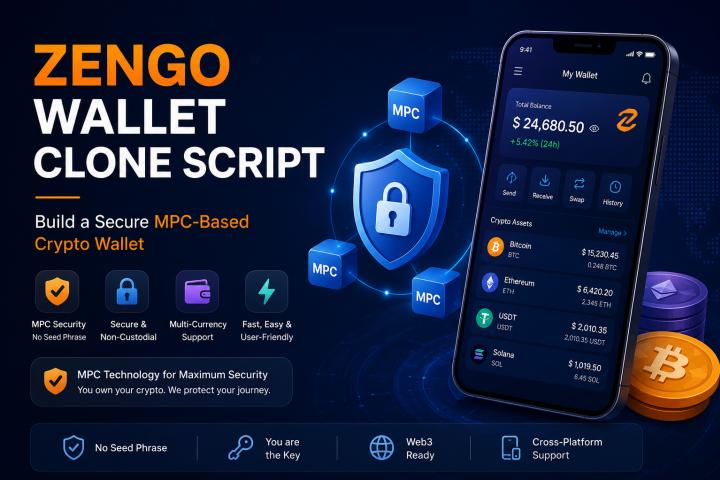
The crypto world moves fast — and so do the threats. As digital currencies gain mainstream adoption, wallet security has become more than just a technical necessity; it’s a survival strategy. If 2024 was all about convenience and accessibility, 2025 is the year of next-level Crypto Wallet Security.
Whether you’re a startup building your first wallet or an SMB expanding your blockchain services, your users will trust you only as much as your security walls hold up. Let’s explore how to enhance your Crypto Wallet Security this year and stay ahead of evolving digital risks.
Why Crypto Wallet Security Matters More Than Ever
Imagine your crypto wallet as a digital fortress — it holds real money, data, and user trust. Any crack in that fortress can cost millions. With cybercriminals becoming sharper, the cost of negligence isn’t just financial; it’s reputational.
In 2025, wallet users expect military-grade protection. They want peace of mind while transacting — and if your wallet can’t provide that, they’ll switch in seconds.
That’s why startups and businesses are now investing heavily in Crypto Wallet Security systems powered by AI, encryption, and multi-party computation (MPC) to fortify every layer.
Emerging Threats to Crypto Wallets in 2025
Before you fortify your defenses, you need to understand what you’re up against. The digital battlefield has evolved. Let’s look at the major threats lurking in 2025:
- Phishing 2.0: AI-generated deepfake emails and fake wallet UIs trick users into sharing seed phrases.
- Smart Contract Exploits: Vulnerabilities in DeFi integrations are now prime targets.
- MPC Attacks: Even multi-party computation wallets face complex coordination breaches.
- Cross-Chain Hacks: As multi-chain wallets grow, so do cross-protocol vulnerabilities.
- Human Error: Most breaches still begin with one careless click.
It’s clear — your wallet’s security isn’t just about tech; it’s about anticipation and adaptability.
Top Strategies to Strengthen Crypto Wallet Security in 2025
Let’s dive into the best ways to upgrade your Crypto Wallet Security for the modern era.
1. Adopt Multi-Party Computation (MPC) Technology
Traditional wallets rely on single private keys — a single point of failure. MPC divides that private key into multiple encrypted shares stored across separate servers. Even if one part is compromised, the attacker gains nothing.
This is the same technology powering wallets like ZenGo and Fireblocks — and now, it’s available for startups too.
2. Implement Biometric & Behavioral Authentication
Forget passwords. In 2025, your face, voice, or even how you swipe on your phone can authenticate you. Combining biometric data with behavioral AI reduces phishing risks dramatically.
3. Use Hardware Security Modules (HSMs)
HSMs store cryptographic keys offline, offering an extra layer against remote attacks. For institutional wallets, this is non-negotiable.
4. Enable Real-Time Transaction Monitoring
AI-driven fraud detection systems can identify unusual transactions in milliseconds. This is a must-have to prevent unauthorized fund transfers.
5. Regular Security Audits and Penetration Testing
You wouldn’t drive a car without checking the brakes — the same goes for wallets. Regular third-party audits ensure your smart contracts, APIs, and data layers are bulletproof.
Need professional help to implement these? Hire certified crypto wallet developers to integrate security upgrades seamlessly.
Why SMBs and Startups Should Prioritize Wallet Security
Big enterprises have teams and budgets for cybersecurity. But for startups and SMBs? Every breach can be fatal.
Building on security-first architecture early helps small businesses:
- Avoid high recovery costs
- Build user trust faster
- Meet compliance requirements (like GDPR and MiCA)
- Stand out in a competitive market
The result? You don’t just protect assets — you protect your business longevity.
How White Label Crypto Wallets Simplify Security Implementation
If building a wallet from scratch sounds daunting, you’re not alone. That’s where White Label Crypto Wallet solutions shine.
These ready-to-deploy wallets come pre-integrated with high-end security modules:
- MPC & multi-signature architecture
- AES-256 encryption
- Biometric verification
- Cross-platform security patches
- KYC/AML integrations
With white-label wallets, you save time, money, and sleepless nights, focusing instead on branding, marketing, and user engagement.
The Future of Crypto Wallet Security in 2025 and Beyond
The future of wallet security is moving toward automation and decentralization. Expect to see:
- AI-driven behavioral tracking that predicts hacks before they happen
- Decentralized Identity (DID) replacing traditional logins
- Quantum-resistant encryption is becoming the new norm
Crypto wallets are no longer digital safes — they’re intelligent ecosystems that learn, adapt, and evolve.
Practical Tips for Everyday Crypto Users
Security isn’t just a developer’s job — users play a part too. Share these safety habits with your community:
- Never share private keys or recovery phrases.
- Double-check URLs before logging in.
- Keep wallet apps updated.
- Avoid using public Wi-Fi for transactions.
- Enable 2FA and biometric authentication.
Simple actions can make or break wallet safety.
Conclusion
In 2025, Crypto Wallet Security is your brand’s biggest differentiator. Users trust wallets that prioritize safety, transparency, and innovation. Whether you’re a startup or an established exchange, investing in security isn’t optional — it’s your competitive edge.
Looking to build or upgrade a secure wallet? Get started with a trusted White Label Crypto Wallet developer solution today!
FAQs
1. What makes crypto wallets vulnerable in 2025?
Evolving phishing scams, smart contract bugs, and cross-chain vulnerabilities are the biggest concerns.
2. Are MPC wallets truly unhackable?
While nothing is 100% unhackable, MPC wallets offer the strongest form of decentralized key protection available today.
3. How often should wallets undergo security audits?
At least once every 6 months or after any major feature update.
4. Is white-label wallet software secure?
Yes — top providers use enterprise-grade encryption and compliance-ready security frameworks.
5. What’s the best way for startups to secure user funds?
Use a White Label Crypto Wallet built with MPC, biometric authentication, and real-time threat monitoring.