Living in a rural area can be peaceful and refreshing, but internet connectivity often feels like you’re on a different planet. Slow speeds, dropped connections, and limited providers are common frustrations. Whether you’re working from home, streaming your favorite shows, or keeping in touch with family and friends online, a fast and reliable connection is essential.
Fortunately, technology has advanced significantly, and there are now effective internet options for rural areas that can keep you connected even in remote locations. This post will explore the best solutions, compare their benefits, and help you find the right internet options for rural areas.
Why Rural Internet Is Challenging
Rural internet has always lagged behind urban areas. There are a few key reasons why:
- Infrastructure limitations: Installing fiber and cable networks in sparsely populated areas is costly.
- Distance from towers: Wireless signals weaken as they travel farther, leading to slow or unreliable connections.
- Limited provider choice: Many rural households only have one or two internet options, complicating decisions on price and speed.
The good news is that you don’t have to settle for subpar service. Several internet options cater specifically to rural homes, farms, and RV travelers.
Top Internet Options for Rural Areas
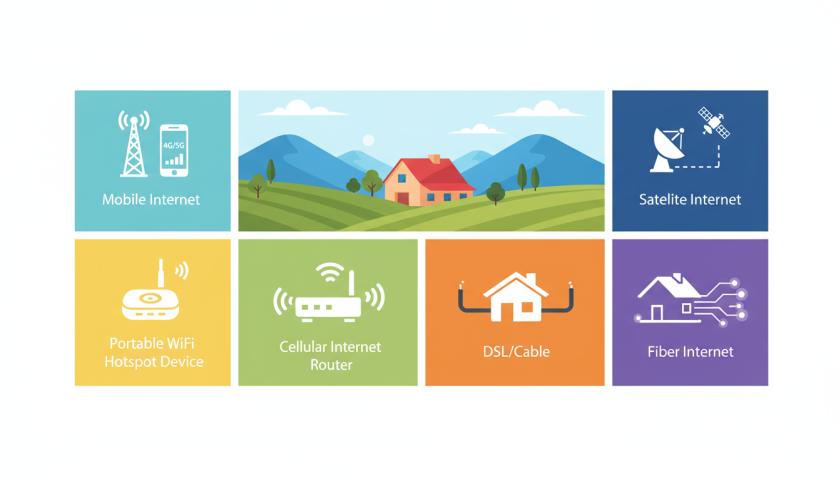
When choosing a rural internet, consider speed, reliability, latency, and price. Here are some of the best options available today:
1. 5G and LTE Home Internet
Wireless broadband using 5G or 4G LTE is one of the fastest-growing solutions for rural areas. These networks use cellular towers to deliver internet directly to your home, without needing fiber or cable lines.
Why it’s a good choice:
- Speeds often range from 100–300 Mbps, suitable for streaming, video calls, and online gaming.
- Easy installation: Many providers offer plug-and-play modems or routers.
- Portable options are available for RVs or temporary setups.
Example tip: Check the coverage map before signing up; some areas might have stronger LTE signals than 5G, which could impact your speed.
2. Satellite Internet
Satellite internet has been a reliable option in rural areas for years. New services like Starlink have improved speed and latency significantly. It’s a solid choice if you live in very remote areas without good cellular coverage.
Benefits:
- Available almost anywhere, as long as the sky is clear.
- Speeds range from 50–250 Mbps depending on the provider and plan.
- No need for wired infrastructure — perfect for cabins, farms, and rural retreats.
Pro tip: Heavy storms or dense trees can sometimes affect performance, but modern satellite internet is more stable than older systems.
3. Fixed Wireless Internet
Fixed wireless internet connects a home or business to a nearby tower using a small antenna. It delivers fast internet without the need for cable or fiber. It’s like LTE but is often optimized for fixed locations rather than mobility.
Why it works well in rural areas:
- Reliable for multiple devices in a household.
- Typically faster than standard LTE, with lower latency.
- Good alternative when fiber isn’t available and satellite is too expensive.
Tip: Line-of-sight to the tower is essential. Trees, hills, or buildings may require additional equipment like signal boosters.
4. DSL Internet
DSL is an older technology but is still common in many rural areas. It uses existing telephone lines to provide internet and can be a cost-effective option when other services are limited.
Pros:
- Widely available in small towns and rural areas.
- Stable connection with moderate speeds (up to 100 Mbps in some locations).
- Often included in bundled plans with phone services.
Caution: Speeds depend heavily on how far you are from the central office; the farther away you are, the slower your connection. DSL may not be great for households with many heavy internet users.
5. Hybrid Internet Solutions
Some providers now combine LTE, 5G, and satellite technologies to create hybrid plans. These can automatically switch between networks based on signal strength and congestion, keeping you online in challenging areas.
Advantages:
- Maximizes uptime and reliability.
- Often includes unlimited data without throttling.
- Great for remote homes or RV users who travel frequently.
Tip: Always compare providers’ service agreements to ensure you get consistent speeds and coverage where you need it most.
Key Factors to Consider When Choosing Rural Internet
Even with excellent options available, not every service suits every home. Here’s what to think about before signing up:
- Speed Requirements: How many devices will connect at the same time? For remote work or 4K streaming, aim for at least 100 Mbps.
- Coverage Area: Use coverage maps and read local reviews to confirm signal reliability in your specific location.
- Data Caps and Contracts: Some plans offer unlimited data with no contract. Others may slow down speeds after reaching a certain usage level.
- Equipment & Setup: Check if the service provides a modem/router and whether installation is user-friendly.
- Cost vs Performance: Compare monthly fees with expected speeds and reliability. Sometimes paying a bit more ensures a much better experience.
Real-World Insights
- Many rural users find that 5G or LTE home internet is surprisingly reliable for multiple devices, even better than older satellite connections.
- Satellite internet works well for very remote areas, though latency can impact online gaming or video calls.
- Fixed wireless and hybrid solutions strike a balance between speed, reliability, and coverage.
Conclusion
Living in a rural area doesn't mean you must settle for poor internet quality. With advances in 5G, LTE, fixed wireless, and satellite technologies, there are now plenty of options to stay connected. By understanding your needs, checking coverage, and comparing providers, you can find a solution that delivers fast, reliable, and consistent internet, ideal for work, streaming, and keeping in touch with family and friends.
Even if fiber isn’t available in your area, wireless solutions are rapidly catching up, making rural living more connected than ever.
FAQs: Best Rural Internet Options
Q1. What are the best rural internet options for homes in remote areas?
The best rural internet options include 5G/LTE home internet, satellite, fixed wireless, DSL, and hybrid plans. Your choice should depend on speed, coverage, and household needs.
Q2. Can I get fast internet in rural areas without fiber?
Yes. 5G and LTE-based wireless broadband often offers speeds between 100 and 300 Mbps, while satellite and fixed wireless provide reliable alternatives where fiber isn’t available.
Q3. Are satellite internet speeds good enough for streaming and work?
Modern satellite services like Starlink provide 50 to 250 Mbps, which is enough for streaming, video calls, and remote work. Weather can affect performance, but it is generally dependable.
Q4. Which internet providers serve rural areas best?
Some top options include UbiFi, Starlink, T-Mobile 5G Home Internet, Rise Broadband, and HughesNet. Availability varies by location and network coverage.
Q5. How do I choose the right rural internet plan?
Consider speed, coverage, equipment, data limits, and cost. Read local reviews and check provider maps to ensure you select the best rural internet options and providers for your home.