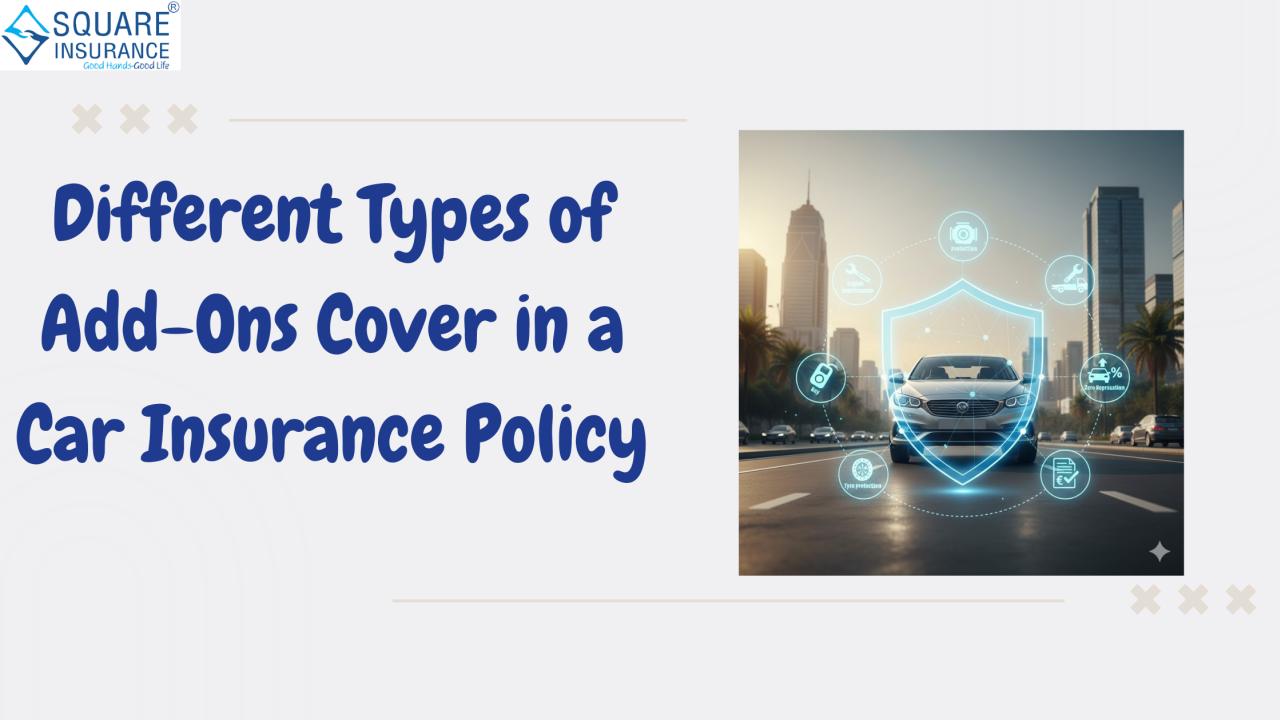

Car insurance is not just about having a basic policy to meet legal requirements. While a standard comprehensive car insurance policy offers essential protection, it may not always cover every real-life situation you face on Indian roads. This is where add-on covers play an important role. Add-ons are optional benefits that you can include in your car insurance policy by paying a small extra premium to enhance your protection.
Choosing the right add-ons can significantly
reduce your out-of-pocket expenses during claims and provide peace of mind in
unexpected situations. However, many car owners either skip add-ons completely or
choose them without understanding their real value. This guide explains the different types of add-on covers in a car insurance
policy, their benefits, and who should consider them.
What Are Add-On Covers in Car Insurance?
Add-on covers are additional protection options
that extend the coverage of your standard comprehensive car insurance policy.
These covers address specific risks that are usually excluded or only partially
covered under the basic policy.
You can select add-ons while buying a new
policy or during renewal. Each add-on has its own cost and benefits, so it is
important to choose only those that match your driving habits, vehicle
condition, and usage.
Why Add-On Covers Are Important
In real-world scenarios, car damages often go
beyond what basic insurance pays for. Add-ons help by:
·
Reducing repair expenses
·
Protecting expensive car parts
·
Covering special situations like engine damage
or roadside breakdowns
·
Improving claim settlement value
Instead of paying large sums during repairs,
the right add-ons can save money in the long run.
Different Types of Add-On Covers in Car
Insurance
1. Zero Depreciation Cover
This is one of the most popular add-ons,
especially for new cars. Normally, insurance companies deduct depreciation on
car parts during claims. With zero depreciation cover, you receive the full
cost of replaced parts without any depreciation deduction.
Best
for:
·
New cars
·
Expensive vehicles
·
Owners who want maximum claim value
2. Engine Protection Cover
Standard car insurance does not cover engine
damage caused by waterlogging, oil leakage, or hydrostatic lock. Engine
protection add-on covers repair or replacement costs of the engine and gearbox
due to such issues.
Best
for:
·
Areas prone to floods or heavy rains
·
Luxury cars with expensive engines
·
Vehicles frequently driven in traffic-heavy
areas
3. Roadside Assistance Cover
This add-on provides emergency help if your
car breaks down on the road. Services usually include towing, battery
jump-start, fuel delivery, flat tyre assistance, and minor repairs.
Best
for:
·
Frequent travelers
·
Long-distance drivers
·
People who drive alone often
4. Return to Invoice (RTI) Cover
In case of total loss or theft, this add-on
ensures you receive the full invoice value of your car, including registration
and road tax, instead of the depreciated IDV amount.
Best
for:
·
Brand-new cars
·
High-value vehicles
·
Owners worried about financial loss after theft
or major accidents
5. Consumables Cover
During repairs, items like engine oil, nuts,
bolts, coolant, and brake fluid are not covered in standard policies.
Consumables add-on pays for these small but frequent expenses.
Best
for:
·
Cars that undergo frequent repairs
·
Owners who want complete repair coverage
6. Key Replacement Cover
Modern car keys are expensive and contain
electronic chips. This add-on covers the cost of replacing lost or damaged keys
and even lock-set replacement if required.
Best
for:
·
Cars with smart key systems
·
Urban drivers where key loss is common
7. NCB Protection Cover
No Claim Bonus (NCB) reduces your premium if
you do not make claims. This add-on protects your NCB even if you make a claim
during the policy period, subject to conditions.
Best
for:
·
Safe drivers with high NCB
·
Those who want long-term premium savings
8. Tyre Protection Cover
This add-on covers tyre replacement costs due
to cuts, bulges, or bursts, which are not included in standard insurance.
Best
for:
·
Cities with poor road conditions
·
Cars with expensive alloy wheels and tyres
9. Passenger Assistance Cover
This add-on provides benefits such as hotel
stay, alternative transport, or medical assistance for passengers in case of
breakdown or accident far from home.
Best
for:
·
Family travelers
·
Long road trips
10. Daily Allowance Cover
If your car is in the garage for repairs, this
add-on offers a daily cash allowance to help cover transport expenses.
Best
for:
·
Office commuters
·
People who depend heavily on their car
How to Choose the Right Add-Ons
Not every add-on is necessary for every
driver. Smart selection depends on:
·
Age and value of your car
·
Driving frequency
·
Road conditions in your area
·
Parking safety
·
Repair and maintenance costs
For example, zero depreciation and return to
invoice are more useful for new cars, while roadside assistance is helpful for
frequent travelers. Choosing unnecessary add-ons can increase premium without
adding real value.
Common Mistakes to Avoid While Choosing
Add-Ons
·
Selecting too many add-ons without understanding
benefits
·
Ignoring engine protection in flood-prone cities
·
Skipping NCB protection after building high
bonus
·
Not reviewing add-ons during renewal
Always reassess your needs every year instead
of renewing the same add-ons automatically.
Conclusion
Add-on covers play a crucial role in making
your car insurance policy truly effective. While a standard policy offers basic
protection, add-ons help cover real-world risks that can otherwise result in
heavy expenses. From zero depreciation and engine protection to roadside
assistance and tyre cover, each add-on serves a specific purpose and can
provide valuable financial support during emergencies.
Choosing the right combination of add-ons ensures better claim settlements, fewer out-of-pocket expenses, and greater peace of mind. Platforms like Square Insurance help car owners understand coverage options clearly and choose suitable add-ons based on individual needs, making the process of buying and renewing car insurance simpler and more transparent.
Frequently Asked Questions
1. Are add-on covers mandatory in car insurance?
No, add-on covers are optional. However, they
provide additional financial protection and can be very useful depending on
your driving conditions and vehicle type.
2. Can I buy add-ons with third-party car insurance?
Most add-ons are available only with comprehensive
car insurance policies, not with third-party-only plans.
3. Do add-ons increase car insurance premium a lot?
Add-ons increase premium slightly, but the
benefits during claims often outweigh the additional cost.
4. Can I change add-ons during renewal?
Yes, you can add or remove add-ons at the time
of policy renewal based on your current needs.
5. Which add-on is best for new cars?
Zero depreciation cover and return to invoice
cover are highly recommended for new vehicles.
6. Is engine protection necessary for all cars?
It is especially important in areas with
waterlogging or heavy rainfall, as engine repairs can be extremely expensive.