Buying car insurance is not just about complying with legal requirements; it is about ensuring continuous financial protection for your vehicle and yourself. Yet, many car owners still opt for annual policies and deal with yearly renewals, premium changes, and the risk of policy lapses. This is where long-term car insurance offers a smarter and more convenient alternative.
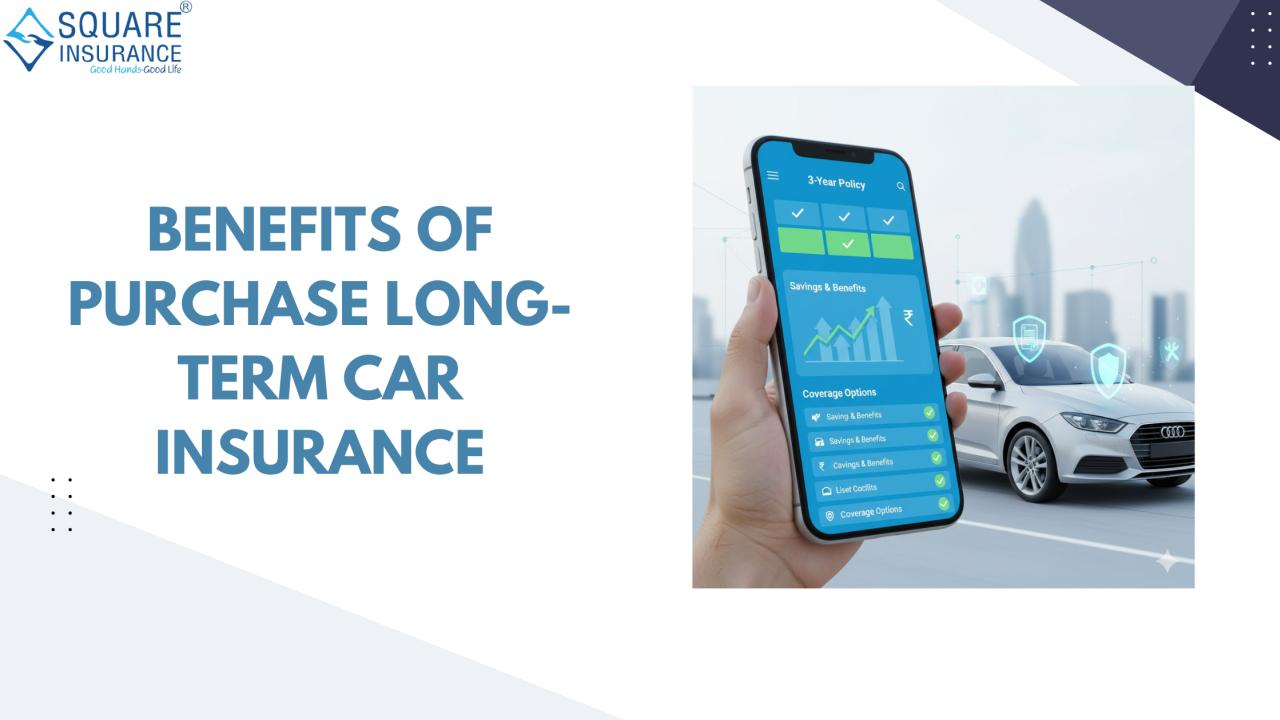
Long-term car insurance policies provide coverage
for multiple years under a single policy term. This guide explains what
long-term car insurance is, how it works, and the key benefits of choosing
long-term coverage for your car.
What Is Long-Term Car Insurance?
Long-term car insurance is a policy that
provides coverage for more than one year, usually for three years for private cars. Instead of renewing your
policy every year, you pay a single premium and enjoy uninterrupted insurance
protection for the entire policy term.
These policies typically include:
·
Long-term third-party liability cover
·
Own-damage cover, which may be renewed annually
within the long-term structure
·
Personal accident cover for the owner-driver
Long-term insurance was introduced to improve
compliance with motor laws and reduce the number of uninsured vehicles on
Indian roads.
How Long-Term Car Insurance Works
When you buy a long-term car insurance policy:
·
You pay the premium upfront for the entire
policy duration
·
Third-party cover remains valid for the full
term
·
Own-damage section may be renewed yearly,
depending on policy structure
·
No need to worry about annual legal compliance
This structure ensures both legal protection
and financial safety without repeated renewals.
Key Benefits of Purchasing Long-Term Car
Insurance
1. Protection from Policy Lapses
One of the biggest risks with annual policies
is forgetting renewal dates. Even a short lapse can lead to:
·
Loss of coverage
·
Higher premiums
·
Inspection requirements
·
Legal penalties
Long-term insurance eliminates this risk by
providing continuous coverage throughout the policy period.
2. Long-Term Cost Savings
With long-term policies:
·
Premium rates are locked for multiple years
·
You are protected from yearly premium hikes
·
Road tax and regulatory cost increases do not
affect your policy
Over time, this can result in significant
savings compared to renewing annually at fluctuating rates.
3. Convenience and Reduced Paperwork
Annual renewals involve:
·
Repeated documentation
·
Policy comparisons
·
Payment processing
With long-term insurance, you avoid repeated
administrative tasks and enjoy hassle-free ownership experience.
4. Better Compliance with Legal Requirements
Since third-party insurance is mandatory,
long-term coverage ensures you always remain legally insured, even if you
forget renewal reminders or travel frequently.
This is particularly helpful for people who:
·
Own multiple vehicles
·
Travel often
·
Do not actively track insurance expiry dates
5. Stable Coverage Terms
Policy conditions remain stable during the
long-term period, offering:
·
Predictable benefits
·
Fewer surprises in terms of coverage changes
·
Consistent protection structure
This stability helps in long-term financial
planning.
6. Lower Risk of Rejection Due to Policy
Break
Policy breaks often lead to:
·
Mandatory vehicle inspections
·
Higher premiums
·
Rejection of add-ons
With long-term insurance, your policy
continuity remains intact, protecting your claim eligibility.
7. Suitable for New Car Owners
Long-term insurance is especially beneficial
for new cars because:
·
The first few years carry higher repair risks
·
Premium is locked when IDV is high
·
Add-ons can be planned efficiently
New car owners can enjoy uninterrupted
protection from the very beginning.
8. Improved Road Safety Compliance
By encouraging long-term coverage, the number
of uninsured vehicles reduces, leading to:
·
Faster claim settlements for accident victims
·
Reduced legal complications
·
Better overall compliance with traffic laws
This supports a more responsible driving
ecosystem.
Are There Any Limitations of Long-Term Car
Insurance?
While beneficial, long-term insurance also has
certain considerations:
·
Higher upfront premium payment
·
Less flexibility to change insurers frequently
·
Own-damage renewal still needed annually in some
structures
·
Add-ons may need yearly reassessment
However, these limitations are minor compared
to the overall protection and convenience offered.
Who Should Consider Long-Term Car Insurance?
Long-term insurance is ideal for:
·
New car buyers
·
Busy professionals
·
People who frequently forget renewal dates
·
Owners who prefer stable expenses
·
Families managing multiple vehicles
It is also suitable for those who value
long-term financial planning over short-term premium adjustments.
How to Choose the Right Long-Term Car
Insurance Policy
Before buying, consider:
·
Total premium cost for full tenure
·
Coverage of own-damage section
·
Availability of add-ons
·
Claim support reputation
·
Flexibility during renewals
Choosing a reliable policy ensures smooth
experience throughout the policy term.
Conclusion
Long-term car insurance offers a smart way to
stay continuously protected without the stress of annual renewals. It
safeguards you from legal risks, premium hikes, and policy lapses while
offering stable coverage over multiple years. Although the upfront premium may
appear higher, the long-term financial and practical benefits make it a
worthwhile investment.
By locking in coverage early, car owners can
focus more on driving and less on insurance deadlines. Platforms like Square Insurance help simplify the
process of selecting long-term car insurance by offering easy plan comparisons,
transparent pricing, and expert support. Choosing long-term coverage is not
just about convenience—it is about building consistent financial protection for
your vehicle and your peace of mind.
Frequently Asked Questions
1. Is
long-term car insurance mandatory for all vehicles?
Long-term third-party insurance is mandatory for new cars, while existing
vehicles can choose between annual and long-term options.
2. Can I
cancel a long-term car insurance policy?
Yes, cancellation is possible, but refund terms depend on insurer rules and
time of cancellation.
3. Are
add-ons available with long-term policies?
Add-ons are usually purchased annually along with the own-damage section of the
policy.
4. Does
No Claim Bonus apply in long-term insurance?
Yes, NCB continues to apply on the own-damage portion renewed annually.
5. Is
long-term insurance cheaper than annual insurance?
Over time, it can be more cost-effective due to fixed rates and protection from
premium increases.