
When your morning is 2pm and your evening is 5am, keeping up with daily adhkar gets weird. Shift work doesn't just mess with your sleep, it messes with every routine you've ever built. I lost my adhkar habit for months before I figured out a way to get it back. Not a perfect system. Just a realistic one that works even on the worst days. Here's what I learned.
How to Keep Up with Your Daily Adhkar When Working Shifts
I work shifts. Have done for a while now. And if there's one thing that took a hit early on, it was my adhkar. Not salah I managed to hold on to that, alhamdulillah. But the morning and evening adhkar? The post-salah tasbih? Gone. Just quietly disappeared from my life for months.
It wasn't that I stopped caring. I just couldn't figure out when to do them anymore. My "morning" was sometimes 2pm. My "evening" was sometimes 5am. Nothing made sense. And by the time I'd think about it, I was either too tired or too late.
So I had to figure it out. And I did, mostly. Not perfectly. But enough that I feel like my adhkar are back in my life in a real way. Here's what worked for me.
The real problem isn't laziness, it's that your routine keeps breaking
With a normal job, you build a routine and it sticks. Wake up, Fajr, adhkar, breakfast, work. Same thing every day. Your body gets used to it. Your brain stops thinking about it. It just happens.
Shift work breaks that. You're on early shifts for three days, then late shifts, then nights. Every few days your whole life rearranges itself. And habits need repetition to stick. So you keep starting over. The other thing is just being tired. I mean really tired. After a 12-hour night shift, I can barely make wudu. Sitting down for 10 minutes of focused dhikr? That feels impossible some days. And I used to feel bad about that. Like I was making excuses.
But I stopped thinking that way. Being exhausted after a long shift isn't an excuse. It's just reality. The question is how to work with it, not against it.
Stop tying your adhkar to the clock
This was the biggest thing for me. I used to think "morning adhkar = 6am" and "evening adhkar = after Maghrib." But when you work shifts, 6am might be the middle of your sleep. And Maghrib might happen while you're stuck at work.
So I changed the anchor. Instead of tying adhkar to a time, I tied them to salah.
- After Fajr morning adhkar. Doesn't matter if Fajr is at 4am or if I'm praying it late at 5:30am after getting home from nights. Fajr is Fajr.
- After Maghrib evening adhkar. Same idea.
- After any other salah quick tasbih. SubhanAllah, Alhamdulillah, Allahu Akbar, 33 each. Takes two minutes.
That's it. Salah already moves with the sun, not with your work schedule. So it's the one fixed thing in a shifting life. Use it as your anchor and everything gets simpler.
The Prophet ﷺ said: "The most beloved deeds to Allah are those done consistently, even if they are small." (Sahih al-Bukhari 6464). Small and consistent. That's the whole idea.
Have a bare minimum version
A nurse friend of mine taught me this. She works 12-hour rotations and she told me she has two modes. Good days and survival days. On good days she does her full adhkar. Morning set, evening set, post-salah tasbih, some extra istighfar before bed. The works.
On survival days and there are a lot of those she does three things:
- Ayatul Kursi after Fajr
- Ayatul Kursi before sleep
- 10x SubhanAllah, 10x Alhamdulillah, 10x Allahu Akbar after whatever salah she can
That's maybe two minutes total. But she told me she hasn't missed a single day in over a year. Not one. Because the bar is so low that even on her worst day, she can clear it.
I copied her approach and it changed everything. On bad days I don't feel guilty anymore. I do my minimum and I'm done. On good days I do more. But I never go to zero. That's the rule. Never zero.
And honestly? A short dhikr you actually mean is worth more than a long one where your mind is somewhere else. Allah sees the effort. He knows you just worked 12 hours and you're still sitting there saying SubhanAllah. That counts for something.
Two things that made it easier
I want to mention two things that helped me practically. Not in a spiritual way, just in a "this removed friction from my day" way.
First one is a counter app. I use MyTasbih Tally Counter on my phone. Before that I'd try to count on my fingers and lose track around 20-something. Every time. Then I'd get frustrated and just stop. With the app I just tap. No thinking. I do it on the bus, on my break, right after salah. It sounds like a small thing but when you're exhausted, even counting to 33 in your head feels like effort. Removing that friction matters.
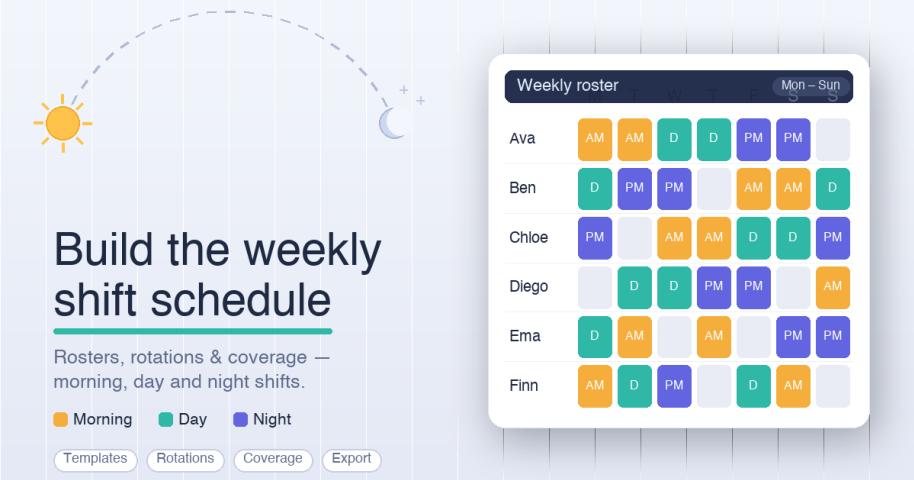
Second thing, and this one surprised me a Shift Rota Planner. I started actually planning my shifts out properly instead of just checking the rota the night before. And when I could see my whole week laid out, I could spot which days would be rough and which days I'd have breathing room. So I'd mentally prepare. Tuesday night shift? That's a minimum adhkar day. Thursday off? I'll do a longer session after Fajr. Having that visibility ahead of time meant I stopped being caught off guard by my own schedule. Sounds obvious but it made a real difference.
The point is, don't rely on motivation. Shift work eats motivation for breakfast. Make things easy for yourself. Remove steps. Remove decisions. The less you have to think about doing your adhkar, the more likely you'll actually do them.
Be patient with yourself
If your adhkar routine fell apart because of shift work, don't try to fix everything at once. That never works. You go hard for three days, miss one day, feel guilty, and quit.
Start with one thing. Just the post-Fajr adhkar. Do that for two weeks. Once it feels normal, add the post-Maghrib set. Then layer in the rest over time.
And don't compare yourself to people with regular schedules. Your friend who does Tahajjud every night and reads a juz after Fajr probably isn't doing that after a night shift. Different situations, different expectations. Allah ﷻ knows what your life looks like. He sees the effort behind every small act of worship you manage to squeeze in between shifts.
Some weeks everything will click. You'll feel connected, focused, spiritually alive. Other weeks you'll barely manage the minimum. Both are fine. Both are part of it.
One thing that shifted my perspective I stopped seeing adhkar as another task. Another thing on the list after a long day. And I started seeing it as my rest. Sitting there after Isha, eyes closed, saying SubhanAllah quietly, just breathing. That's not work. That's the one part of my day where I actually feel calm.
When dhikr stops feeling like a duty and starts feeling like relief, you don't need motivation anymore. You just want to do it. May Allah make it easy for everyone working long and difficult hours. May He accept whatever we manage, even on our worst days. Ameen.