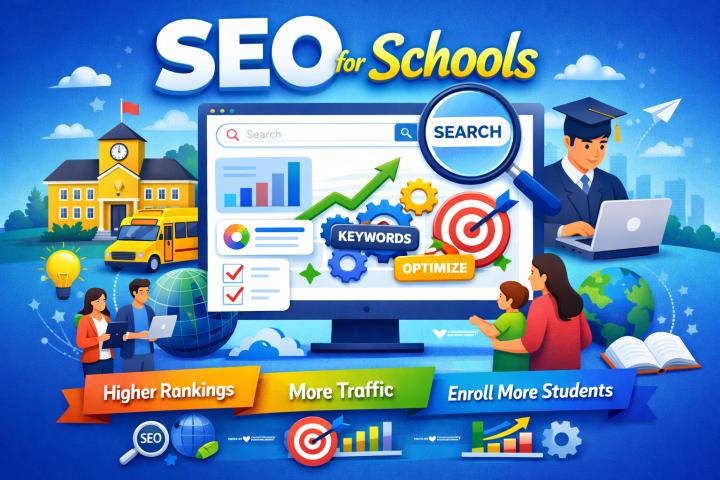

In today’s education landscape, competition among schools is no longer limited to infrastructure, faculty, or academic results. It has expanded into the digital space. Parents are no longer relying only on brochures, hoardings, or local references to choose a school. Instead, the decision often begins online—on search engines, social media platforms, and review sites.
When a parent searches “best school near me” or “top CBSE school in my city,” they are not casually browsing. They are actively planning their child’s future. This makes search visibility one of the most important growth factors for any educational institution.
If your school is not visible on Google’s first page, you are essentially invisible to a large segment of your target audience. This is where SEO for schools becomes not just a marketing activity but a long-term admission strategy.
This article explores SEO from a different perspective: not as a technical tool, but as a digital admission funnel that continuously brings in qualified parent inquiries.
The New Admission Journey Starts on Google
A decade ago, admission decisions were made through word-of-mouth recommendations, local reputation, and physical school visits. Today, that journey has shifted online.
A typical parent admission journey now looks like this:
- Search for schools online
- Compare websites and reviews
- Check fees, curriculum, and facilities
- Shortlist 2–3 schools
- Visit physically
- Final admission decision
Notice that the first interaction is almost always digital.
This means your school’s website is no longer just an informational platform—it is your first impression.
If that impression is weak or invisible, parents may never reach step 4 or 5.
Why SEO Matters More Than Traditional Marketing for Schools
Traditional marketing methods such as flyers, banners, and newspaper ads still exist, but they are limited in impact because they are not targeted.
SEO, on the other hand, works differently:
- It targets parents actively searching for schools
- It captures high-intent traffic
- It works 24/7 without recurring ad costs
- It builds long-term visibility
Unlike paid ads that stop when the budget ends, SEO continues to generate visibility over time.
For schools, this means consistent admission inquiries throughout the year.
Understanding Parent Search Behavior in 2026
To build an effective SEO strategy, schools must first understand how parents search today.
Modern search queries are highly specific and intent-driven:
- “Best English medium school with hostel near me”
- “CBSE school with affordable fees in [city]”
- “Top school with sports facilities and coaching”
- “Nursery admission open near me 2026”
- “School with smart classrooms and transport facility”
These searches reveal three major priorities:
- Location convenience
- Academic quality
- Facilities and affordability
Your SEO strategy must align with these expectations.
Building a Strong SEO Foundation for Schools
SEO for schools is not just about adding keywords. It is a structured system that includes technical optimization, content strategy, and authority building.
Let’s break it down into practical components.
1. Website as a Digital Admission Office
Your school website is the first digital touchpoint for parents. It should function like an admission office that is always open.
A strong school website must include:
- Clear admission process
- Updated fee structure
- Curriculum details
- Faculty information
- Facility highlights
- Contact forms for inquiries
If parents struggle to find basic information, they will leave the website immediately and move to another school.
2. Local SEO: The Most Powerful Growth Driver
For schools, local SEO is the most important ranking factor because admissions are location-specific.
Local SEO focuses on helping your school appear in:
- Google Maps results
- “Near me” searches
- Local keyword searches like “school in [area]”
Key actions include:
- Creating and optimizing Google Business Profile
- Adding accurate address, phone number, and timings
- Uploading campus photos regularly
- Collecting parent reviews and ratings
- Posting updates and announcements
Schools with strong local SEO often dominate map listings even if their website is new.
3. Keyword Strategy for Admission Growth
Keywords are the foundation of SEO success.
However, schools should avoid random keyword usage and instead focus on intent-based keywords.
Examples:
- admission open school in [city]
- best CBSE school near me
- top English medium school in [area]
- affordable private school admission
- best school with hostel facility
These keywords should be placed naturally in:
- Homepage
- Admission page
- Blog articles
- Service pages
The goal is not to rank for everything but to rank for what parents are actually searching.
4. Content Marketing for Educational Trust Building
Content is what transforms a school website from a brochure into a trusted resource.
Schools should regularly publish content such as:
- Admission guides for parents
- Fee breakdown explanations
- Curriculum comparisons (CBSE vs ICSE)
- Exam preparation tips
- School event updates
- Parenting blogs related to education
This type of content builds authority and trust.
When parents repeatedly see useful content from your school, it increases credibility—even before they visit physically.
5. Technical SEO: The Invisible Ranking Factor
Even the best content will not rank if the website is technically weak.
Important technical SEO factors include:
- Fast page loading speed
- Mobile-friendly design
- Secure HTTPS website
- Clean URL structure
- Proper internal linking
Most parents use mobile phones for searching, so mobile optimization is critical.
If your website is slow or unresponsive, users will leave within seconds.
6. Online Reviews: The Digital Word-of-Mouth
In education, trust plays a huge role. Online reviews have become the modern version of word-of-mouth marketing.
Parents often trust Google reviews more than advertisements.
To improve SEO and reputation:
- Encourage satisfied parents to leave reviews
- Respond to feedback professionally
- Highlight positive testimonials on your website
A school with strong ratings often ranks higher and gets more inquiries.
7. Backlinks: Building Authority in Education Space
Backlinks are links from other websites pointing to your school website. They act as a vote of confidence in the eyes of Google.
Schools can build backlinks by:
- Getting listed in education directories
- Collaborating with local blogs or news sites
- Publishing press releases for school events
- Partnering with educational organizations
The more high-quality backlinks you have, the stronger your domain authority becomes.
Common SEO Mistakes Schools Should Avoid
Many schools struggle with SEO because they make avoidable mistakes such as:
- Ignoring Google Business Profile
- Using outdated websites
- Not updating content regularly
- Targeting irrelevant keywords
- Lack of mobile optimization
- No focus on reviews
Fixing these issues can dramatically improve visibility within a few months.
The Future of School SEO
The education industry is evolving rapidly, and SEO is also changing.
Future trends include:
- Voice search optimization (“Which is the best school near me?”)
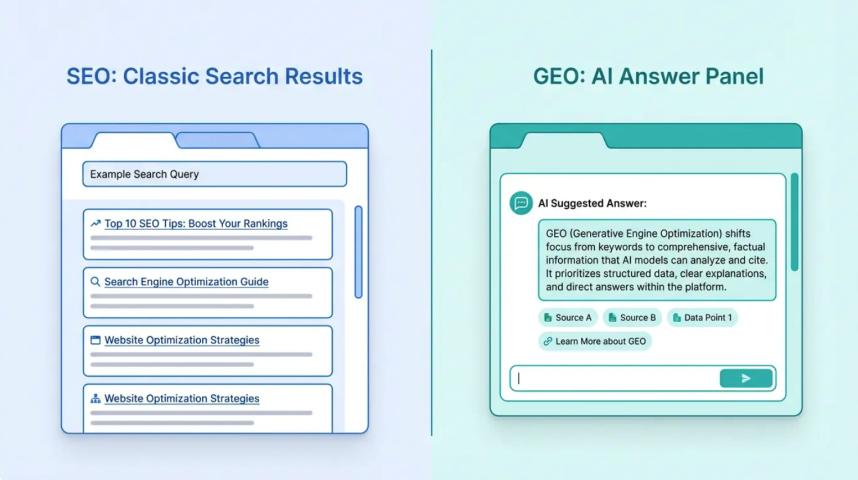
- AI-driven search results
- Video-based school marketing
- Hyperlocal targeting within neighborhoods
- Personalized search results based on user behavior
Schools that adopt these trends early will gain a strong competitive advantage.
Conclusion
SEO for schools is no longer optional—it is a core part of modern admission strategy.
A well-optimized digital presence ensures that your school is visible when parents are actively searching for admission options. From local SEO and content marketing to technical improvements and online reputation management, every element contributes to building trust and visibility.
In a highly competitive education environment, the schools that rank higher on Google are the ones that attract more inquiries, build stronger credibility, and ultimately secure more admissions.
Investing in SEO today means securing consistent student growth for the future.