Introduction: The Shift No One Can See But Everyone Feels
Something unusual is happening in retail.
Customers are spending less time waiting, shelves are rarely empty, and store layouts seem… smarter. Yet, most shoppers can’t point to what changed.
Behind the scenes, computer vision in retail is quietly becoming the intelligence layer of physical stores. It’s not just adding automation it’s changing how decisions are made, how stores operate, and how customers experience shopping.
This isn’t about replacing humans. It’s about removing guesswork.
From Physical Stores to Intelligent Environments
Traditional retail has always had a visibility problem.
Managers didn’t know when a shelf went empty until it was too late. They couldn’t fully understand how customers moved through the store. And most decisions were reactive, based on past data rather than real-time behavior.
With computer vision in retail, that limitation disappears.
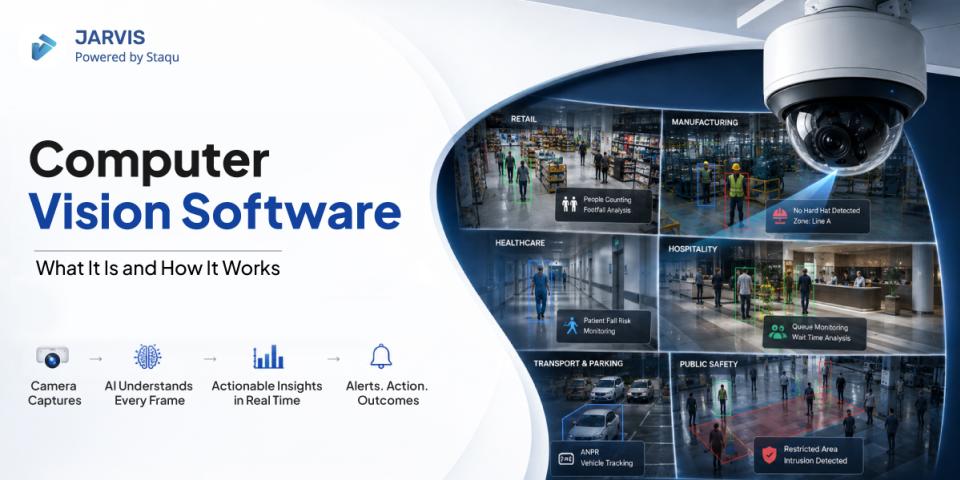
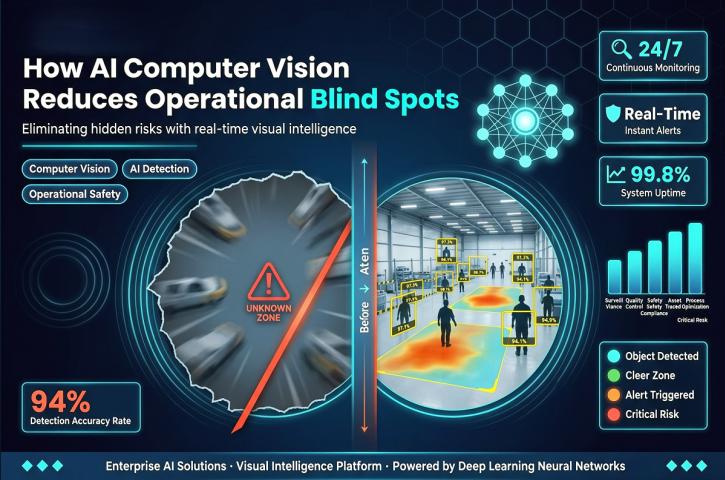
AI-powered cameras and machine learning models continuously interpret what’s happening inside the store. Every movement, interaction, and transaction becomes data that can be acted on instantly.
The result? Stores that don’t just operate they adapt.
Where Computer Vision Is Making the Biggest Impact
The most powerful aspect of this technology is how naturally it fits into everyday retail operations.
Inventory management, for example, has always been a challenge. Products go out of stock, items are misplaced, and manual checks consume time. Computer vision solves this by monitoring shelves in real time, ensuring products are always available and correctly placed. This directly translates into fewer missed sales.
Checkout is another area undergoing a massive transformation. Long queues have historically been one of the biggest friction points in retail. Concepts pioneered by Amazon Go show that checkout can disappear entirely. Customers simply pick up items and leave, while the system handles billing automatically.
Loss prevention is also becoming smarter. Instead of relying solely on human monitoring, AI systems can detect unusual behavior patterns, such as skip-scanning or suspicious activity. This helps retailers reduce shrinkage significantly while maintaining a smoother shopping experience.
Beyond operations, retailers are gaining something even more valuable insight. They can now understand how customers navigate stores, which sections attract attention, and where engagement drops. These insights allow for continuous optimization of store layouts and product placements.
Even compliance tasks, like ensuring shelves match planned layouts, are being automated. What once required manual audits can now be verified instantly through AI.
Business Outcomes: Why Retailers Are Investing Now
The adoption of computer vision in retail isn’t driven by hype it’s driven by measurable results.
When shelves are consistently stocked, customers are more likely to complete purchases. When checkout is seamless, satisfaction improves. When store layouts are optimized based on actual behavior, conversion rates increase.
Operational efficiency also improves as employees spend less time on repetitive tasks and more time assisting customers.
Perhaps most importantly, retailers are seeing returns on investment faster than expected. Many implementations begin delivering value within months, not years. This makes computer vision one of the few AI technologies that directly connects to revenue growth.
Market Trends Driving Adoption
The rapid growth of computer vision in retail is being fueled by several converging trends.
One of the biggest drivers is the demand for real-time analytics. Retailers can no longer rely on delayed reports—they need immediate insights to stay competitive.
Another important trend is the rise of sensor fusion. Retailers are increasingly combining cameras with other technologies like weight sensors and IoT devices to improve accuracy and reliability. This multi-layered approach is making systems more robust and scalable.
There’s also a shift in customer expectations. Online shopping has conditioned consumers to expect speed, personalization, and convenience. Physical stores are now evolving to deliver similar experiences, and computer vision plays a key role in bridging that gap.
Finally, the concept of autonomous retail is gaining traction. Stores are gradually moving toward systems that can manage inventory, monitor activity, and optimize operations with minimal human intervention.
Challenges That Can’t Be Ignored
Despite its advantages, implementing computer vision isn’t without challenges.
Retailers must address concerns around data privacy and ensure transparency in how customer data is used. Integration with existing systems can also be complex, particularly for large retail chains with legacy infrastructure.
Accuracy remains another critical factor. Real-world environments are unpredictable, and systems must perform consistently under varying conditions.
Success depends on a strategic approach one that aligns technology with business goals rather than treating it as a standalone solution.
What the Future Looks Like
The current phase of computer vision in retail is focused on understanding what is happening inside stores.
The next phase will focus on predicting what happens next.
Imagine a store that knows which products will run out before they do, adjusts layouts dynamically based on customer flow, or delivers personalized experiences in real time.
This is where retail is heading from reactive operations to predictive intelligence.
Conclusion: Retail Is Becoming Self-Aware
Retail isn’t being disrupted it’s being upgraded.
The introduction of computer vision in retail marks a shift from manual, assumption-driven processes to intelligent, data-driven
The stores that succeed in the coming years won’t just be well-stocked or well-designed. They’ll be aware, responsive, and continuously improving.
In a world where every second and every decision matters, the ability to see is becoming the ultimate competitive advantage.