Introduction
Institutional capital is undergoing a structural shift. Traditionally conservative asset managers—ranging from private equity firms to pension funds—are now exploring blockchain-powered financial infrastructure. At the center of this transformation is real estate tokenization, a model that converts physical property assets into digital tokens on a blockchain.
What was once considered experimental is now gaining measurable traction. Institutional investors are increasingly recognizing that tokenized real estate offers a compelling combination of liquidity, efficiency, and programmability—features that legacy real estate markets have long struggled to deliver.
What is Real Estate Tokenization?
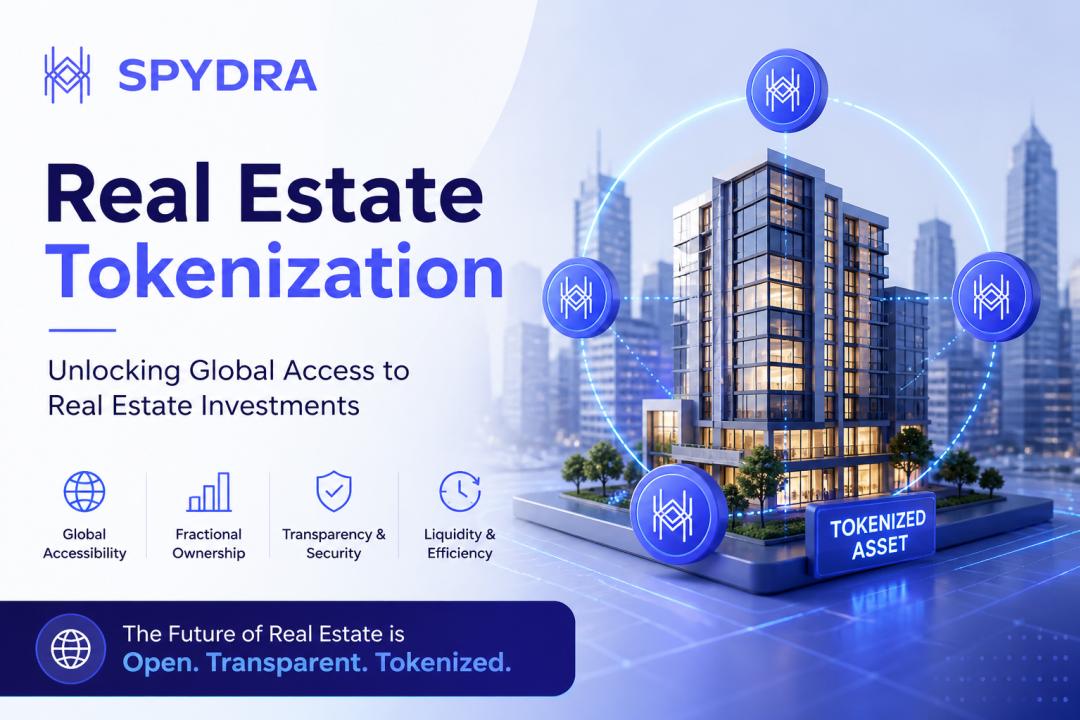
Real estate tokenization is the process of digitizing ownership rights of a property into blockchain-based tokens. These tokens represent fractional ownership and can be issued, transferred, and managed through smart contracts.
Key Components:
- Blockchain Infrastructure: Ensures transparency and immutability
- Smart Contracts: Automate compliance, transfers, and payouts
- Token Standards: Represent ownership units in a digital format
- Compliance Layers: Enforce KYC/AML and regulatory requirements
This approach transforms real estate from a static, illiquid asset class into a dynamic, tradable digital asset.
Why Institutional Investors Are Paying Attention
Institutional investors are not driven by hype—they move when structural advantages are clear. Real estate tokenization is gaining traction because it addresses long-standing inefficiencies in property investment.
1. Liquidity in an Illiquid Market
Real estate has historically suffered from long holding periods and complex exit processes. Tokenization introduces secondary market trading, enabling partial exits and improved capital flexibility.
2. Fractional Ownership at Scale
Instead of committing large sums to single assets, institutions can allocate capital across multiple properties globally, optimizing diversification strategies.
3. Transparency & Auditability
Blockchain provides a tamper-proof record of ownership and transactions, reducing reliance on intermediaries and enhancing investor trust.
4. Faster Settlement Cycles
Traditional real estate deals can take weeks or months. Tokenized transactions can settle significantly faster, improving operational efficiency.
Key Benefits for Institutional Portfolios
Diversification Opportunities
Tokenization allows institutions to access a broader range of real estate assets across geographies and sectors, including commercial, residential, and industrial properties.
Enhanced Liquidity Management
Digital tokens can be traded in smaller units, allowing institutions to rebalance portfolios more effectively.
Lower Operational Costs
Automation through smart contracts reduces administrative overhead, legal complexity, and intermediary fees.
Global Market Access
Institutions can invest in international real estate markets without the traditional barriers of cross-border transactions.
Market Trends & Industry Momentum
The growth of real estate tokenization is supported by increasing institutional experimentation and infrastructure maturity.
Key Trends:
- Major financial institutions are piloting tokenized asset programs
- Asset tokenization is projected to become a multi-trillion-dollar market in the coming decade
- Increasing emergence of real estate tokenization platforms offering compliant issuance and lifecycle management
Notable Developments:
- Banks exploring tokenized deposits and asset-backed tokens
- Private equity firms testing fractional ownership models
- Governments beginning to clarify regulatory frameworks
This momentum signals a transition from proof-of-concept to production-grade adoption.
Challenges & Considerations
Despite its promise, real estate tokenization is not without challenges.
Regulatory Uncertainty
Jurisdictions vary in how they classify tokenized assets, creating complexity for global investors.
Technology Integration
Institutions must integrate blockchain systems with legacy infrastructure, which can be resource-intensive.
Custody & Security
Managing private keys and digital assets introduces new operational risks.
Market Education
Many stakeholders still lack a clear understanding of how tokenization works and its long-term implications.
Use Cases & Real-World Applications
Commercial Real Estate Tokenization
Office buildings, retail spaces, and warehouses can be fractionalized and offered to institutional investors.
Tokenized REIT-like Structures
Digital equivalents of REITs allow for more flexible participation and real-time asset management.
Cross-Border Investments
Tokenization simplifies international property investment by reducing legal and financial friction.
The Role of Web3 Development Platforms
Institutional adoption depends heavily on robust infrastructure. Web3 platforms play a critical role in enabling secure and compliant tokenization.
Key Capabilities:
- Permissioned blockchain networks for controlled access
- Built-in compliance frameworks (KYC/AML)
- Asset lifecycle management (issuance, transfer, redemption)
- Integration with existing financial systems
Platforms like Spydra empower institutions to deploy tokenization strategies without compromising on governance or scalability.
Future Outlook
The trajectory of real estate tokenization suggests a long-term transformation of how property assets are owned, traded, and managed.
- Increased institutional allocation to tokenized real estate
- Integration with decentralized finance (DeFi) and traditional finance (TradFi)
- Development of secondary markets for tokenized assets
- Greater regulatory clarity driving mainstream adoption
As infrastructure matures, tokenization is likely to become a standard layer in real estate investment strategies, not just an alternative.
Conclusion
Real estate tokenization is no longer a niche innovation—it is evolving into a foundational component of modern financial markets. Institutional investors are driving this shift, attracted by the promise of liquidity, efficiency, and global accessibility.
While challenges remain, the direction is clear: tokenized real estate is moving from experimentation to execution. Institutions that engage early stand to gain a competitive advantage in a rapidly digitizing asset landscape.
FAQs
1. What is real estate tokenization?
Real estate tokenization is the process of converting property ownership into digital tokens on a blockchain, enabling fractional ownership and easier transferability.
2. Why are institutional investors interested in tokenized real estate?
They benefit from improved liquidity, diversification, transparency, and operational efficiency compared to traditional real estate investments.
3. Is real estate tokenization regulated?
Regulation varies by country, but many jurisdictions are developing frameworks to support compliant tokenized assets.
4. What are real estate tokenization platforms?
These are blockchain-based systems that enable the issuance, management, and trading of tokenized real estate assets.
5. What is the future of real estate tokenization?
It is expected to become a major part of global financial markets, with increasing institutional adoption and integration into traditional investment systems.