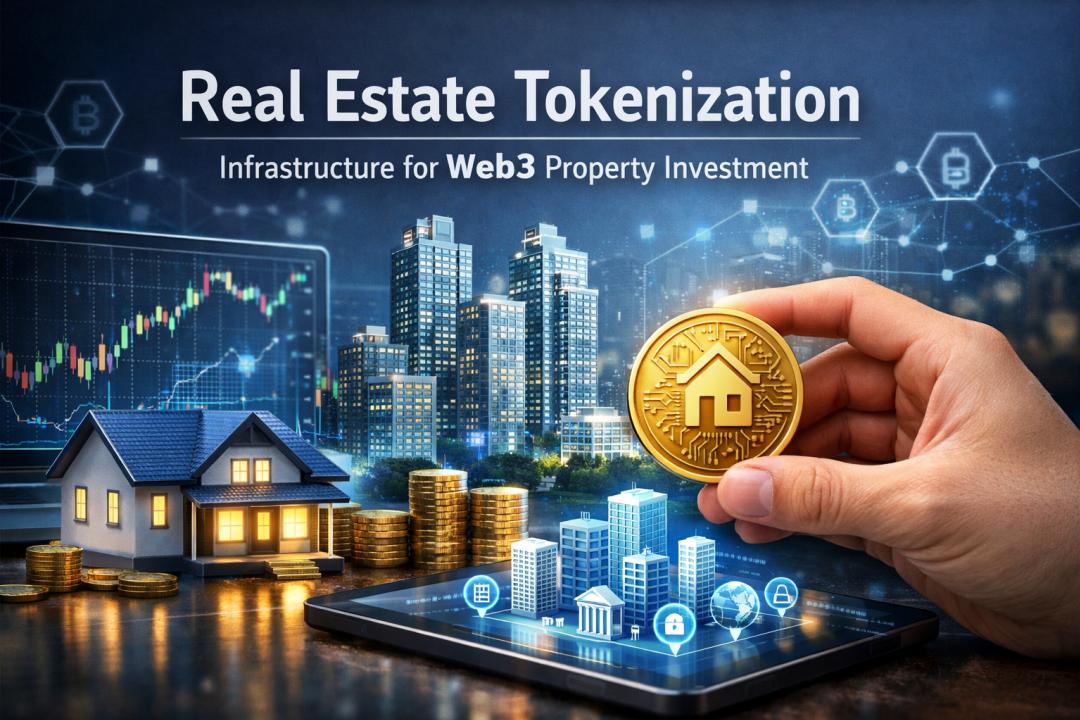
The intersection of blockchain architecture and real estate finance is redefining how property assets are issued, traded, and managed across digital ecosystems. Real estate tokenization infrastructure has emerged as a foundational layer for Web3 property investment, enabling fractional ownership, programmable asset management, liquidity optimization, and borderless participation. Instead of relying on traditional paper-based ownership systems and fragmented intermediaries, tokenized real estate ecosystems establish a digitally verifiable framework where ownership rights are represented through blockchain-based tokens.
As institutional investors and fintech innovators accelerate the adoption of decentralized finance models, tokenized property assets are becoming increasingly relevant within global capital markets. The infrastructure supporting this transformation is no longer limited to smart contracts alone. It now includes compliance automation layers, custody frameworks, interoperability protocols, digital identity systems, secondary marketplace architecture, and on-chain governance mechanisms. Together, these components create a scalable operational environment for secure and transparent property investment in Web3 ecosystems.
The Core Architecture Behind Real Estate Tokenization
Real estate tokenization infrastructure operates through a multilayered technology stack that converts physical property rights into blockchain-native digital assets. The process begins with asset digitization, where ownership interests in a real estate asset are divided into programmable tokens stored on distributed ledger networks.
The infrastructure layer typically includes:
- Smart contract protocols for ownership automation and revenue distribution
- Asset-backed token issuance mechanisms
- KYC and AML verification engines
- Decentralized identity authentication systems
- Digital wallets and institutional custody solutions
- Secondary trading marketplaces for liquidity enablement
- Oracle integrations for off-chain property valuation data
These systems collectively create a trust-minimized environment where investors can purchase fractional property stakes with improved transparency and reduced transactional friction.
Unlike conventional property investment structures that require lengthy settlement cycles and multiple intermediaries, Web3-enabled real estate infrastructure introduces automated execution logic. Rental yields, profit distributions, governance voting, and compliance monitoring can all be embedded directly into smart contracts. This automation significantly reduces operational inefficiencies while enhancing auditability across investment workflows.
Fractional Ownership and Liquidity Transformation
One of the most transformative capabilities of tokenization infrastructure is its ability to fractionalize traditionally illiquid property assets. Real estate has historically remained inaccessible to smaller investors because of high capital requirements, jurisdictional barriers, and limited liquidity. Tokenized ownership models fundamentally alter this dynamic.
By dividing property value into smaller digital units, blockchain infrastructure enables investors to acquire exposure to premium real estate assets without purchasing entire properties. This opens participation to a wider investor base while creating more dynamic liquidity channels within the real estate market.
Several infrastructure advancements are accelerating this transition:
- Multi-chain token issuance for broader interoperability
- Decentralized exchanges supporting real estate-backed assets
- Automated dividend distribution systems
- Cross-border payment rails powered by stablecoin settlements
- Smart contract escrow systems for transparent fund allocation
As liquidity improves, property investments begin to behave more like digitally tradable financial instruments rather than static long-term holdings. This evolution has significant implications for institutional portfolio diversification, real estate syndication, and alternative asset management strategies.
The emergence of specialized infrastructure providers has also increased demand for platforms capable of handling regulatory alignment, investor onboarding, and token lifecycle management. Many enterprises now collaborate with a specialized Real Estate Tokenization Company to build compliant blockchain frameworks tailored for institutional-grade property investment ecosystems.
Compliance Infrastructure and Regulatory Alignment
Regulatory compliance remains one of the most critical pillars of tokenized real estate ecosystems. Since property-backed digital assets often fall under securities classifications in multiple jurisdictions, infrastructure providers must integrate sophisticated compliance architecture directly into the platform layer.
Modern tokenization systems increasingly include programmable compliance logic capable of enforcing jurisdiction-specific regulations in real time. Rather than treating compliance as an external process, Web3 infrastructure embeds regulatory controls within transaction execution itself.
Key compliance-focused infrastructure components include:
- Automated investor accreditation verification
- Geographic transfer restrictions
- Smart contract-based ownership limitations
- On-chain audit trails for transaction transparency
- Tax reporting integration modules
- Real-time sanctions and identity screening systems
This programmable approach improves regulatory resilience while reducing legal ambiguity for issuers and investors. It also strengthens institutional confidence in blockchain-backed property investment models.
Additionally, decentralized identity infrastructure is becoming essential for scalable compliance management. Self-sovereign identity systems allow investors to maintain control over their credentials while enabling secure verification across multiple investment platforms. This reduces repetitive onboarding procedures and streamlines access to tokenized real estate opportunities.
The Role of Smart Contracts in Asset Governance
Smart contracts serve as the operational backbone of real estate tokenization infrastructure. These self-executing blockchain protocols automate administrative processes traditionally handled by brokers, custodians, legal teams, and financial intermediaries.
Within Web3 property ecosystems, smart contracts govern several mission-critical operations, including ownership transfers, voting rights, yield allocation, compliance validation, and treasury management. Their deterministic execution model reduces dependency on centralized administrative oversight while improving transactional integrity.
Advanced governance frameworks now integrate decentralized autonomous organization principles into tokenized real estate environments. Investors can participate in governance decisions related to property maintenance, refinancing strategies, operational budgets, and revenue utilization through token-weighted voting systems.
This shift toward programmable governance introduces a new operational paradigm where property management becomes partially decentralized. Instead of relying solely on centralized asset managers, stakeholders gain direct participation in strategic decision-making processes.
Furthermore, infrastructure scalability has improved through Layer 2 blockchain solutions and cross-chain interoperability protocols. These advancements reduce network congestion, lower transaction costs, and improve execution speed for large-scale tokenized property ecosystems.
Future Outlook of Web3 Property Investment Infrastructure
The evolution of Web3 property investment infrastructure is expected to accelerate as institutional finance increasingly converges with decentralized technologies. Tokenized real estate is gradually moving beyond experimental adoption phases toward enterprise-grade implementation.
Future infrastructure developments are likely to focus on interoperability, institutional custody optimization, AI-driven valuation analytics, and real-time settlement systems. Integration between traditional banking systems and blockchain-based property networks will also become increasingly important as regulated digital asset frameworks mature globally.
Another major development area involves the integration of decentralized finance mechanisms into property investment ecosystems. Tokenized assets may eventually support collateralized lending, staking models, liquidity pools, and composable financial products built directly around real estate-backed tokens.
As scalability, compliance, and investor confidence continue improving, tokenized property infrastructure could reshape how global real estate assets are issued, financed, traded, and governed. The long-standing barriers associated with property investment — including illiquidity, geographical limitations, operational inefficiency, and restricted accessibility — are steadily being addressed through blockchain-native infrastructure innovation.
In the broader context of digital finance transformation, real estate tokenization infrastructure represents more than a technological trend. It is becoming a strategic foundation for the next generation of programmable asset ownership within the Web3 economy.