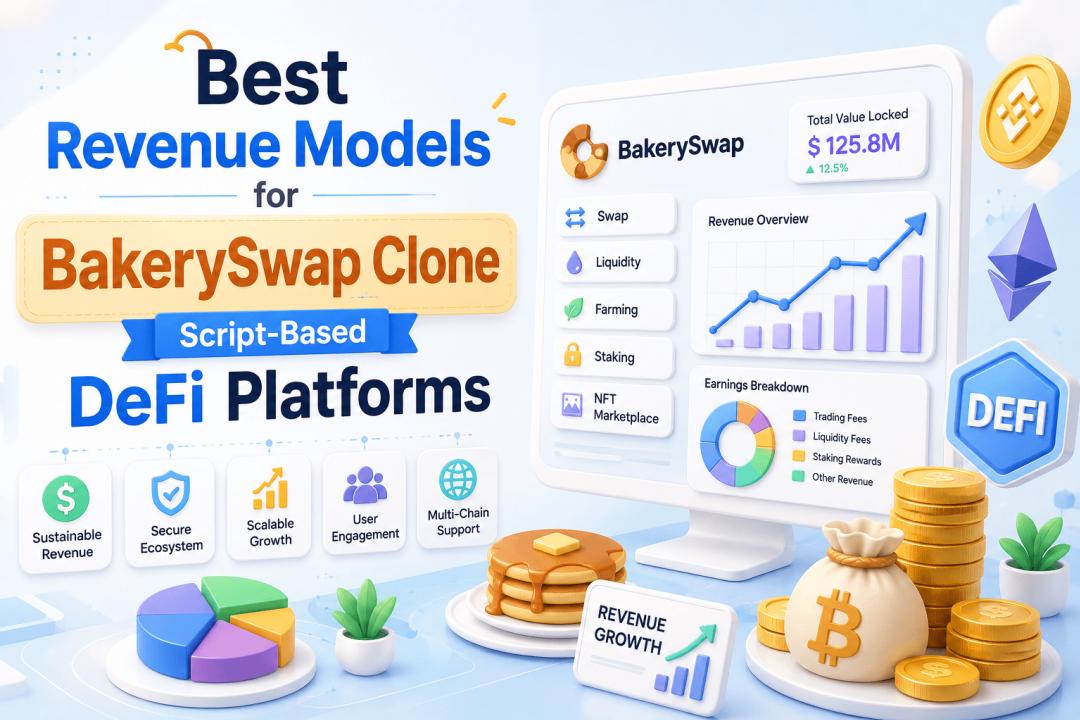
The decentralized finance industry has moved far beyond simple cryptocurrency trading. Today, DeFi platforms are building complete financial ecosystems that include staking, yield farming, NFT trading, liquidity management, and decentralized governance. As competition grows, launching a decentralized exchange alone is no longer enough. The real challenge is building a platform that can generate sustainable long-term revenue while still delivering value to users.
This is where a BakerySwap Clone Script becomes highly relevant for startups and blockchain businesses. It provides a ready-made decentralized exchange framework that helps entrepreneurs launch faster while focusing more on growth, user engagement, and monetization strategies.
But success in the DeFi market depends heavily on choosing the right revenue model. A well-structured platform should generate income naturally through ecosystem activity rather than relying on aggressive monetization tactics. In this article, we’ll explore the best revenue models for BakerySwap Clone Script-based DeFi platforms, how they work, and why they matter in today’s evolving Web3 economy.
Understanding the Revenue Potential of a BakerySwap Clone Script
A BakerySwap Clone Script is designed to replicate the core functionality of decentralized exchanges like BakerySwap while allowing customization based on business goals. These platforms commonly support:
Decentralized token swapping
Liquidity pools
Staking
Yield farming
NFT marketplaces
Governance mechanisms
Wallet integrations
Multi-chain support
Because DeFi platforms operate differently from traditional financial applications, their monetization models are also unique. Revenue is often generated through platform activity, transaction volume, and ecosystem participation.
The strongest DeFi businesses usually combine multiple income streams rather than depending on a single source of revenue.
Trading Fees Remain the Most Reliable Revenue Stream
Trading fees continue to be the foundation of most decentralized exchange business models. Every time users swap one token for another, the platform collects a small percentage as a transaction fee.
This model works effectively because it scales with platform usage. As trading activity increases, revenue naturally grows alongside it.
For a BakerySwap Clone-based DeFi platform, trading fee models can include:
Fixed percentage swap fees
Dynamic fees based on liquidity
Reduced fees for premium users
Governance token fee discounts
Users generally accept trading fees when the platform provides smooth transactions, strong liquidity, and reliable security. Keeping fee structures transparent is important for maintaining user trust and long-term engagement.
Liquidity Pool Fees Create Consistent Platform Income
Liquidity pools are essential for decentralized exchanges because they allow traders to swap assets without relying on traditional order books.
When liquidity providers deposit assets into pools, the platform can generate revenue by collecting a portion of the trading fees associated with those pools.
This model benefits all sides of the ecosystem:
Traders gain access to faster swaps
Liquidity providers earn rewards
Platform owners generate recurring revenue
A well-designed BakerySwap Clone Script usually includes automated liquidity management features that make pool participation easier for users.
As Total Value Locked (TVL) increases, the platform often becomes more attractive to traders and investors, helping improve both activity and profitability.
Yield Farming Drives User Engagement and Revenue
Yield farming remains one of the most popular features in decentralized finance. Users lock their crypto assets into liquidity pools or farming contracts to earn rewards over time.
For DeFi businesses, yield farming creates monetization opportunities through:
Performance-based fees
Farming participation charges
Premium reward pools
Locked farming tiers
More importantly, yield farming encourages users to keep their assets within the platform ecosystem instead of moving them elsewhere.
This helps improve platform liquidity, strengthen token utility, and increase ecosystem stability.
Modern BakerySwap Clone Development solutions often integrate advanced farming dashboards that simplify participation for both beginner and experienced DeFi users.
Staking Models Help Build Long-Term Ecosystem Stability
Staking is another highly effective revenue model for DeFi platforms. Instead of actively trading, users lock their tokens into staking pools and earn passive rewards.
From a business perspective, staking provides several advantages:
Improves user retention
Reduces token volatility
Increases ecosystem participation
Creates predictable revenue opportunities
Platforms can monetize staking through:
Validator commissions
Platform maintenance fees
Premium staking plans
Early withdrawal penalties
Staking also encourages long-term community involvement, which is especially important for growing decentralized ecosystems.
NFT Marketplace Integration Adds New Monetization Opportunities
Many modern DeFi platforms are expanding beyond token trading by integrating NFT marketplaces directly into their ecosystem.
A BakerySwap Clone Script with NFT support can generate additional revenue through:
NFT minting fees
Marketplace transaction commissions
Creator royalty percentages
Featured collection listings
Auction participation fees
This approach allows platforms to attract a wider audience, including creators, collectors, and Web3 gaming communities.
As NFTs continue evolving beyond digital art into gaming assets, memberships, and tokenized utilities, marketplace integration is becoming a valuable long-term business strategy.
Governance Tokens Can Become Strong Revenue Drivers
Governance tokens play a major role in decentralized ecosystems. They allow users to vote on platform decisions while also creating additional economic utility.
For DeFi businesses, governance tokens can support monetization through:
Token launches
Utility-based access
Premium platform features
Fee discount mechanisms
Community participation programs
Strong governance models help build loyal user communities while encouraging long-term token holding behavior.
When users feel involved in the platform’s growth and direction, engagement levels typically increase significantly.
Launchpad and IDO Services Generate High-Value Revenue
Crypto startups regularly look for trusted platforms to launch new blockchain projects. This has made decentralized launchpads and IDO services highly profitable additions to DeFi ecosystems.
A BakerySwap Clone-based launchpad can generate revenue through:
Token listing fees
Fundraising commissions
Smart contract deployment fees
Project verification charges
Marketing partnerships
Launchpad functionality also increases platform visibility because new blockchain projects often bring their communities into the ecosystem.
For growing DeFi businesses, launchpad services can become a major secondary revenue stream.
Subscription-Based Features Support Recurring Revenue
Many decentralized platforms are beginning to adopt premium subscription models, especially for advanced trading users.
Subscription services may include:
Advanced trading analytics
Portfolio tracking tools
Reduced transaction fees
Exclusive staking pools
Early access to new features
Institutional trading dashboards
Unlike aggressive monetization methods, subscription models work best when they genuinely improve the user experience.
This creates a more balanced revenue strategy while supporting long-term customer loyalty.
Cross-Chain Functionality Opens Additional Revenue Channels
The DeFi ecosystem is increasingly moving toward multi-chain accessibility. Users want the ability to transfer assets between blockchain networks without friction.
A BakerySwap Clone Script with cross-chain integration can monetize:
Bridge transaction fees
Cross-chain swap commissions
Multi-chain liquidity services
Priority processing features
Cross-chain support also expands the platform’s user base by attracting traders from multiple blockchain ecosystems.
As interoperability becomes more important in Web3 infrastructure, this revenue model is expected to grow significantly.
Advertising and Strategic Partnerships
As DeFi platforms grow their user base, they naturally become attractive spaces for blockchain-related partnerships and promotions.
Revenue opportunities may include:
Sponsored token placements
Featured farming pools
Ecosystem collaborations
Wallet integration partnerships
NFT campaign promotions
The key is maintaining balance. Too much advertising can negatively impact the user experience, while carefully selected partnerships can improve ecosystem credibility and generate additional income.
White Label Services Expand Business Opportunities
Some companies using BakerySwap Clone Development frameworks go beyond operating a single platform. They also offer white label DeFi solutions to other startups entering the blockchain market.
This can include:
Custom DEX development
NFT marketplace integration
Smart contract deployment
Staking module development
Multi-chain integration services
White label services create an entirely separate business model that extends beyond transaction-based revenue.
For blockchain development companies, this approach can generate long-term enterprise partnerships and recurring project opportunities.
Why User Experience Directly Impacts Revenue Growth
Revenue generation in DeFi is closely connected to user experience. Even technically advanced platforms struggle if navigation feels confusing or transactions become unreliable.
Successful DeFi platforms usually focus on:
Simple onboarding
Fast transaction speeds
Clear fee structures
Mobile compatibility
Wallet flexibility
Strong security systems
A positive user experience often leads to:
Higher transaction volume
Better retention rates
Increased staking participation
Greater community trust
This is why modern BakerySwap Clone Script solutions increasingly prioritize UI/UX optimization alongside core blockchain functionality.
Security Is Critical for Long-Term Profitability
No revenue model can succeed without strong platform security. In the DeFi industry, security directly affects user confidence, liquidity growth, and investor trust.
Platforms should prioritize:
Smart contract audits
Multi-signature wallet support
Anti-phishing mechanisms
Secure liquidity management
Real-time monitoring systems
Users are far more likely to participate in staking, farming, and trading activities when they trust the platform’s infrastructure.
For DeFi businesses, investing in security is not just a technical decision — it is a long-term business strategy.
Future Revenue Trends in BakerySwap Clone-Based Platforms
The DeFi sector continues evolving rapidly, creating new monetization opportunities for blockchain startups.
Emerging trends include:
AI-powered DeFi analytics
Automated portfolio management
Real-world asset tokenization
Social trading systems
DAO-powered ecosystems
Institutional DeFi tools
Future-ready BakerySwap Clone Development solutions are increasingly being designed with modular architectures that allow businesses to adapt quickly to changing market demands.
Platforms that remain flexible and innovation-focused are more likely to achieve sustainable long-term growth.
Conclusion
A successful BakerySwap Clone Script-based DeFi platform depends on more than just launching decentralized trading features. Long-term growth comes from building smart, sustainable revenue models that align with user activity and ecosystem value.
Trading fees, liquidity pools, staking, yield farming, NFT marketplaces, launchpad services, subscription models, and cross-chain functionality all offer meaningful monetization opportunities when implemented thoughtfully. The most effective DeFi platforms combine several of these strategies to create balanced and scalable business growth.
As the decentralized finance industry continues expanding, businesses that focus on usability, transparency, security, and ecosystem-driven monetization will be in a stronger position to grow sustainably in the evolving Web3 landscape.