Top Skills Required for Fortinet FCX Engineers
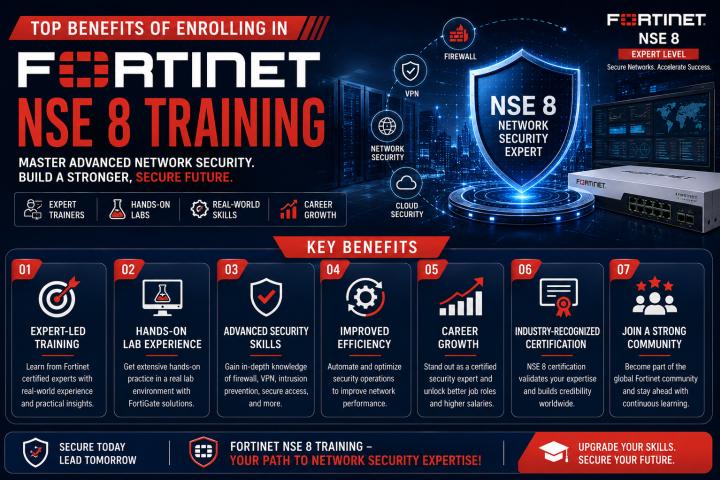
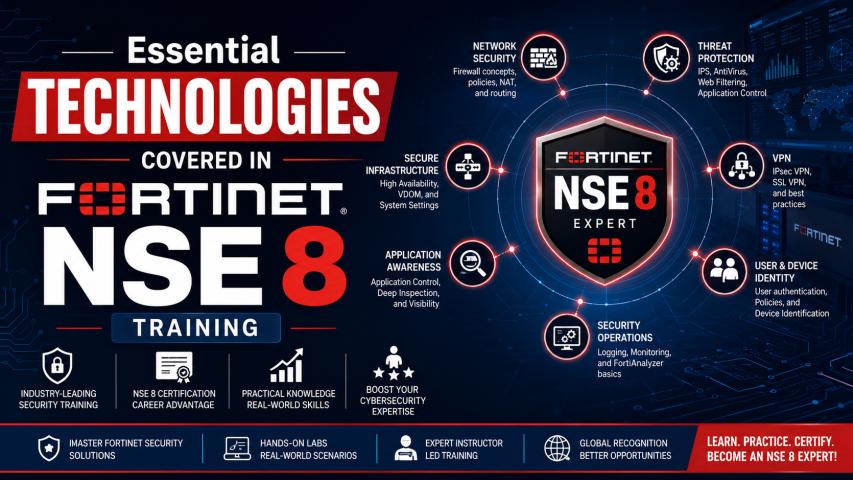
The demand for advanced cybersecurity professionals continues to rise as organizations invest heavily in secure networking and threat prevention technologies. Professionals pursuing Fortinet NSE 8 level expertise are increasingly recognized for their ability to manage complex enterprise security infrastructures.
Businesses across industries are looking for engineers who can deploy, troubleshoot, and optimize enterprise-grade security environments efficiently. This is why interest in Fortinet NSE 8 Training programs has grown significantly among network and security professionals.
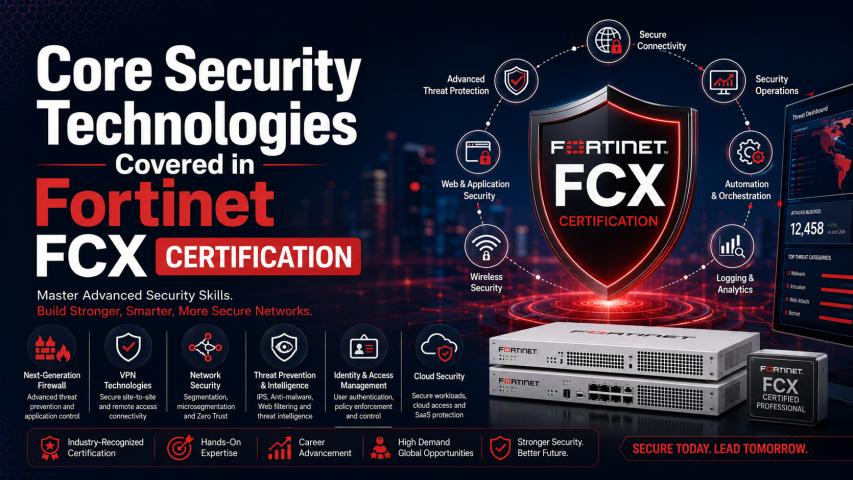
Fortinet FCX engineers are expected to possess a combination of networking expertise, cybersecurity knowledge, automation capabilities, and real-world troubleshooting skills. Understanding the key competencies required for this certification path can help aspiring professionals prepare effectively for future opportunities.
Understanding the Role of a Fortinet FCX Engineer
Fortinet FCX engineers are responsible for designing, implementing, managing, and troubleshooting enterprise security solutions using Fortinet technologies. These professionals often work in large-scale environments where security, performance, and availability are critical.
Their responsibilities typically include:
Managing firewall deployments
Configuring VPN and SD-WAN solutions
Monitoring security threats
Implementing Zero Trust frameworks
Maintaining secure enterprise connectivity
Handling incident response and troubleshooting
Organizations value FCX-certified engineers because they demonstrate advanced-level expertise in enterprise cybersecurity operations.
Importance of Advanced Cybersecurity Skills
Cyberattacks are becoming increasingly sophisticated. Enterprises require security engineers who can quickly identify vulnerabilities and deploy effective protection mechanisms.
Fortinet FCX professionals must understand both traditional network security and modern cloud-based security architectures. Their ability to integrate multiple security technologies into a unified ecosystem makes them highly valuable in enterprise IT environments.
Core Networking Knowledge
Routing and Switching Fundamentals
A strong understanding of networking concepts forms the foundation of every successful FCX engineer’s career.
Important topics include:
TCP/IP protocols
VLAN configuration
Static and dynamic routing
BGP and OSPF
Network segmentation
NAT and policy routing
Without advanced networking knowledge, troubleshooting enterprise-level security issues becomes extremely difficult.
SD-WAN Expertise
Software-Defined Wide Area Networking has become a critical component of modern enterprise infrastructure.
FCX engineers should understand:
SD-WAN deployment models
Traffic shaping
WAN optimization
Application-aware routing
Performance monitoring
Fortinet SD-WAN solutions are widely adopted because they combine networking efficiency with advanced security features.
Advanced Firewall Management Skills
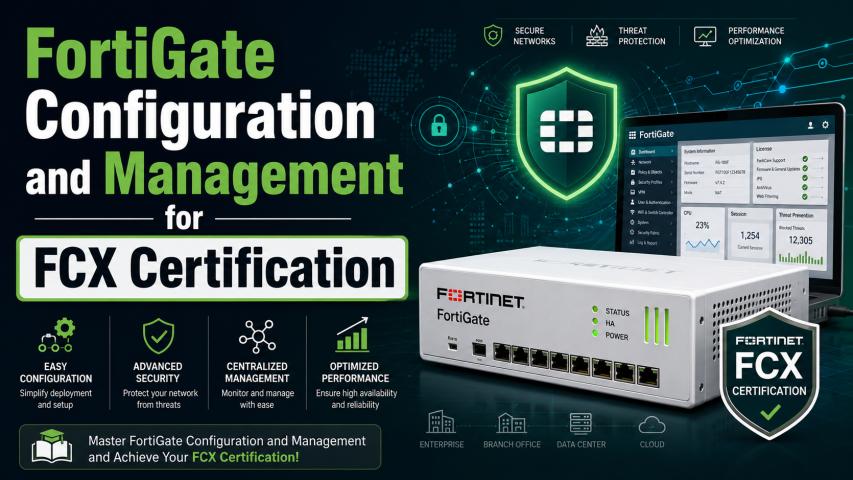
FortiGate Configuration Expertise
FortiGate firewalls are at the center of many enterprise security environments. FCX engineers must know how to configure and manage these devices effectively.
Key areas include:
Firewall policy management
NAT configuration
Security profiles
User authentication
Web filtering
SSL inspection
Practical experience with FortiGate deployments is essential for handling enterprise-level implementations.
High Availability Configuration
Business continuity is critical for organizations. Engineers should know how to configure:
Active-passive clusters
Active-active deployments
Failover mechanisms
Session synchronization
Redundancy strategies
High availability ensures minimal downtime during network failures or maintenance activities.
Security Fabric Knowledge
Understanding Fortinet Security Fabric
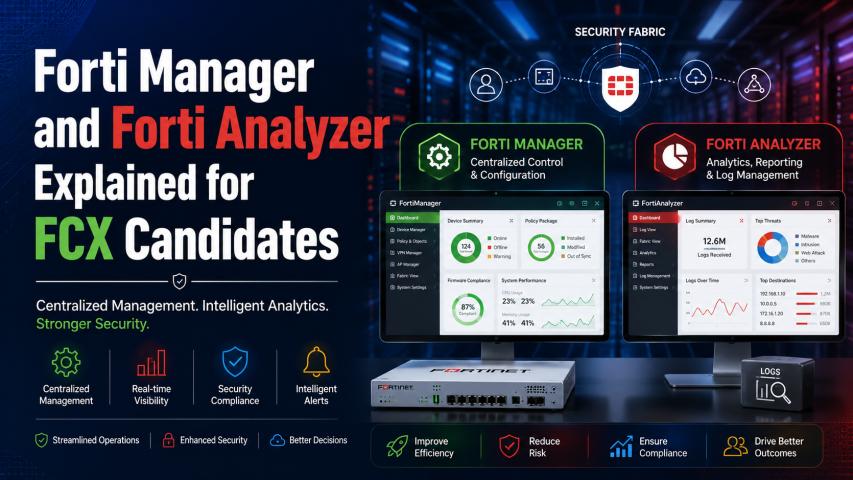
One of the most important concepts for FCX engineers is the Fortinet Security Fabric architecture.
This architecture provides unified security visibility and combines threat intelligence across diverse devices, networks, and operating environments.
Engineers should understand how Security Fabric helps with:
Centralized management
Automated threat response
Device integration
Network visibility
Security analytics
Integration Skills
Modern enterprises use multiple security platforms simultaneously. FCX engineers must know how to integrate Fortinet solutions with:
Cloud platforms
SIEM tools
Endpoint protection systems
Identity management solutions
Third-party cybersecurity products
Integration capabilities improve operational efficiency and threat detection accuracy.
VPN and Secure Remote Access Skills
IPsec VPN Configuration
Remote connectivity remains essential for businesses operating across multiple locations.
FCX engineers should be skilled in:
Site-to-site VPN deployment
Remote access VPN configuration
Encryption standards
Tunnel troubleshooting
Authentication methods
SSL VPN Management
SSL VPN solutions provide secure remote access for employees and contractors.
Important competencies include:
User access control
Multi-factor authentication
Endpoint verification
VPN optimization
Remote user troubleshooting
Secure remote access has become even more important in hybrid work environments.
Troubleshooting and Analytical Skills
Problem-Solving Capabilities
Troubleshooting is one of the most valuable skills for enterprise security engineers.
FCX professionals must be able to:
Identify network bottlenecks
Analyze security incidents
Resolve connectivity issues
Interpret logs efficiently
Perform packet analysis
Strong analytical thinking significantly improves operational efficiency.
Diagnostic Tool Knowledge
Engineers should understand how to use:
Packet capture tools
Log analyzers
Monitoring dashboards
CLI diagnostic commands
Performance monitoring utilities
Practical troubleshooting experience often separates advanced engineers from entry-level professionals.
Cloud Security Expertise
Multi-Cloud Security Understanding
Businesses are increasingly managing their operations across hybrid infrastructures and multiple cloud platforms.
FCX engineers should understand security implementations across:
Amazon Web Services
Microsoft Azure
Google Cloud Platform
Hybrid cloud infrastructures
Cloud security knowledge is becoming mandatory for enterprise cybersecurity roles.
Secure Cloud Connectivity
Key cloud-related skills include:
Cloud firewall deployment
Secure cloud migration
Virtual network security
Cloud VPN connectivity
Workload protection
As businesses continue cloud adoption, engineers with these skills remain in high demand.
Automation and Scripting Skills
Network Automation Knowledge
Automation reduces manual tasks and improves operational consistency.
FCX engineers should understand:
Python scripting
REST APIs
Infrastructure automation
Configuration management
Automated monitoring
Automation capabilities help enterprises scale their security operations more efficiently.
Security Orchestration
Security orchestration enables faster threat response and workflow management.
Engineers should be familiar with:
Automated policy deployment
Threat intelligence integration
Incident response automation
Alert management systems
Automation is becoming a major focus in enterprise cybersecurity environments.
Threat Detection and Incident Response
Cyber Threat Analysis
Modern security engineers must understand current cyber threats and attack techniques.
Critical knowledge areas include:
Malware analysis
Ransomware mitigation
Intrusion detection
Threat intelligence
Security event analysis
Understanding attacker behavior helps engineers strengthen enterprise defenses.
Incident Response Planning
Organizations expect FCX engineers to support security operations during cyber incidents.
Important incident response skills include:
Threat containment
Root cause analysis
Recovery planning
Security auditing
Compliance reporting
Strong incident response capabilities reduce operational risk.
Communication and Documentation Skills
Technical Communication
FCX engineers often work with IT teams, management, and clients. Clear communication is essential.
Professionals should be able to:
Explain technical concepts clearly
Prepare security reports
Document network architectures
Conduct technical presentations
Good communication improves collaboration across departments.
Documentation Practices
Proper documentation helps organizations maintain operational consistency.
Important documentation includes:
Network diagrams
Security policies
Configuration backups
Change management records
Incident reports
Well-maintained documentation supports troubleshooting and compliance requirements.
Continuous Learning and Certification
Keeping Up with Cybersecurity Trends
Cybersecurity evolves rapidly. FCX engineers must continuously update their knowledge.
Important areas to follow include:
Zero Trust security
AI-driven threat detection
Cloud-native security
SASE architecture
Emerging cyber threats
Continuous learning ensures long-term career growth.
Importance of Hands-On Practice
Practical lab experience is essential for mastering advanced Fortinet technologies.
Professionals preparing for expert-level certifications should focus on:
Real-world lab scenarios
Enterprise deployment simulations
Advanced troubleshooting exercises
Security integration projects
Hands-on exposure strengthens both technical confidence and operational skills.
Career Opportunities for FCX Engineers
Organizations worldwide are actively hiring advanced cybersecurity professionals with Fortinet expertise.
Common job roles include:
Network Security Engineer
Security Consultant
SOC Engineer
Firewall Administrator
Cybersecurity Architect
Security Operations Specialist
As cybersecurity investments increase globally, demand for highly skilled FCX professionals is expected to remain strong.
Conclusion
Fortinet FCX engineers require a broad combination of networking expertise, cybersecurity knowledge, automation skills, and real-world troubleshooting experience. Fortinet NSE 8 Organizations increasingly rely on professionals who can secure enterprise environments while maintaining performance and operational efficiency.
From firewall management and VPN deployment to cloud security and automation, the required skill set continues to evolve alongside modern cybersecurity challenges. Professionals who invest in continuous learning and practical experience can position themselves for long-term growth in the cybersecurity industry.
With enterprises prioritizing advanced threat protection and secure digital transformation, FCX-certified engineers are becoming valuable assets across industries worldwide.