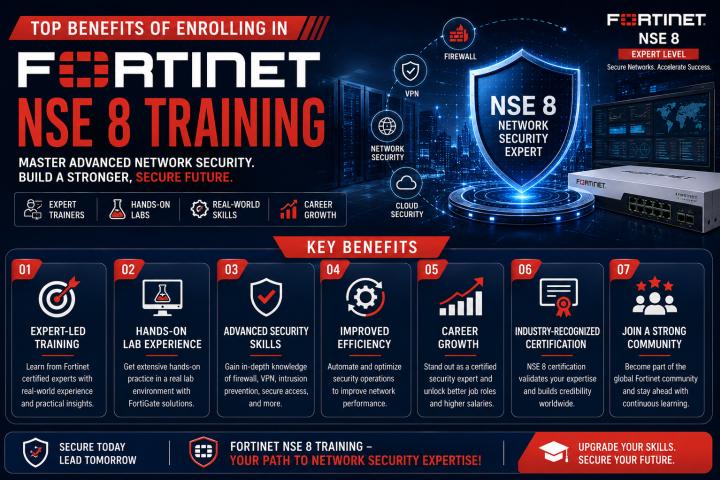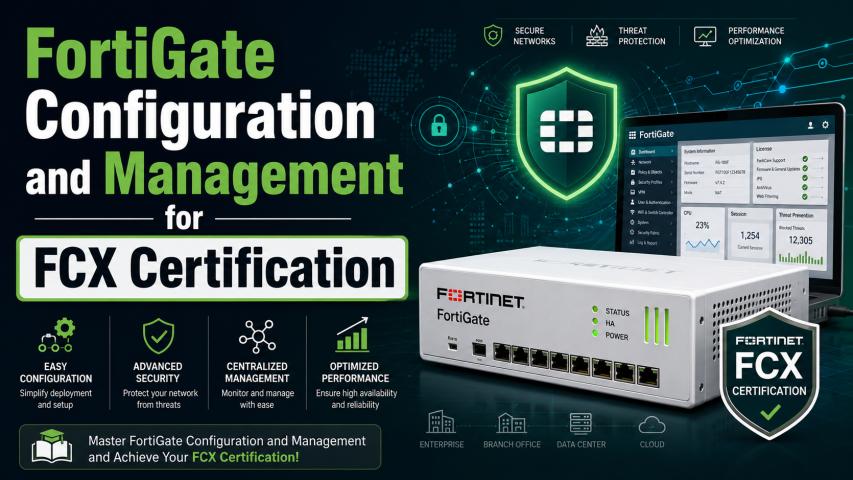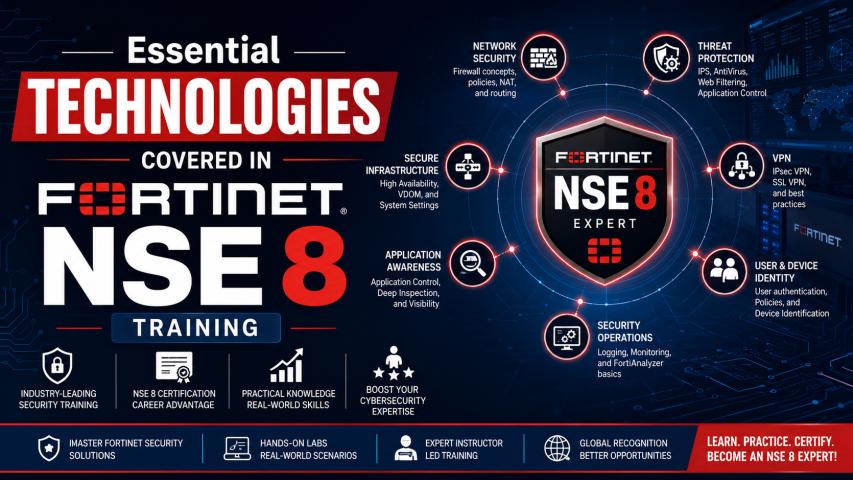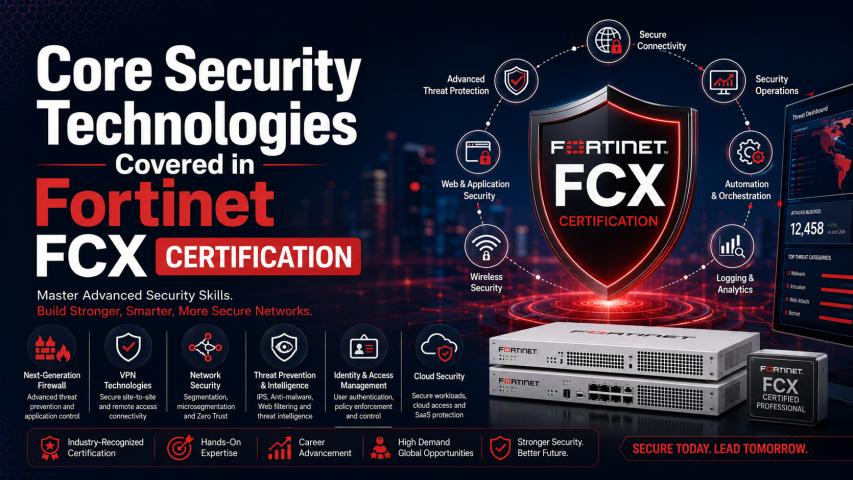
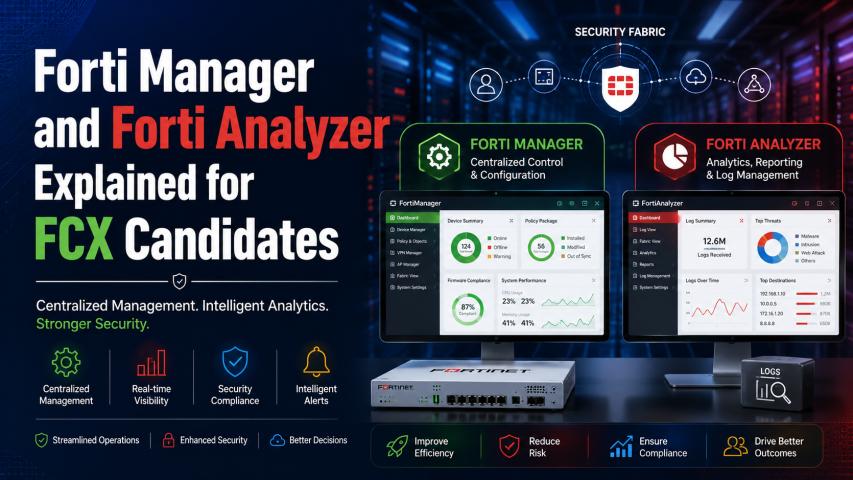
As enterprise networks become more complex, organizations require centralized tools to manage security policies, monitor network performance, and respond to cyber threats efficiently. Fortinet NSE 8 training helps cybersecurity professionals develop advanced expertise in using Fortinet's enterprise security solutions. Among the most important technologies covered during preparation are FortiManager and FortiAnalyzer, which play a vital role in managing and monitoring large-scale security environments. Understanding these platforms is essential for candidates preparing for advanced Fortinet certification exams and for professionals aiming to build successful careers in network security.
Understanding the Role of FortiManager and FortiAnalyzer
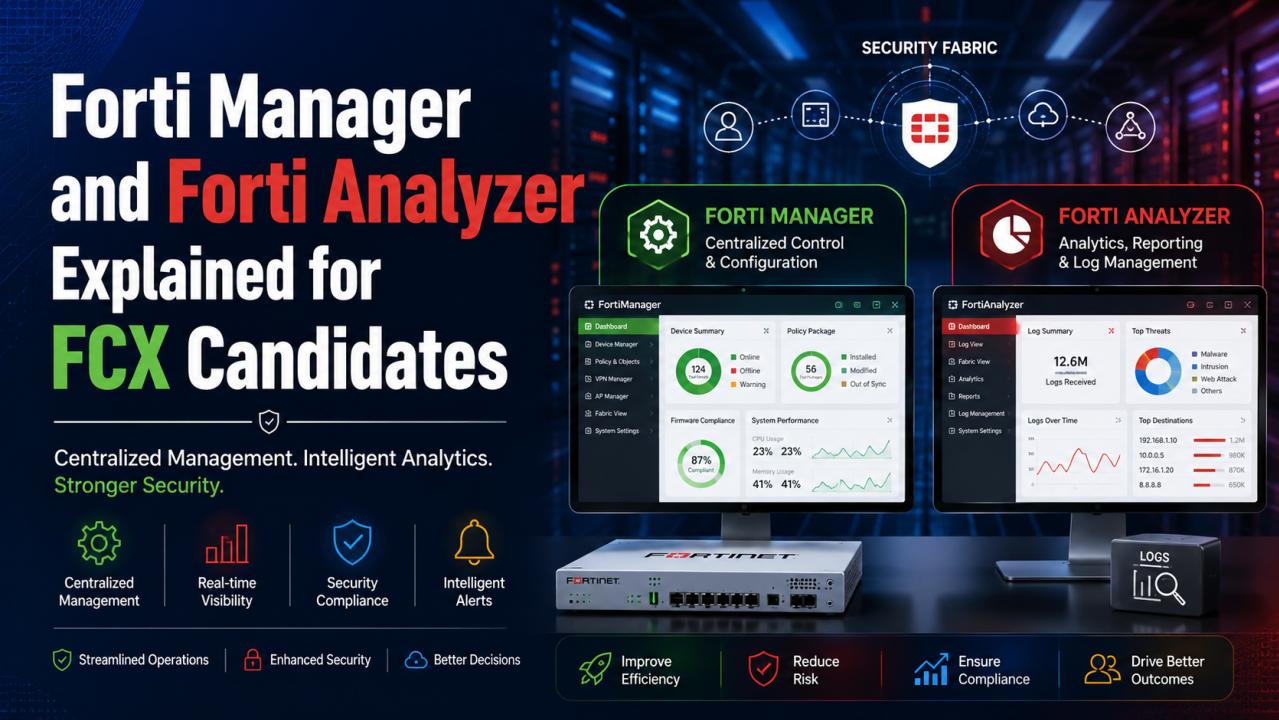
FortiManager and FortiAnalyzer are two core components of the Fortinet Security Fabric. While they work together to strengthen enterprise security operations, each platform serves a unique purpose.
FortiManager focuses on centralized device management and policy administration.
FortiAnalyzer specializes in log collection, reporting, analytics, and security event visibility.
Together, these solutions simplify security administration, improve operational efficiency, and provide valuable insights into network activity.
What Is FortiManager?
FortiManager is a centralized management platform designed to simplify the administration of multiple Fortinet security devices from a single interface.
Instead of configuring each firewall individually, administrators can create, deploy, and maintain security policies across multiple devices simultaneously.
Key Features of FortiManager
Centralized Device Management
FortiManager enables administrators to manage multiple FortiGate firewalls and other supported Fortinet devices through one centralized dashboard.
Benefits include:
Simplified administration
Reduced configuration errors
Faster policy deployment
Consistent security settings
Easier software upgrades
Policy Management
Security policies can be created once and applied across multiple devices.
This helps organizations:
Maintain consistent firewall rules
Reduce manual configuration
Improve compliance
Simplify large-scale deployments
Configuration Backup
FortiManager automatically stores device configurations, making it easier to restore settings if hardware failures or configuration issues occur.
Firmware Management
Administrators can schedule firmware updates for multiple devices simultaneously, reducing downtime and improving security posture.
Role-Based Access Control
Organizations can assign different administrative permissions based on employee responsibilities, improving operational security.
What Is FortiAnalyzer?
FortiAnalyzer is a centralized logging and analytics platform that collects security logs from Fortinet devices.
Its primary purpose is to help organizations monitor network activity, detect security threats, and generate detailed compliance reports.
Key Features of FortiAnalyzer
Centralized Log Collection
FortiAnalyzer gathers logs from:
FortiGate
FortiMail
FortiWeb
FortiClient
Forti Sandbox
Other Fortinet products
Centralized logging simplifies security investigations and long-term record management.
Career Benefits of Mastering FortiManager and FortiAnalyzer
Professionals who gain expertise in these solutions become valuable assets to organizations implementing enterprise security architectures.
Potential career opportunities include:
Network Security Engineer
Security Administrator
Security Consultant
SOC Analyst
Firewall Engineer
Infrastructure Security Engineer
Security Operations Engineer
Cybersecurity Consultant
Enterprise Security Architect
Knowledge of centralized management and security analytics significantly enhances technical credibility and career growth.
Conclusion
Understanding FortiManager and FortiAnalyzer is essential for professionals preparing for advanced Fortinet security roles. While FortiManager simplifies centralized device administration and policy deployment, FortiAnalyzer provides powerful log management, security analytics, reporting, and threat investigation capabilities. Together, these platforms help organizations maintain consistent security policies, improve operational efficiency, and strengthen overall cybersecurity posture. Building practical experience with these enterprise tools not only supports success in advanced certification exams but also prepares professionals for real-world security challenges across industries. Mastering these technologies is a valuable step toward achieving FCX Certification and advancing a successful career in enterprise cybersecurity.