Introduction
Precision is one of the most important factors in achieving successful surgical outcomes. Whether performing orthopedic reconstruction, dental implant placement, cranio-maxillofacial (CMF) surgery, or complex oncology procedures, every millimeter matters. Even minor deviations during surgery can affect implant positioning, healing, and long-term patient outcomes.
This is where the 3D printed surgical guide has transformed modern surgical practice. Designed using advanced medical imaging, computer-aided design (CAD), and additive manufacturing, these patient-specific guides help surgeons execute procedures with greater accuracy and confidence. Unlike conventional surgical methods that rely heavily on manual measurements and intraoperative judgment, 3D printed surgical guides provide a customized roadmap tailored to each patient's anatomy.
At Curewith3D, advanced engineering, Virtual Surgical Planning (VSP), and medical 3D printing technologies are combined to develop patient-specific surgical guides that support safer, faster, and more predictable surgical procedures.
What is a 3D-printed surgical guide?
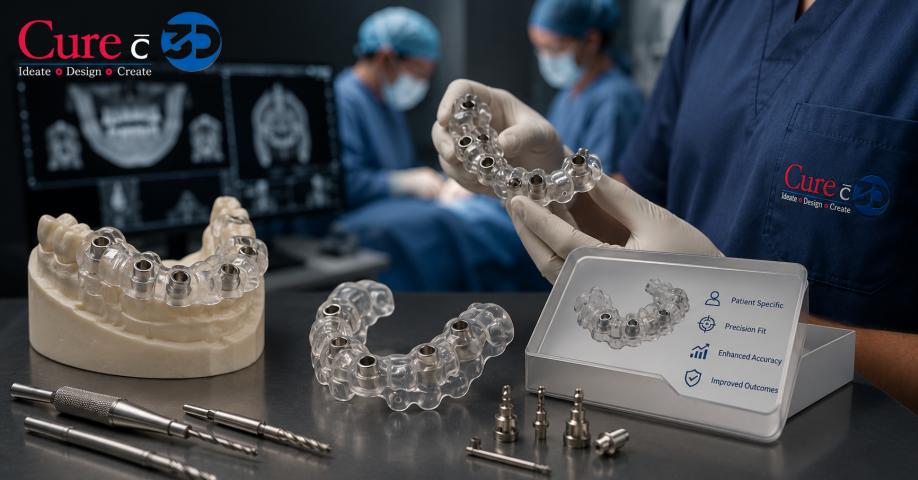
A 3D printed surgical guide is a customized medical device created from a patient's CT or MRI scan data. It is designed to fit precisely over the patient's bone or anatomical structure and helps surgeons perform critical surgical steps with exceptional accuracy.
These guides direct surgical instruments, drill paths, cutting angles, and implant positioning according to a pre-planned digital surgical workflow.
Unlike generic surgical templates, every guide is uniquely designed for an individual patient, improving precision while minimizing variability during surgery.
How Does a 3D Printed Surgical Guide Work?
The creation of a surgical guide follows a carefully planned digital workflow.
Step 1: Medical Imaging
The process begins with high-resolution CT or MRI scans that capture the patient's anatomy in detail.
Step 2: Digital Reconstruction
Specialized software converts imaging data into accurate three-dimensional anatomical models.
Step 3: Virtual Surgical Planning
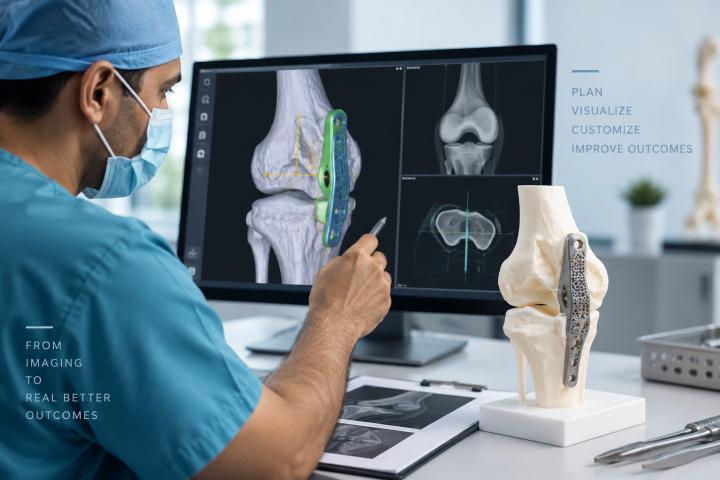
Surgeons and biomedical engineers collaborate to simulate the entire surgical procedure digitally. This stage determines cutting planes, drilling trajectories, implant positioning, and surgical objectives before entering the operating room.
Step 4: Guide Design
Using CAD software, engineers design a patient-specific surgical guide that fits precisely onto the targeted anatomy.
Step 5: 3D Printing
The guide is manufactured using medical-grade biocompatible materials through advanced 3D printing technology.
Step 6: Surgical Application
During surgery, the guide helps transfer the digital plan accurately to the patient, improving surgical precision and consistency.
Why Are 3D Printed Surgical Guides Important?
Modern surgeries often involve complex anatomical structures where even small deviations can affect clinical outcomes.
A 3D-printed surgical guide helps surgeons by:
- Improving surgical accuracy
- Enhancing implant positioning
- Reducing intraoperative uncertainty
- Shortening operating time
- Supporting minimally invasive techniques
- Improving reproducibility
- Increasing surgical confidence
These benefits make surgical guides an essential component of personalized healthcare.
Clinical Applications of 3D Printed Surgical Guides
Orthopedic Surgery
Orthopedic surgeons frequently use customized surgical guides for:
- Complex fracture reconstruction
- Knee replacement surgery
- Hip replacement surgery
- Limb deformity correction
- Bone tumor reconstruction
- Revision of orthopedic procedures
Patient-specific guides help restore anatomical alignment with greater precision than conventional freehand techniques.
Cranio-Maxillofacial (CMF) Surgery
Facial reconstruction demands exceptional accuracy because both function and aesthetics depend on precise bone positioning.
A 3D printed surgical guide supports procedures such as:
- Mandibular reconstruction
- Maxillary reconstruction
- Orbital floor repair
- Facial trauma surgery
- Skull reconstruction
- Orthognathic surgery
Customized cutting guides ensure planned osteotomies are accurately transferred during surgery.
Dental Implant Surgery
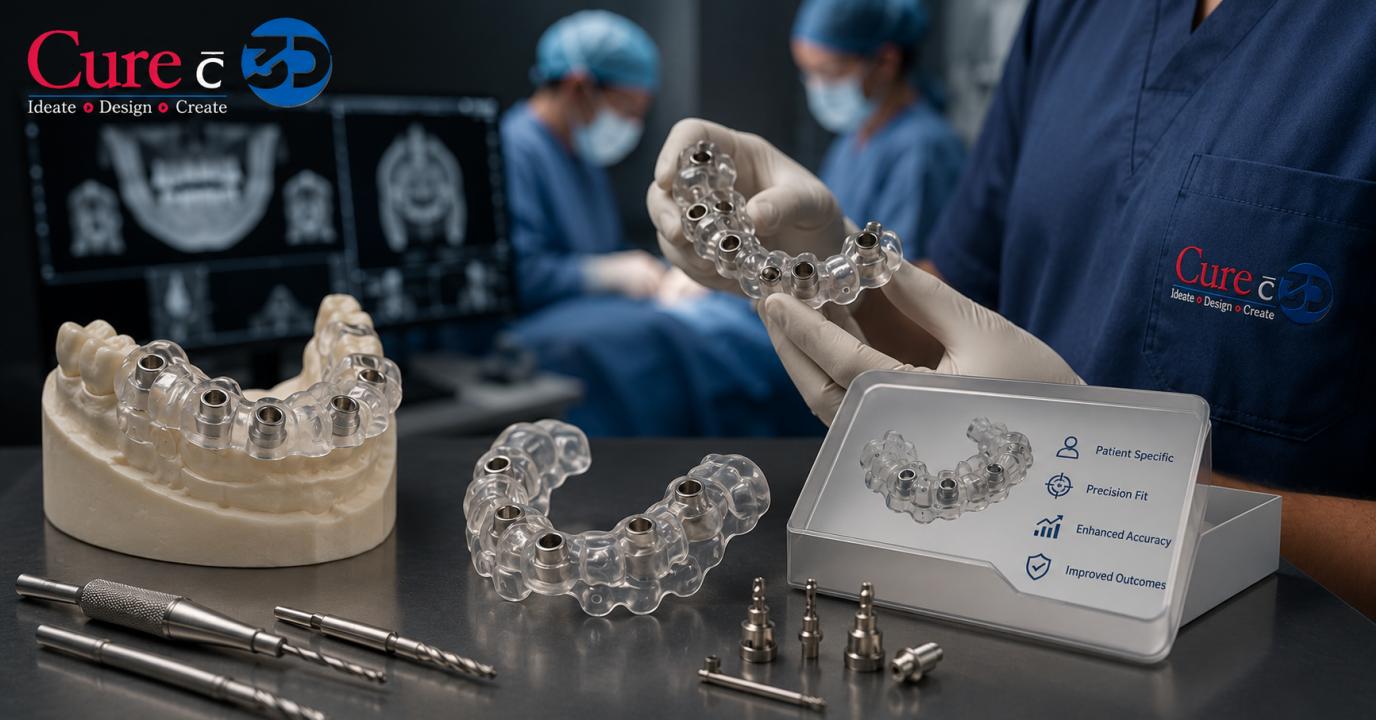
In implant dentistry, surgical guides improve the accuracy of implant placement by controlling drilling depth, angle, and position.
Benefits include:
- Better implant alignment
- Reduced surgical errors
- Improved prosthetic outcomes
- Faster procedures
- Better patient comfort
Oncology Reconstruction
After tumor removal, reconstructive surgery often requires highly accurate bone resection and implant placement.
Customized surgical guides help surgeons achieve planned resection margins while preserving healthy tissue whenever possible.
Advantages of Using a 3D Printed Surgical Guide
Improved Surgical Precision
Every guide is designed around the patient's anatomy, allowing highly accurate surgical execution.
Reduced Operating Time
Pre-planned procedures reduce intraoperative measurements and adjustments, improving surgical efficiency.
Better Implant Fit
Accurate implant positioning contributes to improved biomechanics and long-term clinical outcomes.
Increased Patient Safety
Better planning and precise guide placement may reduce complications associated with implant misalignment.
Enhanced Surgical Predictability
Because surgeons rehearse procedures digitally beforehand, surgical outcomes become more consistent and reproducible.
Materials Used in 3D Printed Surgical Guides
Medical-grade materials commonly include:
- Biocompatible photopolymer resin
- Sterilizable polymer materials
- Nylon
- High-performance engineering polymers
These materials are selected based on surgical application, sterilization requirements, and regulatory standards.
Traditional Surgery vs 3D Printed Surgical Guide
| Traditional Surgery | 3D Printed Surgical Guide |
|---|---|
| Manual measurements | Patient-specific precision |
| Greater surgical variability | Consistent execution |
| Longer operating time | Improved efficiency |
| Limited preoperative simulation | Complete digital planning |
| Generic instruments | Customized surgical workflow |
| Higher dependence on intraoperative judgment | Guided surgical execution |
Benefits for Surgeons
Using a 3D-printed surgical guide allows surgeons to:
- Visualize procedures before surgery
- Improve procedural confidence
- Simplify complex surgeries
- Reduce intraoperative stress
- Improve communication with engineering teams
- Achieve more predictable outcomes
Benefits for Patients
Patients may experience several advantages, including:
- More accurate surgery
- Reduced anesthesia time
- Less tissue trauma
- Better functional outcomes
- Faster recovery
- Improved implant positioning
- Greater long-term satisfaction
While every patient's recovery varies, personalized surgical planning contributes to more consistent clinical outcomes.
The Future of 3D Printed Surgical Guides
Medical technology continues to evolve rapidly.
Future developments include:
- Artificial Intelligence-assisted surgical planning
- Robotic-assisted surgery
- Smart surgical guides
- Augmented Reality navigation
- Automated implant design
- Digital twin simulations
- Cloud-based surgical collaboration
Together, these innovations will further improve surgical precision and personalized patient care.
How Curewith3D Supports Precision Surgery
At Curewith3D, advanced Virtual Surgical Planning, biomedical engineering, and medical 3D printing technologies are integrated to develop patient-specific surgical solutions for orthopedic, cranio-maxillofacial, oncology, and reconstructive procedures.
Working closely with surgeons, Curewith3D designs customized 3D-printed surgical guides that help improve surgical accuracy, streamline complex procedures, and support better patient outcomes through personalized healthcare solutions.
Frequently Asked Questions (FAQs)
What is a 3D printed surgical guide?
A 3D-printed surgical guide is a customized medical device created from CT or MRI scan data to help surgeons accurately perform drilling, cutting, and implant placement during surgery.
Which surgeries use 3D printed surgical guides?
They are widely used in orthopedic surgery, dental implant surgery, cranio-maxillofacial surgery, oncology reconstruction, trauma surgery, and corrective jaw surgery.
How accurate are 3D printed surgical guides?
Because they are designed using patient-specific anatomy and digital surgical planning, they provide significantly higher precision than conventional freehand techniques.
Are surgical guides reusable?
No. Most patient-specific surgical guides are manufactured for single-patient use to maintain sterility and ensure accuracy.
How does Virtual Surgical Planning improve surgical guides?
Virtual Surgical Planning allows surgeons to simulate the procedure digitally before manufacturing the guide, ensuring precise execution during surgery.
Conclusion
A 3D-printed surgical guide has become an essential tool in modern precision surgery. By combining advanced imaging, digital planning, and additive manufacturing, these patient-specific devices help surgeons perform complex procedures with greater confidence, accuracy, and efficiency.
From orthopedic reconstruction and dental implant placement to cranio-maxillofacial and oncological surgeries, customized surgical guides are improving surgical precision while supporting better patient outcomes. As digital healthcare continues to evolve, technologies such as Virtual Surgical Planning, AI, and medical 3D printing will further enhance personalized surgical care.
Curewith3D is committed to advancing precision surgery by providing innovative Virtual Surgical Planning, patient-specific engineering, and 3D-printed surgical guide solutions that help healthcare professionals deliver safer, more predictable, and patient-centered surgical outcomes.