Launching a freelance marketplace is no longer just about connecting clients with freelancers. If you design your platform with the right business model, it can become a reliable source of recurring revenue while delivering value to both sides of the marketplace.
Whether you're a startup founder, entrepreneur, or business owner looking to enter the gig economy, understanding how a Freelancer Clone generates sustainable income is just as important as choosing the right technology. In this guide, I'll explain the revenue strategies that successful freelance marketplaces use and how you can apply them to your own platform.
How Does a Freelancer Clone Generate Recurring Revenue?
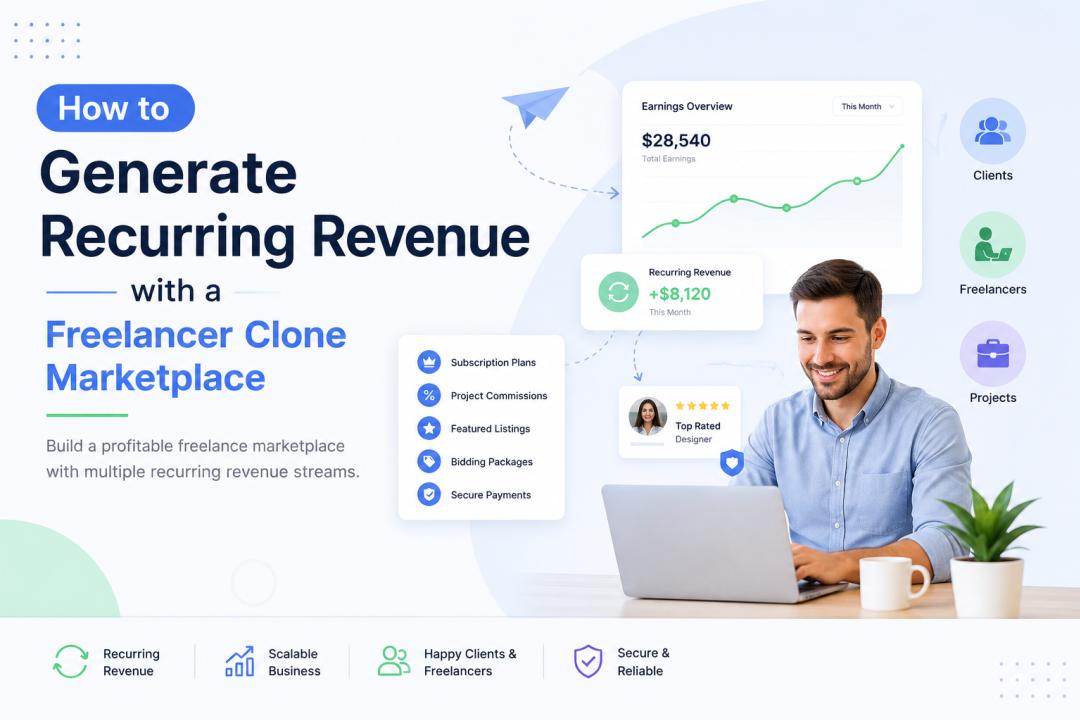
A Freelancer Clone generates recurring revenue by combining multiple monetization methods instead of relying on a single income source. Common revenue streams include:
Project commission fees
Premium membership subscriptions
Featured job postings
Freelancer bidding packages
Sponsored listings
Payment processing fees
Value-added business services
The combination of these revenue models helps create predictable income while keeping the platform valuable for freelancers and employers.
Why a Subscription-Based Marketplace Works
Many marketplace owners initially focus only on commissions. While commissions are important, they depend on completed projects.
Recurring subscriptions provide more predictable monthly revenue. Businesses may subscribe for better visibility, advanced hiring tools, or priority support. Freelancers often pay for additional bids, profile promotion, analytics, or higher proposal limits.
This creates steady cash flow even during slower hiring periods.
Multiple Revenue Streams Create a Stronger Business
One of the biggest advantages of a Freelancer Clone Script is flexibility. Instead of depending on one payment source, you can combine several monetization options.
1. Project Commission
Charge a percentage or fixed fee whenever a project is successfully completed.
This keeps revenue aligned with marketplace activity.
2. Premium Membership Plans
Offer subscription tiers that include:
Unlimited proposals
Better profile visibility
Lower service fees
Hiring management tools
Advanced reporting
Recurring memberships often become one of the platform's most stable revenue sources.
3. Featured Listings
Businesses looking to hire quickly often pay to highlight their projects.
Likewise, freelancers may promote their profiles to appear higher in search results.
Additional Monetization Opportunities
As your marketplace grows, additional services can increase customer lifetime value.
Consider offering:
Identity verification
Escrow payment services
Team collaboration tools
AI-powered freelancer recommendations
Recruitment assistance
API integrations for businesses
Advertising placements
These services improve the user experience while creating additional income opportunities.
Focus on User Trust First
Revenue only grows when users trust the platform.
A successful freelance marketplace development strategy includes features such as:
Secure payment processing
Escrow protection
Transparent review systems
Verified freelancer profiles
Dispute resolution
Real-time messaging
Project milestone management
When both freelancers and clients feel secure, they're more likely to return for future projects.
Build for Long-Term Growth
Many new marketplace owners think about launching quickly, but long-term scalability matters even more.
As your user base grows, your platform should support:
Multiple service categories
International payments
Mobile applications
Multi-language support
Business dashboards
Analytics and reporting
Planning these features early makes expansion much easier later.
Choosing the Right Freelancer Clone
Not every solution offers the same level of flexibility.
When evaluating a Freelancer Clone, look for:
Customizable workflows
Scalable architecture
Secure payment integration
Subscription management
Admin dashboard
SEO-friendly structure
Mobile responsiveness
API support
These capabilities help reduce future development costs while supporting business growth.
Conclusion
A successful Freelancer Clone isn't simply a platform for posting freelance jobs—it's a business built around recurring customer value. By combining subscriptions, commissions, featured listings, premium services, and secure payment systems, you can create a marketplace with multiple dependable revenue streams.
If you're planning to launch a freelance marketplace, focus on delivering a trustworthy user experience first. Strong features and thoughtful monetization will naturally support long-term revenue growth while helping your platform stand out in a competitive market.
Ready to launch your own Freelancer Clone marketplace? Start with a scalable platform that supports recurring revenue from day one.