
Quick Summary: Sustainable acoustic wall panels are redefining modern interior design in 2026. Today's commercial and residential projects demand materials that dampen noise while minimizing environmental impact. Key trends include PET felt made from recycled ocean plastics, rapidly renewable wood wool, biophilic organic finishes, and modular closed-loop designs. This guide explores top eco-friendly acoustic wall panel trends for 2026 and how to integrate them into your space.
Introduction
Modern architecture places a huge focus on wellness, sound management, and environmental responsibility. Hard architectural surfaces like glass partitions, polished concrete, and open steel structures dominate contemporary layouts, often creating harsh indoor echo. Traditional acoustic fixes relied on energy-intensive synthetic materials.
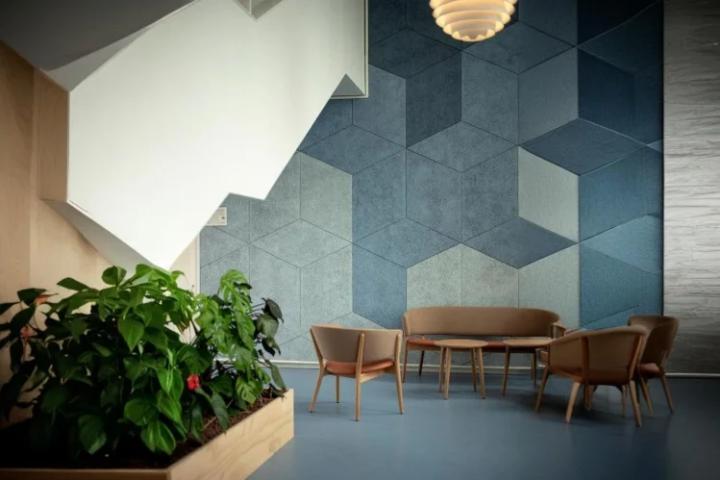
In 2026, the trend has shifted completely toward eco-friendly innovation. Sustainable acoustic wall panels and acoustic boards for walls now combine high-performance sound absorption with carbon-neutral manufacturing.
Here is a breakdown of the leading trends shaping sustainable acoustic design this year.
1. Upcycled PET Felt from Ocean Plastics
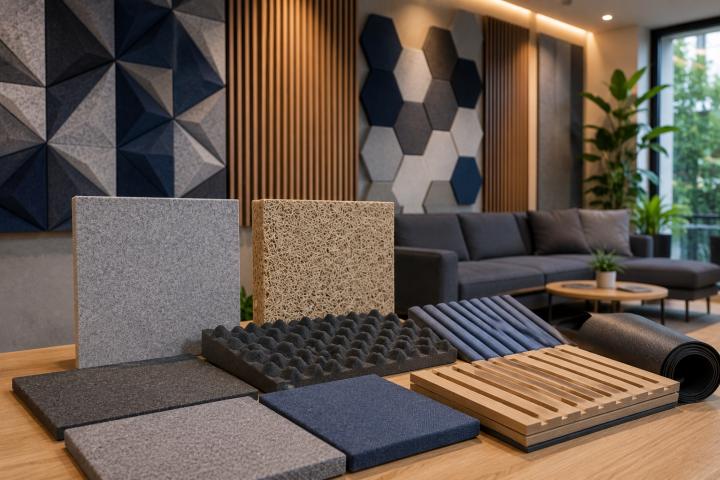
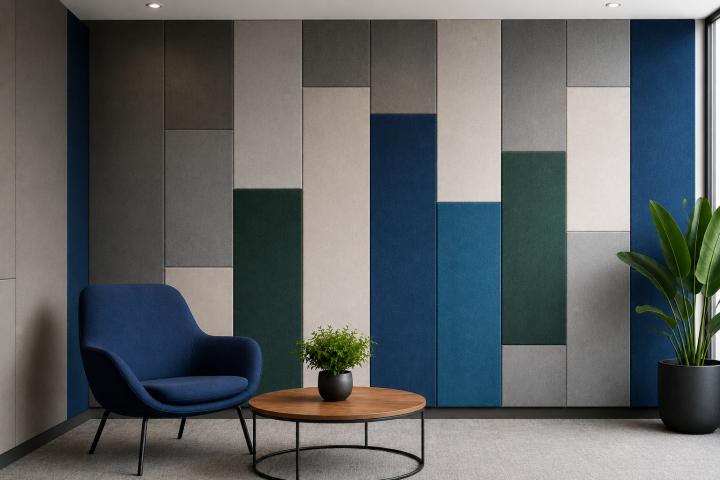
Polyethylene Terephthalate (PET) felt continues to lead the eco-friendly acoustic market. Manufactured by melting down post-consumer plastic bottles and ocean-bound plastics, PET acoustic boards transform waste into dense, fibrous sound absorbers.
- Key Benefits: Lightweight, non-allergenic, highly durable, and completely moisture-resistant.
- 2026 Evolution: Manufacturers are moving toward 100% post-consumer content without chemical binders, allowing panels to be fully recycled again at the end of their lifecycle.
2. Bio-Based Wood Wool Panels
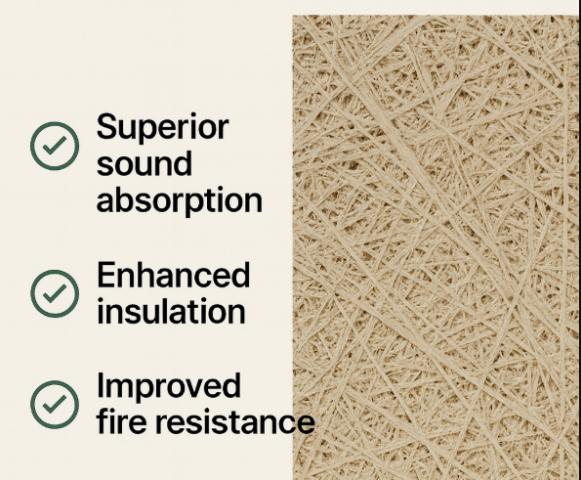
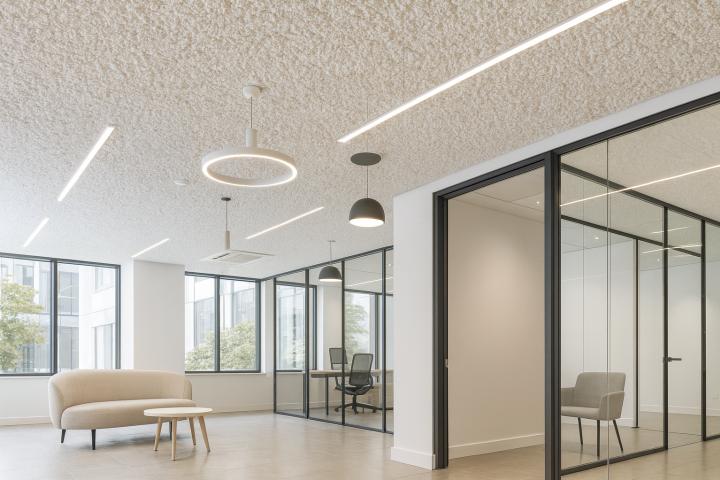
Wood wool acoustic panels combine natural wood fibers, water, and mineral binders like cement or lime. This creates a breathable, highly textured acoustic board that traps sound while regulating indoor humidity.
- Sustainability Edge: Uses rapidly renewable wood fibers sourced from certified sustainable forests.
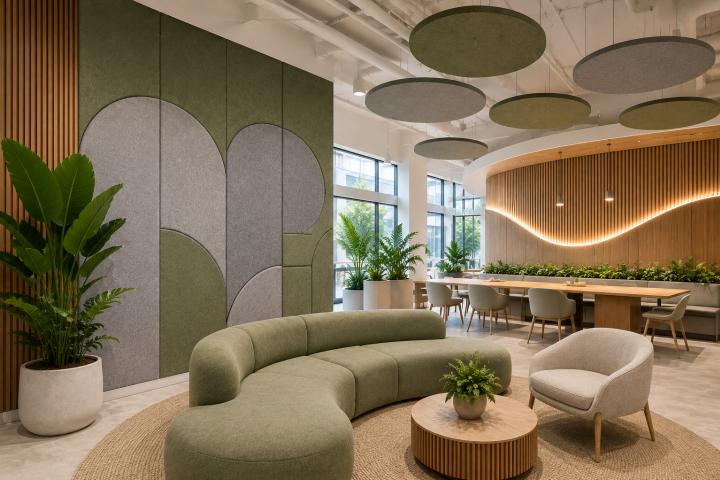
- Design Trend: Raw, earthy textures and organic wood grains are replacing slick, synthetic finishes, bringing biophilic elements directly into offices and homes.
3. Natural Plant Fiber Composites
Beyond PET and wood wool, 2026 has seen a surge in agricultural waste composites. Acoustic boards made from hemp, cork, coconut husk fibers, and mycelium (mushroom root networks) are entering high-end interior projects.
- Carbon Negative: These rapidly renewable crops absorb more carbon during growth than is emitted during manufacturing.
- Acoustic Performance: Natural fibrous structures provide excellent mid-to-high frequency sound absorption.
4. Closed-Loop Circularity and Modular Design
Sustainability in 2026 is not just about raw materials; it is about the product lifecycle. Designers favor modular acoustic boards for walls that click together without toxic glues or permanent adhesives.
- Easy Retrofitting: Modular panels allow easy replacement of damaged tiles without tearing down whole wall assemblies.
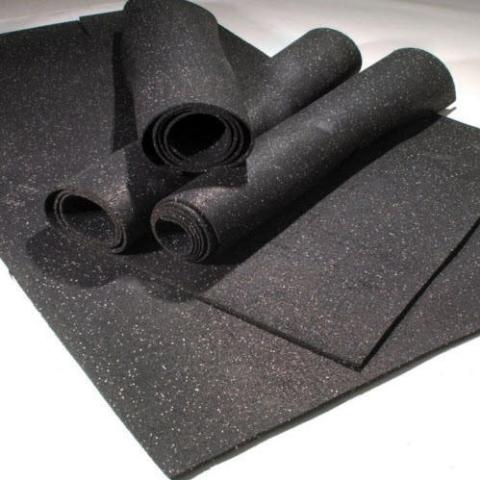
- Take-Back Programs: Leading acoustic brands offer circular take-back schemes, ensuring old panels are re-processed into new acoustic sheet materials rather than sent to landfills.
5. Non-Toxic, Zero-VOC Formulations
Indoor air quality matters just as much as acoustic comfort. Sustainable acoustic wall panels in 2026 prioritize non-toxic construction:
- Zero Volatile Organic Compounds (VOCs): Panels emit no harmful off-gassing, protecting indoor air quality.
- Formaldehyde-Free Binders: Uses natural starch or water-based binders instead of traditional resin adhesives.
Conclusion
Sustainable acoustic wall panels prove that you do not have to choose between environmental responsibility and outstanding sound control. By choosing recycled PET felt, natural wood wool, or agricultural fiber boards, you can eliminate unwanted echo, improve speech clarity, and reduce your carbon footprint all at once.
These eco-friendly materials are designed to deliver excellent acoustic performance while minimizing environmental impact through renewable, recycled, or responsibly sourced resources. They are suitable for offices, schools, homes, hospitality spaces, and commercial interiors, offering both functionality and modern aesthetics.
Investing in sustainable acoustic solutions creates quieter, healthier environments while supporting long-term environmental conservation and responsible building practices.
Create Green, Peaceful Spaces with Tranquil Global
Looking to upgrade your space with sustainable acoustic treatments? Tranquil Global offers eco-friendly acoustic wall panels, wood wool boards, and custom soundproofing solutions engineered for modern architecture. Contact our experts at Tranquil Global today for eco-conscious acoustic consultations and custom quotes.
FAQs
Are sustainable acoustic boards as effective as traditional fiberglass panels?
Yes. High-density sustainable materials like recycled PET felt and wood wool achieve Noise Reduction Coefficients (NRC) between 0.75 and 0.95, matching the performance of conventional fiberglass absorbers.
How do sustainable acoustic wall panels improve indoor air quality?
Eco-friendly panels are engineered with zero-VOC finishes and formaldehyde-free binders. This prevents toxic off-gassing, keeping indoor air clean and safe for occupants.
Can PET felt acoustic panels be recycled again?
Most high-quality PET acoustic panels are 100% recyclable. Because they are made from pure polyester fibers without complex chemical backings, they can be re-shredded and recycled back into new acoustic products.
Where should sustainable acoustic wall panels be installed?
Mount panels on primary sound reflection points, such as side walls in conference rooms, open-plan offices, hallways, and living areas where echo is highest.
How do you clean natural wood wool acoustic panels?
Simply vacuum wood wool panels periodically using a soft brush attachment. Avoid soaking them with water or harsh chemical cleaners.