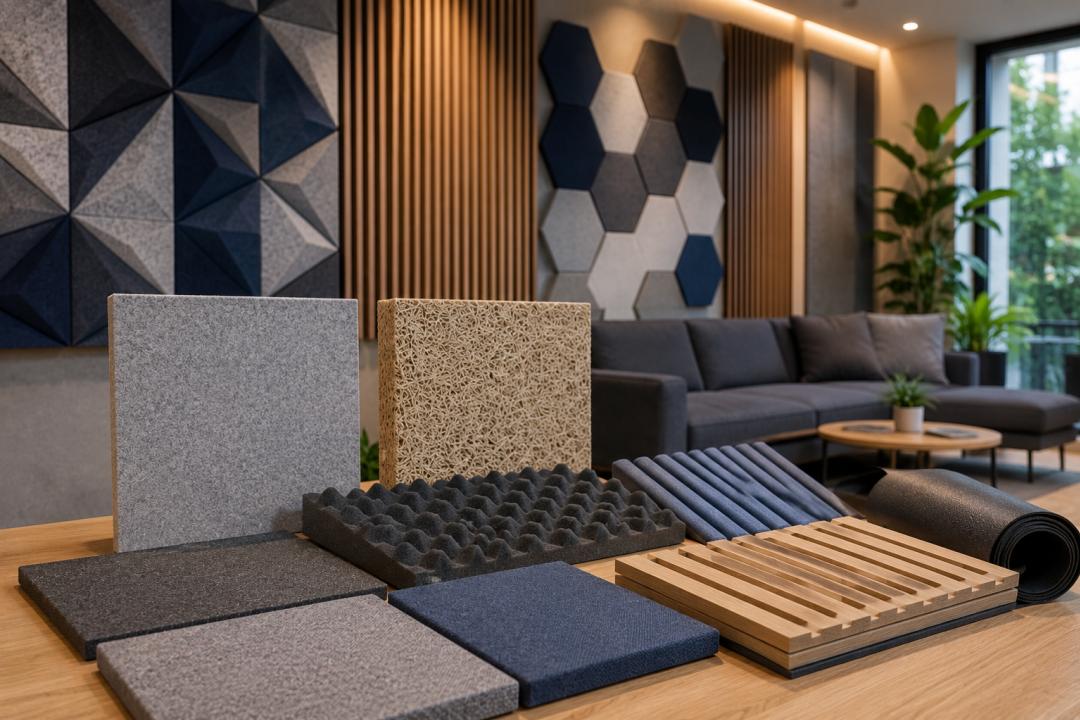

Noise does not always have to be extremely loud to become annoying. Sometimes, it is simply everywhere. A conversation from across the room. A phone ringing nearby. Chairs moving. People walking. A meeting happening behind a partition. The sound of traffic outside. Individually, these noises may seem harmless. Together, they can make a room feel tiring.
This is where acoustic design becomes important. The goal is not necessarily to make a room silent. It is to stop sound from constantly bouncing around and building up until everything starts sounding like one continuous layer of noise. That is where acoustic materials come in.
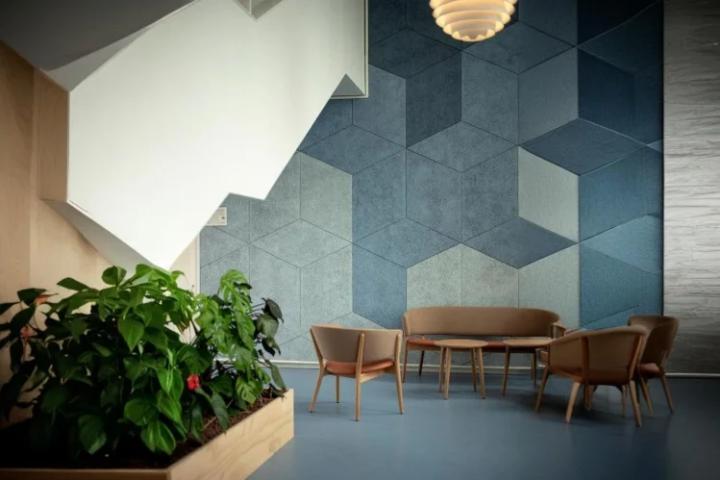
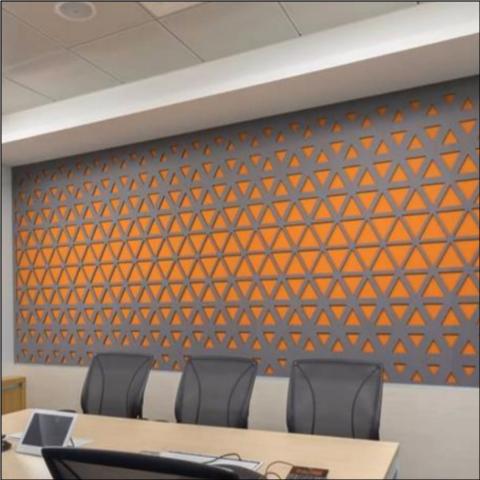
When appropriately selected and positioned, acoustic materials for walls can help manage reflections and reverberation. An acoustic panel material can transform a hard, reflective wall into a surface that contributes to a more controlled acoustic environment. The result is surprisingly simple. The room starts feeling easier to hear in.
1. Why do Walls Make a Room Sound Noisy?
Walls are everywhere. And most conventional walls are relatively hard surfaces. When sound reaches them, some of that sound energy can reflect back into the room. Now imagine several walls doing the same thing. A voice travels across the room. It reaches one wall. The sound reflects.
It reaches another surface. It reflects again. These repeated reflections contribute to reverberation. The longer sound remains in the room, the more crowded the acoustic environment can feel.
2. Acoustic Materials Change what Happens to Reflected Sound
This is where wall treatment becomes useful. Acoustic materials can be designed to absorb some of the sound energy that would otherwise be reflected. Instead of every sound wave continuing to bounce around the room, some of its energy is absorbed by the acoustic treatment.
The result can be less reverberation and a more controlled sound environment. It does not mean every noise disappears. It means the room stops helping that noise travel and linger unnecessarily.
3. Acoustic Materials for Walls Give Large Surfaces a Purpose
A large blank wall is often treated purely as an architectural surface. However, acoustically it can be much more than that. A wall can become part of the room's sound-control strategy. Acoustic materials for walls can introduce absorption into areas that would otherwise remain reflective.
This is especially useful in:
Offices
Meeting rooms
Classrooms
Restaurants
Hotels
Libraries
Auditoriums
Studios
Reception areas
Residential interiors
Read to know more about acoustic panel material here: Acoustic Treatment Materials You didn’t Know You Needed… Here’s the List?
4. The Difference between Noise and Reverberation Matters
This is one of the most important things to understand. Acoustic treatment does not automatically stop sound from entering a room. If traffic noise is coming through a poorly insulated window, installing an acoustic panel on the opposite wall may not solve the transmission problem. But if voices are bouncing around inside the room, acoustic treatment can be much more relevant.
In simple terms:
Sound isolation helps stop unwanted sound from entering or leaving. Acoustic absorption helps manage sound inside the room. Knowing the difference helps you choose the right solution.
5. An Acoustic Panel Material is Part of a Larger System
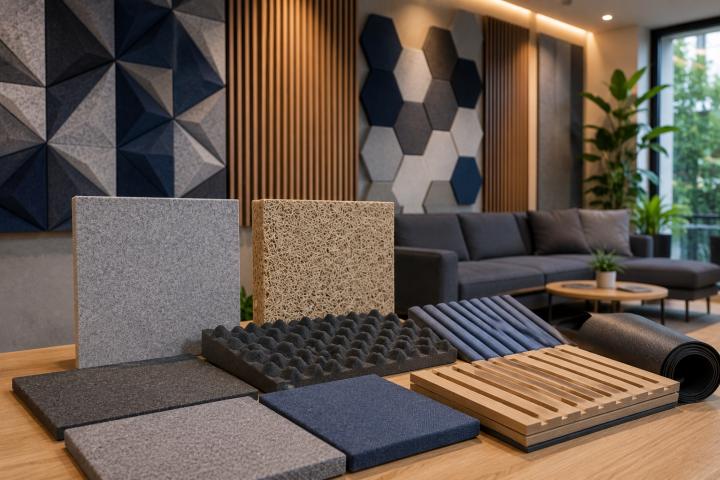
The visible surface is only part of the story. An acoustic panel material may have a particular structure designed to interact with sound.
Its performance can depend on factors such as:
Material composition
Thickness
Density
Surface structure
Panel size
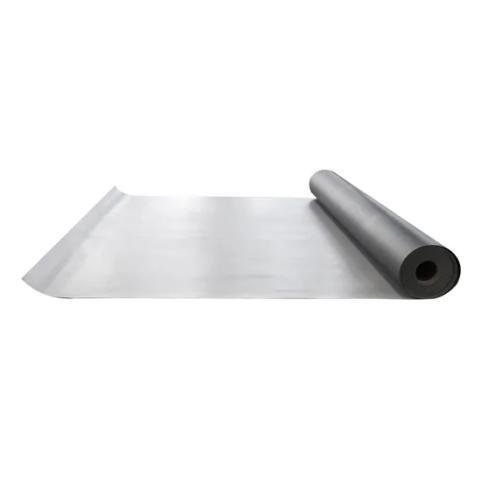
Backing material
Air gap
Mounting configuration
This is why two panels that look similar can behave differently acoustically. The complete system matters.
Conclusion
Noise becomes difficult when it starts controlling the experience of a room. When reflections continue bouncing between hard surfaces, ordinary sounds can accumulate and become tiring. Acoustic materials provide a way to change that environment. Acoustic materials for walls can introduce absorption to large reflective surfaces.
An appropriately designed acoustic panel material can help control reverberation and support clearer communication.
And when these products are thoughtfully integrated, they can contribute to the visual identity of the space as well. The goal is not to make every room silent. It is to make sound manageable. Because when the room stops fighting every conversation, people can finally focus on what actually matters.
Turn a Reflective Wall into a More Comfortable Space
Good acoustic design begins with understanding the room rather than simply adding panels wherever there is empty wall space. Tranquil Global provides acoustic solutions designed to combine sound management with contemporary interior design. Whether you are looking for acoustic materials, acoustic materials for walls, or the right acoustic panel material, the solution should be selected around the way your space is actually used.
FAQs
1. What are acoustic materials?
Acoustic materials are products designed to influence how sound behaves within a space. Depending on their construction and application, they can absorb, diffuse, or otherwise manage sound.
2. What are acoustic materials for walls used for?
They are commonly used to help control sound reflections and excessive reverberation on wall surfaces. This is particularly seen in rooms where speech clarity and acoustic comfort are important.
3. Can wall acoustic materials reduce echo?
Yes. Appropriately selected absorptive wall treatments can reduce reflected sound and help control excessive echo and reverberation.