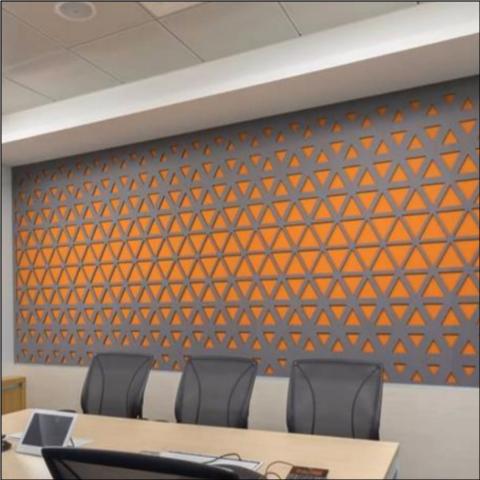

Try knocking on a solid wooden board. Have you heard a sharp, hollow tap? Now picture the same board covered in tiny holes. The tap softens. So does the room around it. That change comes down to one number. This is the perforation ratio. A wooden acoustic panel looks warm and natural from the outside. Behind the pattern, the amount of open area decides how much sound gets in and how much bounces back.
Let’s go through the factors.
Wood itself does not Absorb Much
Timber is known to be dense and rigid. It is mostly left solid. This is because it mostly bounces sound back into the room. That’s why acoustic wooden panels rely on perforations paired with an absorber that is pinned behind them. The holes let sound travel through the face strongly. This lets the material behind to do all the soaking up.
A Low Ratio Limits what Gets through
When only a small share of the face is open, much of the sound still hits solid wood and reflects in the long run. Absorption stays modest. Then, it tends to concentrate in a narrow band of frequencies. Low ratios can still be useful. They suit rooms that need a gentle touch. Additionally, they also go well with a very solid, and refined look. Just don’t expect them to tame a lively space on their own.
A Higher Ratio Opens the Door Wider
As open area grows, more sound reaches the absorber behind the face. Absorption usually becomes broader and stronger. There’s a catch. Wood needs enough material left to stay strong and stable. Push the ratio too high. Soon, you will see that the panel loses rigidity and visual calm. The sweet spot balances both.
Hole Size Changes the Behaviour
Two panels can share the same ratio and still behave differently. One may have many small holes. Another may have fewer large ones. Small holes interact with sound in finer ways. In this sector, micro-perforations can add their own absorbing effect. Larger holes are easier to machine and look bolder. Check the test data for the exact pattern. This is because results depend on the combination.
Spacing and Pattern Shape Both Look and Sound
Hole spacing sets the rhythm of the face. The tight grids begin to feel sleek. Wide, scattered patterns feel very much organic. Slots, grooves and round holes each create a different effect also. Designers choose them for >
Read to know more about acoustic wood wall panels here: Why Acoustic Wood Wall Panels are Architects’ Go-to Choice
The Backing does the Real Absorbing
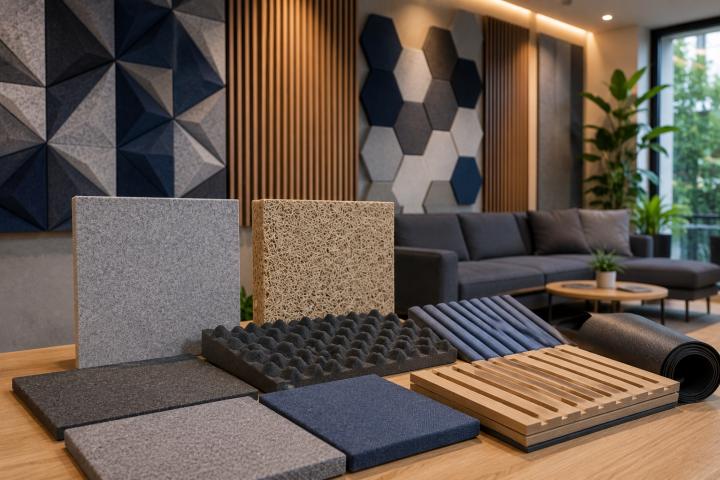
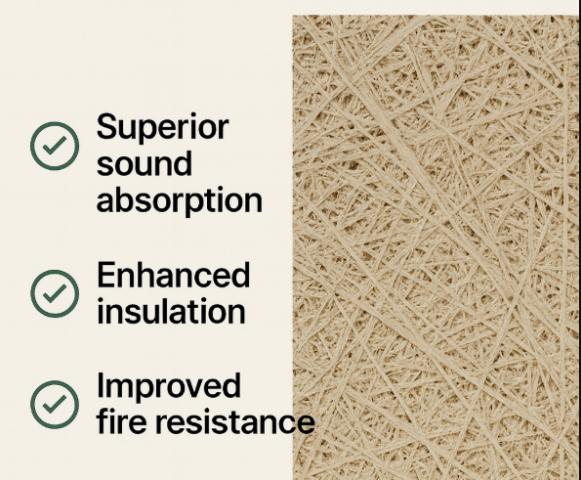
Most acoustic wood wall panels carry a layer of acoustic fleece. They also carry mineral wool or similar material behind the perforated face. That layer is the true absorber. After all, perforations give sound access. The backing also slows it down. It also removes energy at all levels. Without good backing, even a generous open area achieves little.
Thickness and Air Gap Extend the Range
A thicker absorber works on a wider range of sound now. This is because an air cavity behind the panel often helps with deeper tones. This is harder to manage. Mounting matters a lot here. A board fixed tight to a wall behaves differently from the one that is spaced away on battens. This is why it is important for you to always match your planned installation to the tested setup.
Frequencies Respond Differently
Sound is not one pitch. This is because speech, footsteps, music and machinery all sit at different frequencies. Perforation ratio influences which of those get absorbed best. A single average rating can hide this. So, ask for the full frequency breakdown if your room has a specific problem. This can include boomy bass or harsh speech reflections.
Finishes can Quietly Block the Holes
Veneers, lacquers and paints add beauty and protection. Applied carelessly, they can narrow or clog the openings. Good manufacturers finish panels so the perforations stay clear. Heavy coatings are the usual culprit when real-world results fall short. Ask whether the tested sample used the same finish you plan to specify.
Check Data, Fire Ratings and Supplier Support
A reliable wooden acoustic panel comes with clear documentation. That is why you must look for absorption test reports, mounting details, thickness options and the actual perforation pattern tested. Additionally, you must also pay attention to fire classification, emissions data and moisture suitability. Also, you must confirm requirements with local regulations and your project consultants. Request samples before approving anything.
Ready to Choose Wood Panels that Perform?
Great acoustic design starts with understanding what sits behind the pattern. The right guidance helps you balance >Tranquil Global offers acoustic solutions made for modern interiors. Their team can help you choose the right wooden acoustic panel for your space, your design and your goals.
Contact Tranquil Global today and give your interiors the warmth and sound they deserve.
FAQs
1. What is a perforation ratio in acoustic wooden panels?
It is the percentage of the panel’s face that is open through holes or slots. A higher ratio lets more sound reach the absorbing layer behind, which generally broadens absorption. The best value depends on the design and construction.
2. Is a higher perforation ratio always better for acoustic wood wall panels?
Not always. Too much open area can weaken the panel and change its look. The right ratio balances absorption, strength and appearance, so check test data for the exact pattern and backing.
3. Does the backing material matter as much as the perforations?
Yes. Perforations let sound in, but the backing absorbs it. Thickness, air gap, mounting method and finish all influence the final result, so review them together.