Common Challenges in AI Agent Development
AI agents are becoming a practical part of modern software systems. Businesses use them to handle customer support, analyze information, automate tasks and assist employees. Unlike simple chatbots, AI agents can understand a goal and take several steps to complete it. This makes them useful across many industries. However, building an AI agent that works reliably in real business situations requires careful planning. Development teams often face challenges related to data, reasoning, security, system integration and performance.
Defining the Right Business Goal
One of the first challenges is deciding what the AI agent should actually do. A broad goal such as "automate business tasks" is difficult to develop and measure. The agent needs a clear role and defined boundaries. Teams must identify the tasks it can handle and the actions that still require human approval. A focused use case also makes testing easier. Starting with a specific workflow can help businesses understand the value of the agent before expanding its responsibilities.
Managing Data and Context
AI agents depend on useful information to make decisions. Poor quality or outdated data can lead to incorrect responses and actions. The agent may also need information from different sources such as databases and documents. Keeping this context accurate can become difficult as the amount of information grows. Developers need reliable data pipelines and retrieval systems to provide the right information at the right time. Strong data management is therefore an important part of agent development.
Handling Complex Reasoning
An AI agent may need to complete several tasks to reach one goal. It could need to understand a request and select a tool and check the result before taking the next action. Each step introduces another opportunity for an error. Research from Stanford's AI Index shows that AI capabilities continue to improve across many benchmarks. Yet strong benchmark performance does not guarantee reliable behavior in every business workflow. Developers still need structured workflows and testing to manage complex decisions.
Integrating Business Systems
Most enterprise environments already use multiple software systems. An AI agent may need access to CRM platforms and databases and internal applications. Connecting these systems can be challenging when they use different APIs or data formats. Authentication and permission controls also need to be handled carefully. A well-designed integration layer can help the agent communicate with business systems without creating unnecessary technical complexity.
Maintaining Security and Privacy
Security becomes more important when an agent can access sensitive information or perform actions. An agent connected to company systems could potentially view customer records or update business data. Developers need clear access rules for every action. Sensitive information should also be protected during storage and transmission. Regular security testing can help identify weaknesses before the agent is deployed at scale. Human approval can also be added for high-risk actions.
Controlling AI Agent Costs
AI agents can require multiple model calls during a single workflow. They may also use external tools and retrieval systems. This can increase infrastructure and API costs as usage grows. Businesses need to monitor token consumption and system activity from the beginning. Choosing the right model for each task can reduce unnecessary spending. Smaller models can handle simple tasks while more capable models can be reserved for complex decisions.
Testing and Measuring Performance
Testing an AI agent is different from testing traditional software. The same input may produce slightly different responses. Developers need to evaluate accuracy and reliability and task completion. Testing should include normal scenarios and unexpected inputs and failure cases. Business teams can also define clear metrics such as completion rate and response accuracy and escalation rate. Continuous monitoring helps identify problems after deployment.
Scaling AI Agents for Business Use
An agent that works well for a small pilot may face new problems when usage increases. More users can create higher workloads and longer response times. Large knowledge bases can also increase retrieval complexity. Businesses need scalable infrastructure and efficient data access. They should also monitor performance as new workflows and users are added. Building with scalability in mind can prevent expensive redesigns later.
Choosing the Right Development Approach
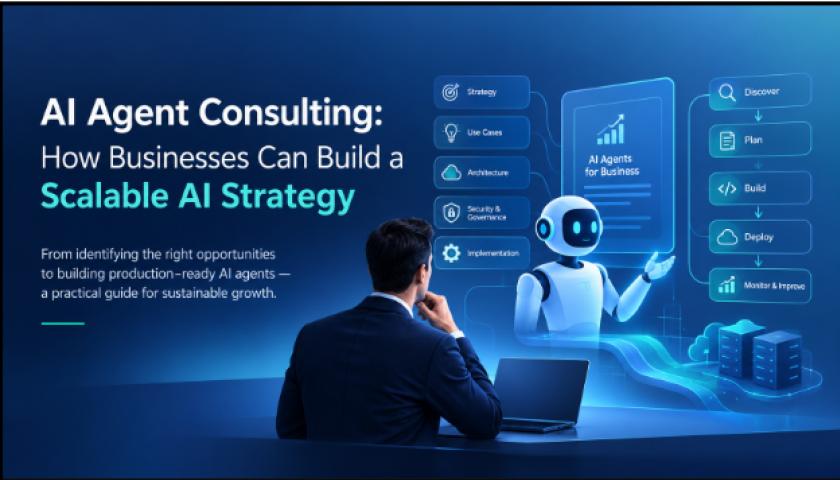
Successful AI agent development requires more than selecting a powerful language model. Teams need to consider business goals and data quality and system architecture and security. They also need a plan for monitoring the agent after launch. AI Agent Development Services can help businesses design and build agents around specific workflows. The right approach should focus on measurable business outcomes instead of adding AI simply because the technology is available.
Conclusion
AI agents can improve productivity and simplify complex workflows. Their development still comes with challenges that businesses need to address early. Data quality and system integration and security and testing can strongly influence the final result. A clear use case combined with strong technical controls can make deployment more reliable. Tech.us helps businesses approach AI agent development with a focus on practical use cases and dependable technology.