Selecting the right wound dressing involves more than choosing a material that suits the wound. Size is equally important. A dressing that is too small may not provide adequate coverage, while one that is unnecessarily large can make application, fixation and patient comfort more difficult.
For healthcare professionals and carers, understanding how to choose the appropriate dressing size can support effective wound management and help ensure the wound remains appropriately protected.
Why Dressing Size Matters
A wound dressing needs to provide sufficient coverage without unnecessarily extending across large areas of healthy skin. The correct size should allow the dressing to cover the wound securely while providing an appropriate margin around the wound, depending on the type of dressing being used.
Adequate coverage can help protect the wound from friction, contamination and external irritation. It can also help the dressing remain securely positioned during normal movement.
However, dressing size should always be considered alongside the wound's condition, location, exudate level and the characteristics of the selected dressing.
Start With an Accurate Wound Assessment
Before choosing a dressing size, the wound should be assessed carefully. Healthcare professionals may consider its length, width, depth, location and surrounding skin.
The dimensions of the wound can help determine the approximate dressing size required, but the wound itself is not the only consideration. Different dressing designs require different amounts of surrounding coverage.
For example, an adhesive dressing needs sufficient surface area beyond the wound to allow the adhesive border to secure it properly. A foam dressing may also need adequate coverage around the wound to support effective positioning.
Measuring the wound consistently can also help healthcare professionals monitor changes over time and determine whether the existing dressing remains appropriate.
Consider the Dressing Type
Different wound dressings are available in different sizes and formats, so size selection should take the design of the dressing into account.
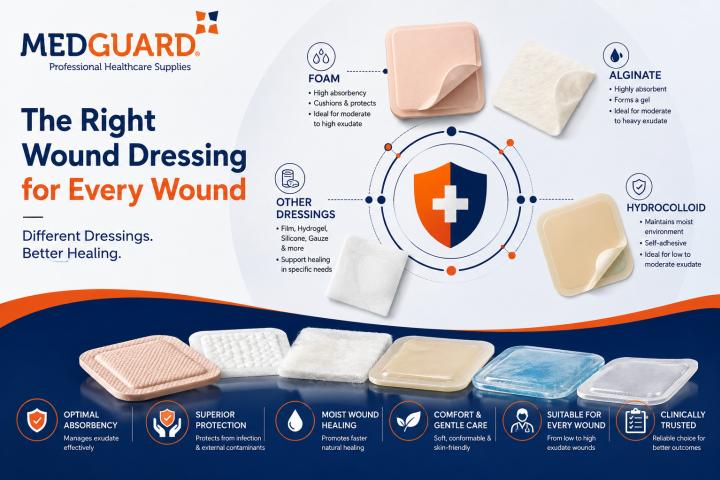
Adhesive dressings such as Primapore are available in several dimensions and provide an absorbent central pad with an adhesive border. The selected size should provide appropriate wound coverage while leaving enough adhesive area to secure the dressing.
Transparent film dressings such as Opsite can provide a different approach to wound protection. Their flexible design means the required size will depend on the area being protected and the amount of surrounding coverage needed.
Foam dressings such as Allevyn are available in various sizes for wounds where exudate management is an important consideration. The size selected should be appropriate for the wound and the specific product's instructions.
Allow for the Dressing Border
One of the most common considerations when choosing a dressing size is the area surrounding the wound.
A dressing generally needs to extend beyond the wound itself. However, the amount of additional coverage required depends on the type and design of the dressing.
If an adhesive dressing is selected, there needs to be sufficient healthy skin available for the adhesive border to attach securely. If the dressing is positioned too close to the wound edges, it may not remain securely in place.
On the other hand, choosing a dressing that is much larger than necessary may increase material use and potentially make application or movement less convenient.
Think About Wound Location
The location of a wound can influence which dressing size and shape are most practical.
Wounds around joints, hands, feet or other areas that move frequently may require particular attention to dressing dimensions and fixation. A dressing that is appropriately sized but poorly suited to a highly mobile area may not remain secure.
In areas where skin contours are uneven, a conformable dressing may be preferable. Healthcare professionals should consider how the dressing will sit against the body and whether it can remain securely positioned between dressing changes.
Exudate Can Influence Dressing Choice
Dressing size should also be considered alongside the amount of wound exudate.
A wound producing more exudate may require a dressing with suitable absorbency and sufficient capacity to manage the fluid between dressing changes. Simply choosing a larger dressing does not necessarily solve an absorbency issue.
This is why the wound's condition and exudate level should be assessed before selecting both the dressing type and size.
If the dressing is becoming saturated quickly, leaking or failing to manage exudate effectively, the overall dressing choice may need to be reviewed rather than simply moving to a larger size.
Common Dressing Sizes for Healthcare Settings
Healthcare facilities may benefit from keeping a selection of commonly used dressing sizes available. This can make it easier to respond to wounds of different dimensions without relying on a single standard size.
For example, smaller dressings may be suitable for minor wounds, while larger formats can provide coverage for more extensive areas. Having different sizes available can also be useful in GP practices, nursing homes, community care and other Irish healthcare environments.
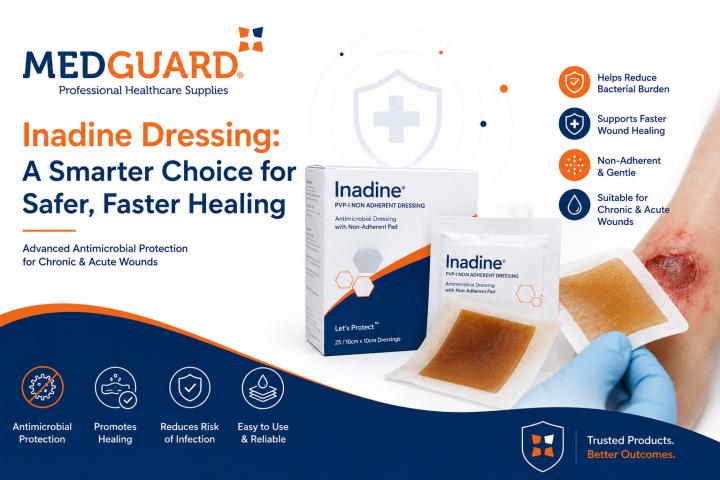
Medguard Healthcare provides a range of wound-care products in different formats and sizes, helping healthcare providers source suitable options for varied wound-management requirements.
When Should Dressing Size Be Reassessed?
Wound size and condition can change during the healing process. A dressing that was appropriate initially may not remain the best choice as the wound develops.
Healthcare professionals should review the wound regularly and consider whether the dressing continues to provide adequate coverage, absorbency and secure fixation.
Changes in wound dimensions, exudate levels, surrounding skin or patient comfort may all indicate that the dressing choice needs to be reconsidered.
Choosing the Right Dressing With Confidence
Choosing the correct wound dressing size is an important part of effective wound coverage. Rather than selecting a dressing based solely on the wound's measurements, healthcare professionals should consider the dressing border, wound location, exudate level, fixation and overall dressing design.
By combining accurate wound assessment with an understanding of different dressing types and sizes, healthcare teams can make more informed choices for individual patients.
For specific wounds or situations where there is uncertainty, dressing selection should follow local wound-care protocols, manufacturer guidance and appropriate clinical advice.
Original source : https://www.buzzingabout.com/blogs/77474/What-s-the-Difference-Between-Primapore-Opsite-and-Allevyn-Dressings