Interior design
is a creative profession, but building a successful career requires much more
than having a good sense of colour or decoration. A professional interior
designer needs to understand space, materials, measurements, furniture,
lighting, design software, client requirements, and the practical process of
developing an interior project.
This is why
choosing an interior design course with practical and industry-focused
learning can be valuable for aspiring designers. The right training can help
students develop creative thinking while also building the technical skills
required to turn ideas into functional spaces.
For students
exploring interior design courses in bangalore, it is important to look
beyond the course name. The curriculum, trainers, practical exposure, projects,
industry visits, internship opportunities, and career support can all influence
the learning experience.
What Practical Skills Should an Interior Designer Learn?
A good interior
design education should help students gradually develop a combination of
creative, technical, and professional skills.
Here are some
of the important practical skills aspiring interior designers should focus on.
1. Space Planning
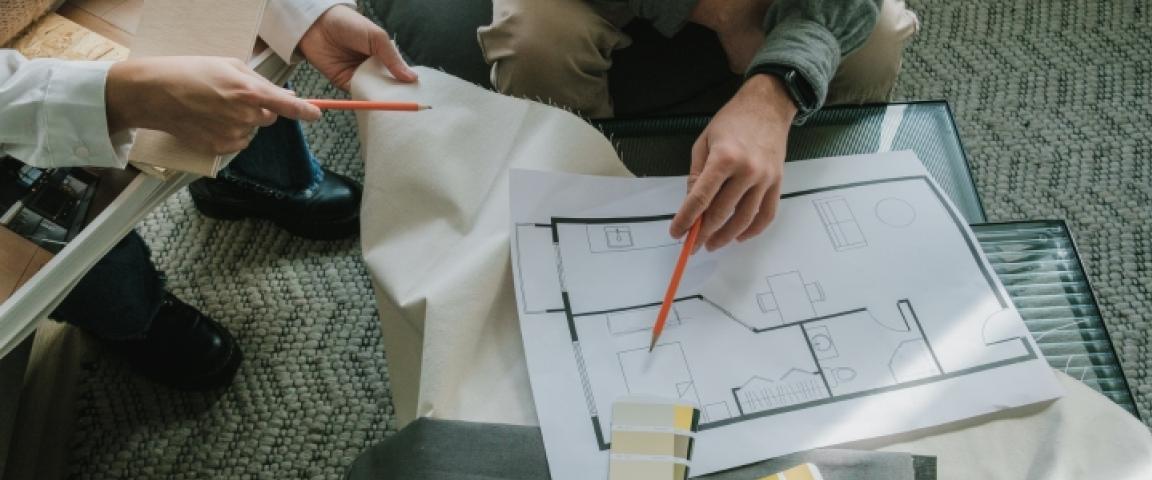
Space planning
is one of the fundamental skills in interior design. It involves understanding
the available area and arranging furniture, circulation paths, functional
zones, and other elements effectively.
A designer
needs to consider how people will use the space, how they move through it, and
how different elements work together.
Through
practical exercises, students can learn how to analyse dimensions, prepare
layouts, plan furniture placement, and make better use of available space.
2. Understanding Design Principles
Interior design
involves more than placing attractive objects in a room. Designers need to
understand principles such as balance, proportion, rhythm, harmony, contrast,
scale, and emphasis.
These principles
help designers create spaces that feel visually balanced and functional.
An interior
design course can introduce students to these fundamentals and provide
opportunities to apply them through design assignments and projects.
3. Colour Selection and Colour Psychology
Colour can
significantly influence the appearance and atmosphere of an interior space.
Aspiring
designers should understand colour combinations, tones, contrasts, textures,
and how natural and artificial lighting can affect colours.
Students can
develop this skill by creating colour palettes and applying them to different
residential and commercial design concepts.
4. Material and Finish Selection
Interior
designers work with a wide range of materials and finishes, including wood,
laminates, glass, metals, fabrics, tiles, stones, paints, and other surface
materials.
Understanding
where and how different materials can be used is an important practical skill.
Students should
learn about the appearance, functionality, maintenance, application, and
suitability of different materials for different interior spaces.
5. Furniture Planning
Furniture needs
to complement the function and dimensions of a space.
A designer
should understand furniture proportions, placement, circulation requirements,
storage needs, and the relationship between furniture and other elements within
the room.
Practical
furniture planning exercises can help students develop a better understanding
of how individual pieces contribute to an overall interior concept.
6. Lighting Design
Lighting plays
an important role in both the functionality and visual character of an
interior.
Aspiring
designers should understand different types of lighting and how lighting can be
incorporated into residential, commercial, and hospitality environments.
Learning how to
combine ambient, task, and accent lighting can help students create more
effective interior concepts.
7. Technical Drawing and Documentation
Creative ideas
need to be communicated clearly.
Interior
designers use technical drawings and documentation to communicate dimensions,
layouts, furniture arrangements, materials, and design details.
Students should
gradually develop the ability to understand measurements, prepare drawings,
read plans, and communicate design information accurately.
8. Interior Design Software Skills
Modern interior
design involves digital tools for creating drawings, layouts, 3D models,
presentations, and visualisations.
Learning
relevant design software can help students communicate their ideas more
effectively and prepare professional design presentations.
However,
software should support design thinking rather than replace it. Students need
to understand the design concept first and then use technology to communicate
that concept.
9. 3D Visualisation
Clients often
want to understand what a proposed space may look like before implementation.
3D
visualisation helps designers communicate concepts through realistic or
conceptual representations of spaces.
Students can
develop their visualisation skills by creating rooms, furniture layouts,
materials, colours, lighting concepts, and other design elements in a
three-dimensional environment.
10. Project Planning
Interior
projects involve multiple stages. Designers need to understand how a project
moves from an initial requirement to concept development, planning, design
presentation, material selection, and execution-related coordination.
Project-based
learning can help students understand this process more effectively than theory
alone.
11. Client Communication
Interior designers regularly communicate with clients to understand their requirements, preferences, budget considerations, life>
Strong
communication skills can help designers explain concepts clearly and respond
professionally to feedback.
Students should
therefore develop presentation and communication skills alongside their
technical abilities.
12. Portfolio Development
A portfolio
allows aspiring designers to demonstrate what they can create.
Instead of
simply listing software or qualifications, a strong portfolio can showcase
floor plans, mood boards, material selections, furniture layouts, 3D views,
colour concepts, and completed projects.
Practical
assignments and project work during an interior design course can provide
valuable material for developing a professional portfolio.
Why Practical Learning Matters in
Interior Design
Interior design
is a profession where knowledge needs to be applied.
A student may
understand design theory but still need practice to develop confidence in
creating layouts, selecting materials, preparing presentations, communicating
ideas, and working through complete projects.
This is why
students researching interior design courses in bangalore should
consider how much practical exposure a program provides.
Practical
learning can help students:
- Apply design principles to actual
spaces
- Understand materials and finishes
- Improve technical drawing skills
- Develop software proficiency
- Work on complete design concepts
- Build a portfolio
- Understand professional workflows
- Gain experience working with
project requirements
Eduleem: Practical Interior
Design Education in Bangalore
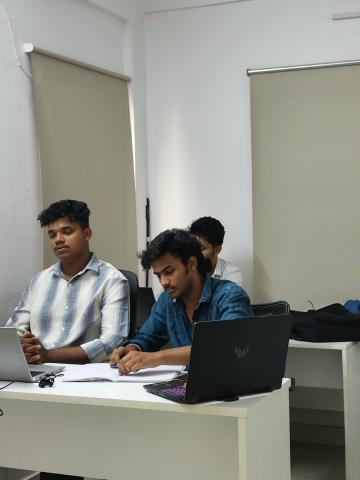
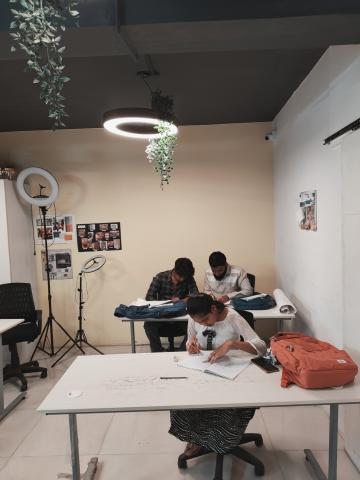
Eduleem focuses on helping aspiring designers
develop practical and industry-relevant interior design skills.
The learning
approach combines classroom concepts with hands-on activities, project work,
industry exposure, workshops, and internship opportunities.
Students learn
from expert trainers and follow an updated course curriculum
designed to cover important creative and technical aspects of interior design.
For students
searching for an interior design institute in bangalore, Eduleem
provides a learning environment focused on developing practical skills that can
be applied beyond the classroom.
Learn from Expert Trainers
Experienced
trainers can help students understand how design concepts are applied in
professional situations.
At Eduleem,
students learn with guidance from expert trainers who help them understand
design fundamentals, technical concepts, software, materials, space planning,
and project development.
The objective
is to help students build both creative confidence and practical knowledge.
Updated Course Curriculum
The interior
design industry continues to evolve with changing materials, technologies,
design trends, and digital tools.
Eduleem's
updated course curriculum covers important areas of interior design while
giving students opportunities to apply what they learn through practical
assignments and projects.
The learning
experience can include areas such as space planning, colour concepts, materials
and finishes, furniture planning, lighting, technical drawings, design
software, 3D visualisation, and project development.
Factory Visit and Industry
Exposure
One of the
practical highlights of Eduleem's interior design learning approach is its factory
visit.
Eduleem states
that it is the only institute in Bangalore offering this factory visit
experience as part of its interior design learning approach.
A factory visit
can help students understand how interior-related products and materials are
manufactured and how they are used in actual projects.
This gives
students an opportunity to connect classroom concepts with real-world
production and material applications.
Workshops with Senior
Professionals
Learning from
experienced professionals can provide students with perspectives that go beyond
textbooks.
Eduleem
conducts workshops with senior professionals, giving students
opportunities to learn about industry practices, project requirements, design
approaches, and professional expectations.
These workshops
can help aspiring designers understand how the skills they develop during their
course are used in professional environments.
3-Month Internship with a Live
Project
Practical
experience becomes particularly valuable when students get an opportunity to
work through a complete project.
Eduleem
provides a 3-month internship with one live project. Depending on the
project, students may work on a 1BHK, 2BHK, 3BHK, or villa project.
Working on a
live project can help students understand how design requirements are
translated into practical solutions.
It can also
give students exposure to different stages of a project, including
understanding requirements, planning spaces, developing concepts, preparing
designs, selecting materials, and presenting solutions.
This practical
experience can contribute to a stronger portfolio and better understanding of
the professional workflow.
Placement Support at Eduleem
Learning the
skills is an important part of starting a career, but students also need
guidance when preparing for employment opportunities.
Eduleem
provides placement support to help students prepare for opportunities in
the interior design field.
Depending on
their skills and interests, students can explore roles such as:
- Interior Designer
- Junior Interior Designer
- Residential Interior Designer
- Commercial Interior Designer
- Space Planner
- 3D Visualiser
- Interior Design Consultant
- Design Coordinator
Career
opportunities can vary based on individual skills, portfolio quality,
experience, and employer requirements.
Why Practical Skills Matter for
Your Interior Design Career
A successful
interior designer needs a combination of creativity and technical
understanding.
Creative
thinking helps generate ideas, while practical knowledge helps transform those
ideas into workable design solutions.
The most useful
skills to develop include:
Creative
Thinking: Generate
original and functional design concepts.
Space Planning: Make effective use of available space.
Technical
Skills: Understand
drawings, dimensions, layouts, and documentation.
Material
Knowledge: Select
suitable materials and finishes.
Software
Skills: Communicate
ideas through digital drawings and visualisations.
Communication: Understand client requirements and
present design concepts.
Project
Experience: Learn how
different stages of an interior project work together.
Portfolio
Development: Present your
abilities through completed design work.
Developing
these skills together can give aspiring designers a stronger foundation for
entering the industry.
How to Choose the Right Interior
Design Course
Before
enrolling in a course, students should consider several factors instead of
looking only at the course title.
Ask questions
such as:
- Does the curriculum include practical
training?
- Are the trainers experienced?
- Is the curriculum updated?
- Does the institute provide
software training?
- Are students exposed to materials
and industry practices?
- Are there workshops or industry
visits?
- Does the course include project
work?
- Is internship experience
available?
- Can students work on a live
project?
- Does the institute provide
placement support?
- Will students have opportunities
to build a portfolio?
Considering
these factors can help students select a course that matches their learning and
career goals.
Start Learning Interior Design
with Eduleem
Interior design
combines creativity, technical knowledge, problem-solving, and practical
execution. If you want to build a career in this field, developing practical
skills should be one of your primary goals.
For students
looking for an interior design course in Bangalore, Eduleem offers a
practical learning environment with expert trainers, an updated curriculum,
factory visit exposure, workshops with senior professionals, a 3-month internship,
a live project, and placement support.
The combination
of classroom learning and practical exposure can help aspiring designers
understand how interior design works beyond theory and begin developing the
skills required for professional opportunities.
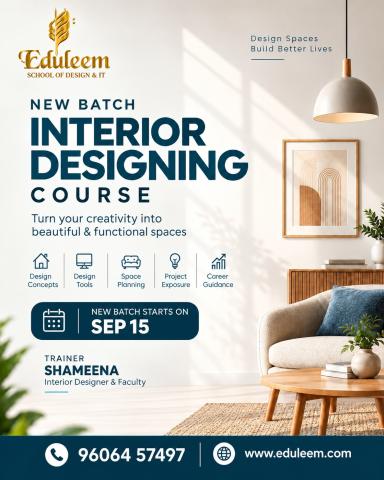
New Batch Starting Soon!
Ready to start
your journey in interior design?
Join Eduleem
and develop the creative, technical, and practical skills needed to take your
first steps toward a career in interior design.
For More
Details:
Call: 96064 57497
Website: www.eduleem.com