Have you ever
looked at a beautifully designed home and wondered how the space was planned,
how the furniture was selected, or how the colours and lighting came together
so perfectly?
Interior design
is much more than choosing attractive furniture or decorating a room. It
combines creativity, technical knowledge, space planning, materials, design
principles, software skills, and an understanding of how a project is actually
executed.
For someone
starting from scratch, a structured interior design course can provide
the foundation needed to understand these areas and gradually develop the
skills required to work on professional projects.
Bangalore has
also become an important destination for aspiring designers because of its
growing residential and commercial development. With the right training,
beginners can learn how an interior project moves from an initial idea to a
finished space.
What Does an Interior Designer Actually Do?
An interior designer is involved in planning and developing interior spaces based on the client's requirements, life>
Depending on
the project, an interior designer may work on:
- Space planning and layouts
- Furniture placement
- Colour schemes
- Lighting plans
- Material selection
- False ceiling and flooring
concepts
- Kitchen and wardrobe planning
- 2D drawings and 3D visualisation
- Client presentations
- Project coordination
- Design modifications and revisions
The role
requires both creativity and practical thinking. A good design needs to look
appealing, but it should also be comfortable, functional, practical, and
suitable for the space.
What Do You Learn in an Interior Design Course?
A
well-structured course takes beginners through the important stages of interior
design. Instead of learning isolated topics, students can gradually understand
how different parts of a project connect with each other.
1. Fundamentals of Interior Design
The first step
is understanding the basic principles of design.
Students learn
concepts such as balance, proportion, scale, harmony, rhythm, contrast, and
functionality. These principles help designers make informed decisions when
planning an interior space.
Understanding
these fundamentals is particularly important for beginners because they form the
foundation for more advanced design work.
2. Space Planning
Space planning
is one of the most important skills in interior design.
A designer
needs to understand how people will use a space and plan furniture, circulation
areas, storage, and other elements accordingly.
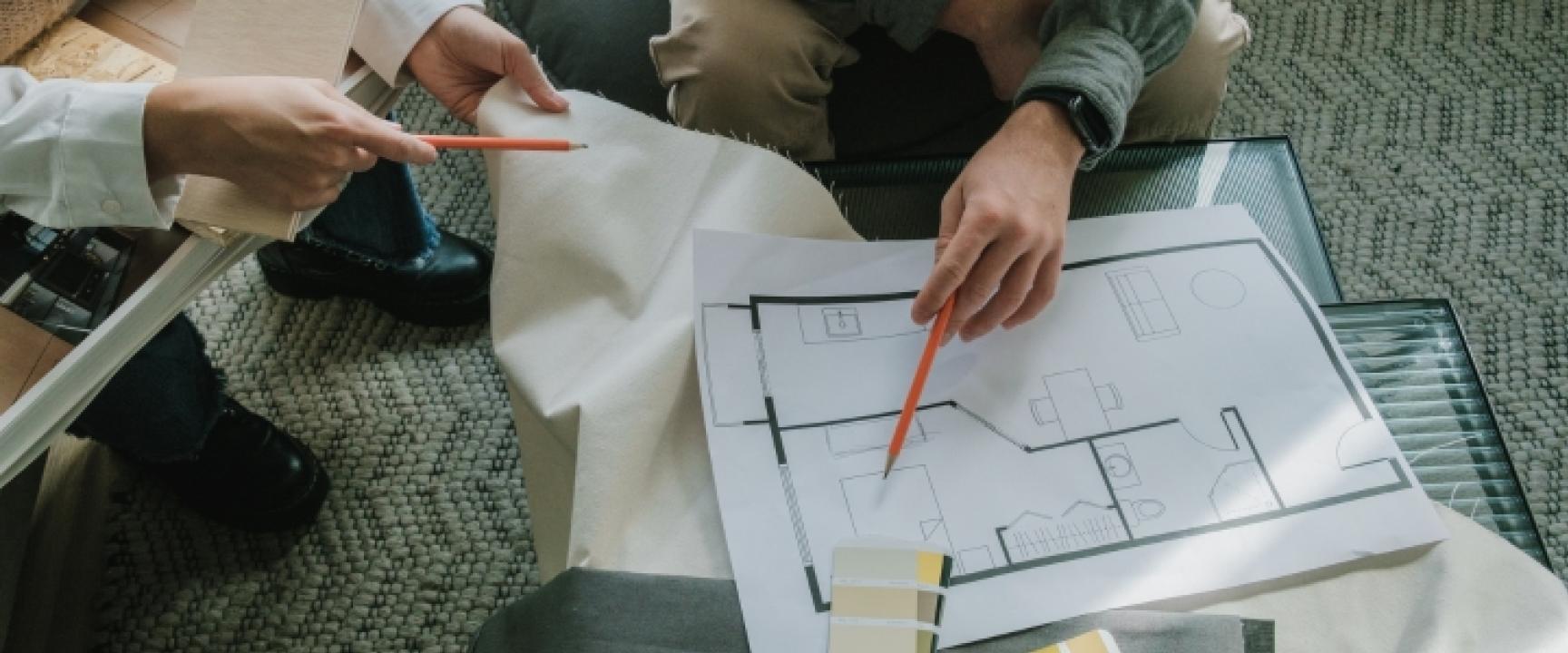
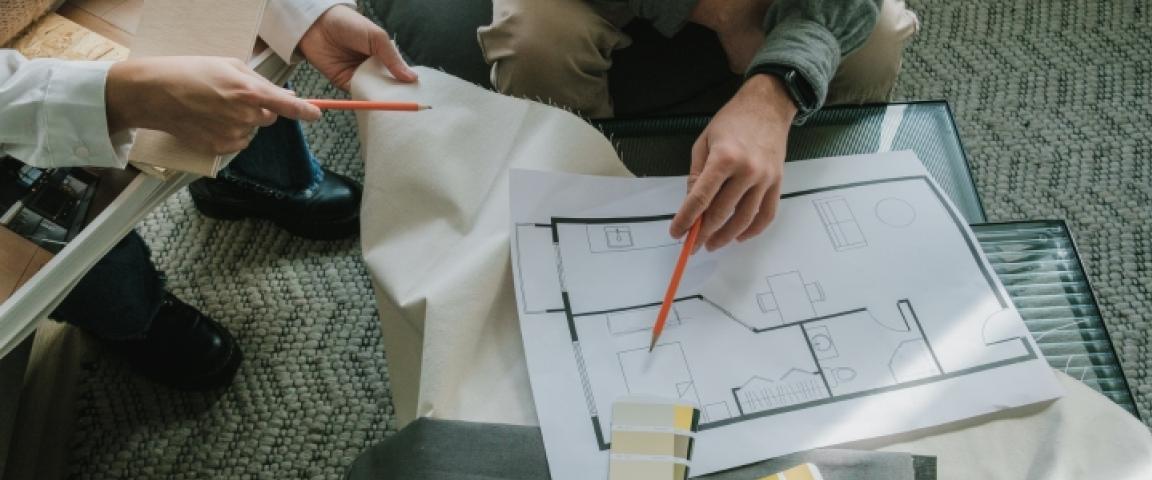
For example, designing a compact 1BHK apartment requires a different approach from designing a large villa. The available space, life>
Students learn
how to think about these practical requirements while creating functional
layouts.
3. Colour, Materials and Finishes
Colours and
materials have a major impact on the appearance and feel of an interior.
Students can
learn how different colours work together and how materials such as wood,
laminates, glass, tiles, stone, fabrics, metals, and other finishes can be
incorporated into a design.
Understanding
materials is especially important because designers need to consider not only
appearance but also durability, maintenance, cost, and suitability for
different spaces.
4. Furniture and Interior Elements
Furniture plays
an important role in making a space functional.
Students learn
how furniture can be selected and positioned according to the size and purpose
of a room. They may also explore elements such as kitchens, wardrobes, storage
units, lighting, ceilings, flooring, and other interior components.
The goal is to
create spaces where design and functionality work together.
5. 2D Drawings and Technical Understanding
Creative ideas
need to be communicated clearly to clients, contractors, and other
professionals.
This is where
technical drawings become important.
Students learn
how design ideas can be represented through layouts, drawings, dimensions, and
other technical details. Developing this ability helps bridge the gap between a
creative concept and its actual execution.
6. 3D Visualisation
Clients often
want to see how a proposed space might look before construction or execution
begins.
3D
visualisation allows designers to communicate their ideas more effectively by
showing elements such as furniture, colours, materials, lighting, and spatial
arrangements.
Learning 3D
design and visualisation can therefore become an important part of an aspiring
interior designer's skill set.
7. Understanding Real Materials and Manufacturing
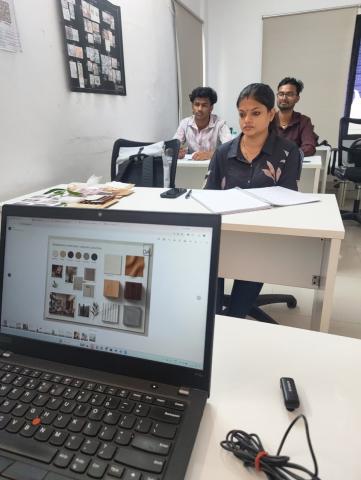
Classroom
learning alone cannot provide complete exposure to how interior products are
manufactured and used.
This is why
industry exposure can be valuable for beginners.
Factory visits
can help students understand materials, manufacturing processes, finishes, and
how different products eventually become part of an interior project.
Seeing these
processes in person can give students a better understanding of the practical
side of interior design.
8. Working on Live Interior Projects
One of the
biggest differences between learning about interior design and actually
experiencing it is project exposure.
Working on a
live project gives students the opportunity to understand how a real project
develops from planning to execution.
Depending on
the project, students may work on residential spaces such as:
- 1BHK
- 2BHK
- 3BHK
- Villa projects
This type of
experience can help beginners understand practical challenges, client
requirements, space constraints, design changes, and project execution.
Why Practical Training Matters for Beginners
Imagine
learning how to design a kitchen only through theory and then being asked to
plan an actual kitchen layout.
The practical
situation may involve questions about available space, storage, movement,
materials, appliances, lighting, budget, and client preferences.
This is why
practical training is an important part of becoming an interior designer.
Workshops,
industry visits, and live projects can help students connect classroom concepts
with real-world situations.
Why Choose Interior Design Courses in Bangalore?
Bangalore has a
diverse interior design market, ranging from apartments and independent houses
to villas, offices, retail spaces, and commercial projects.
For aspiring
designers, studying in Bangalore can provide exposure to a growing design
ecosystem and help them understand the requirements of modern residential and
commercial interiors.
When comparing interiordesign courses in bangalore, students should look beyond course duration
and fees. It is important to consider the curriculum, trainer experience,
practical exposure, industry visits, internship opportunities, live projects,
and career support.
How to Choose the Right Interior Design Institute in
Bangalore
Choosing the
right training institute can make a significant difference to your learning
experience.
Before
enrolling, consider the following:
Updated Curriculum
Interior design
continues to evolve with new materials, technologies, software, and design
trends. An updated curriculum can help students learn skills that are relevant
to the current industry.
Experienced Trainers
Experienced
trainers can explain concepts from both a creative and practical perspective.
They can also help students understand common challenges faced during actual
projects.
Practical Learning
Look for
programs that provide opportunities to apply what you learn rather than
focusing entirely on theory.
Industry Exposure
Factory visits
and workshops with experienced professionals can give students insights that
are difficult to gain from textbooks alone.
Live Project Experience
A live project
can help students understand the complete workflow of an interior design
project and build confidence before entering the industry.
Internship Opportunities
An internship
allows students to experience a professional working environment and understand
how designers and project teams operate.
Career and Placement Support
Beginners may
also benefit from resume guidance, interview preparation, and placement
assistance when they start looking for their first opportunity.
Why Choose Eduleem for Interior Design Training in
Bangalore?
For students
looking for an interior design institute in bangalore, Eduleem provides
a practical and career-focused learning experience designed to take beginners
beyond classroom theory.
Eduleem focuses
on combining design education with industry exposure so that students can
understand both the creative and practical sides of interior design.
Affordable Fee Structure
Starting a new
career should not necessarily mean choosing an expensive training program.
Eduleem offers an affordable fee structure while focusing on practical and
industry-oriented learning.
Expert Trainers
Students learn
under expert trainers who guide them through design concepts, practical
assignments, and project-related learning.
Updated Course Curriculum
Eduleem
provides an updated curriculum covering important aspects of interior design to
help students build relevant skills for the industry.
Factory Visit
Eduleem
provides factory visit exposure, allowing students to see how interior products
and materials are manufactured and understand the connection between design and
production.
Workshops With Senior Professionals
Students also
get opportunities to participate in workshops with senior professionals and
gain practical insights into the interior design industry.
3-Month Internship With a Live Project
One of
Eduleem's key practical learning opportunities is its 3-month internship
with a live project.
Depending on
the project, students may get the opportunity to work on a 1BHK, 2BHK, 3BHK,
or villa project, giving them exposure to real residential interior
requirements.
This experience
can help students understand how professional interior projects are planned and
executed.
Placement Support
Completing a
course is only one step. Starting a career requires preparation for job
applications, interviews, and professional opportunities.
Eduleem
provides placement support through its placement cell to help students move
toward potential career opportunities in the interior design industry.
Eduleem has
trained 200+ students, and many students have been placed in design
companies with the support of the Eduleem placement cell.
A Practical Learning Approach
Eduleem
combines classroom learning with industry exposure through factory visits,
workshops, and live project experience.
The combination
of these learning opportunities can help beginners develop a better
understanding of what working as an interior designer actually involves.
From Learning Design to Building a Career
Becoming an
interior designer is not about learning one software or memorising design
principles. It is a combination of creativity, technical knowledge, practical
understanding, communication, and project experience.
A beginner can
start by learning the fundamentals, progress to space planning and technical
drawings, develop visualisation skills, understand materials, and eventually
gain exposure through internships and live projects.
With the right
training environment, this learning process can become much more structured and
practical.
For students
searching for an interior design course in bangalore, choosing a program
that combines education with real-world exposure can be an important step
toward building professional skills.
Start Your Interior Design Journey With Eduleem
If you are
passionate about designing spaces and want to turn that interest into a
professional skill, structured training can give you the right foundation to
get started.
Eduleem
combines an updated curriculum, expert trainers, practical learning, factory
visits, workshops with senior professionals, a 3-month internship with a live
project, and placement support to create a career-focused learning experience.
With 200+
students trained and many students placed in design companies with support
from the Eduleem placement cell, Eduleem continues to focus on helping aspiring
designers move from learning to professional opportunities.
If you are
looking for an interior design institute in bangalore where learning
goes beyond classroom theory, Eduleem can help you take the next step toward
your interior design career.
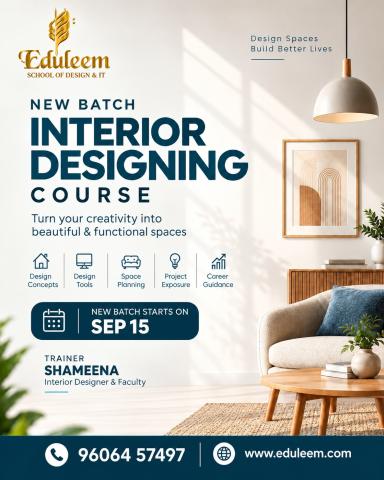
New Batch Starting Soon!
Start your
journey from beginner to aspiring interior designer with Eduleem.
For More
Details:
96064 57497
www.eduleem.com
Learn.
Practice. Experience. Build your career in Interior Design with Eduleem.