For an aspiring
interior designer, a portfolio can be one of the most important tools for
starting a career.
A certificate
can show that you completed a course, but a portfolio can show what you can
actually design. It gives employers and clients an opportunity to
understand your creativity, technical skills, design thinking and ability to
develop a project from an initial idea into a complete design solution.
This is why
choosing the right interior design course is about more than simply
learning design theory. The learning experience should give you opportunities
to work on projects, experiment with different design ideas, develop technical
skills and gradually build work that you can confidently present.
For students
exploring interior design courses in bangalore, practical exposure and
portfolio development should therefore be important factors when comparing
institutes.
Why Is a Portfolio Important in Interior Design?
Interior design
is a visual profession.
When you apply
for an opportunity, employers may want to see examples of your work rather than
only read about your skills.
A
well-presented portfolio can demonstrate your ability to work with:
- Space planning
- Design concepts
- Colour schemes
- Materials and finishes
- Furniture layouts
- Lighting concepts
- Technical drawings
- 2D and 3D visualization
- Residential and commercial spaces
It also gives
you an opportunity to show how you think as a designer.
A good
portfolio doesn't need to contain dozens of projects. A smaller number of
well-developed projects that clearly demonstrate your design process can be
more valuable than pages of unrelated work.
What Should an Interior Design Student Include in a
Portfolio?
A beginner's
portfolio can include different stages of the design process.
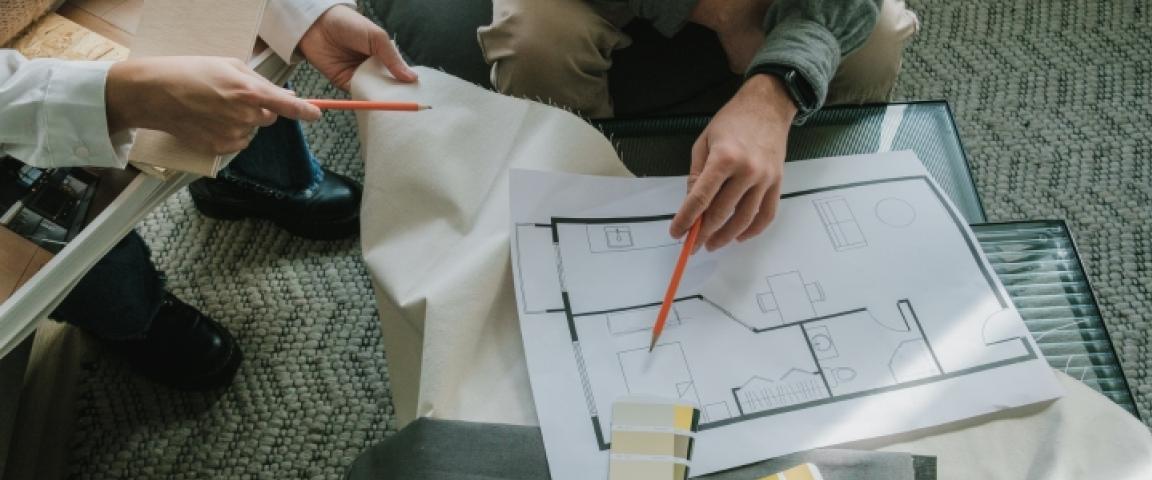
For example, a
residential project could show the initial client requirements, concept
development, mood board, floor plan, furniture layout, material selection and
final visualization.
This helps the
viewer understand not only the final result but also how you arrived at it.
A strong
student portfolio may include:
Design Concepts
Show the idea
behind the project and explain the inspiration, functionality and overall
design direction.
Floor Plans and Space Planning
Demonstrate how
you have organized the available space and considered movement, furniture and
functionality.
Mood Boards
Use images,
colours, textures and materials to communicate the visual direction of the
project.
Materials and Finishes
Show how you
selected materials and finishes and how they contribute to the overall design.
3D Visualizations
Use
visualizations to demonstrate how the proposed interior could look in a
finished space.
Technical Work
Include
relevant technical drawings and other design documentation that demonstrate
your understanding of the practical side of interior design.
Why Real Projects Can Make a Portfolio Stronger
One of the
biggest challenges for beginners is creating a portfolio without professional
experience.
This is where
practical learning becomes important.
Working on
realistic projects gives students an opportunity to make design decisions,
solve problems and develop work that reflects real-world requirements.
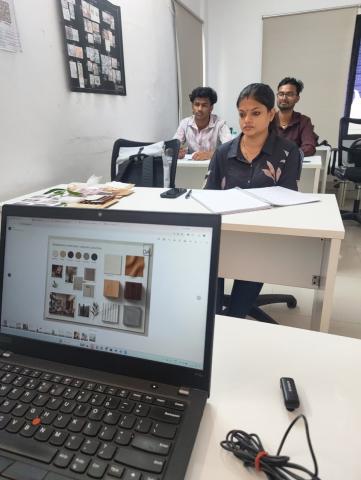
At Eduleem,
students get the opportunity to complete a 3-month internship with one live
interior design project. Depending on the project, it may be a 1BHK,
2BHK, 3BHK or villa project.
This allows
students to experience the design process in a real project environment and
develop practical work that can contribute to their professional portfolio.
The experience
can also help students understand that interior design is not simply about
creating attractive visuals. It involves understanding client requirements,
available space, materials, functionality and practical execution.
Why Industry Exposure Matters When Building Your
Portfolio
Classroom
learning provides the foundation, but industry exposure can add another
dimension to a student's understanding.
Eduleem
provides students with a factory visit, giving them an opportunity to
understand the manufacturing side of the interior industry and see how
materials and interior components are produced.
Eduleem also
conducts workshops with senior professionals, giving students exposure
to professional perspectives and practical insights.
The combination
of factory exposure, senior-led workshops and live-project experience
can help students understand the industry beyond what they learn through
classroom sessions.
Eduleem
highlights its combination of factory visit and live-project exposure as
a distinctive part of its interior design learning experience in Bangalore.
How Does an Interior Design Course Help You Build a
Better Portfolio?
A structured
course can give you a clear progression.
You can start
with basic design exercises and gradually move into more detailed projects.
For example:
Design
fundamentals → space planning → concept development → materials → technical
drawings → visualization → complete project presentation
This
progression allows your portfolio to demonstrate how your skills have
developed.
Instead of
simply collecting random designs, you can build projects that tell a story
about your approach to design.
What Should You Look for in Interior Design Courses in
Bangalore?
If you're
comparing interior design courses in bangalore, don't look only at the
course duration or certificate.
Ask what you
will actually be able to create by the end of the program.
Consider
whether the institute provides:
- Practical design projects
- Experienced trainers
- Updated curriculum
- Software and technical training
- Industry exposure
- Workshops
- Site or factory visits
- Internship opportunities
- Live project experience
- Portfolio development
- Career and placement support
These factors
can make a significant difference, particularly for students who are starting
without professional experience.
Why Eduleem Can Help You Build Industry-Ready Skills
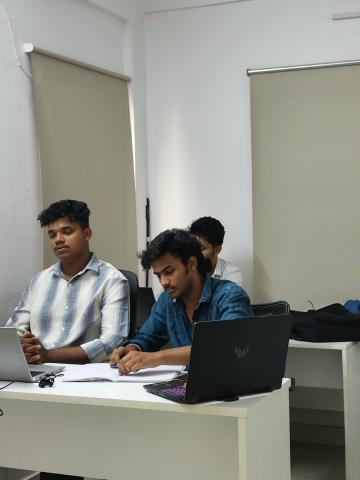
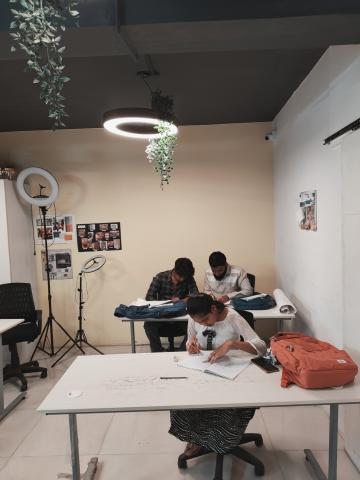
Eduleem
provides a practical and career-focused learning environment for aspiring
interior designers.
Students learn
under the guidance of expert trainers and follow an updated course
curriculum designed to develop creative, technical and practical skills.
The learning
experience goes beyond classroom instruction through factory visits and
workshops with senior professionals.
One of the key
practical features is the 3-month internship with one live project,
which may involve a 1BHK, 2BHK, 3BHK or villa project.
This gives
students the opportunity to work around a real residential project and
understand how design concepts connect with actual requirements.
Eduleem has
trained more than 200 students and also provides placement support
through its dedicated placement cell. Many students have secured
opportunities in top design companies with the support of the Eduleem placement
team.
For someone
starting a career, this combination of training, practical exposure, portfolio
development and career support can provide a stronger foundation than learning
design only through theory.
How Can You Make Your Portfolio Stand Out?
A portfolio gets
noticed when it communicates your abilities clearly.
Don't simply
add every assignment you have completed.
Instead, select
your strongest projects and explain the thinking behind them.
For each
project, consider showing:
The
requirement: What was the
client or project trying to achieve?
The concept: What was your design direction?
The planning: How did you organize the space?
The materials: Why did you select those particular
finishes?
The
visualization: How does the
final concept look?
The solution: What problem did your design solve?
This approach
helps your portfolio demonstrate design thinking, rather than simply
displaying attractive images.
From Student Projects to Professional Opportunities
Building a
portfolio is not something that should be left until the final day of a course.
Start
developing it as you learn.
Every strong
project can become an opportunity to demonstrate a new skill. One project may
showcase space planning, another may demonstrate material selection, while
another can highlight your ability to develop a complete residential concept.
Over time,
these projects can come together to create a portfolio that represents your
strengths as a designer.
This is also
why practical experience matters. The more realistic the project, the easier it
can be to demonstrate how you approach real design requirements.
Choosing the Right Interior Design Institute in Bangalore
When evaluating
an interior design institute in bangalore, think beyond the classroom.
Ask yourself
whether the institute will give you opportunities to learn, practice,
experience and present.
An institute
with experienced trainers, an updated curriculum, practical projects, industry
exposure, internships and career support can provide a more complete learning
experience.
Eduleem's
approach combines these elements with factory exposure, senior-led workshops
and a 3-month live-project internship.
For students
who want to build a portfolio based on practical learning rather than only
classroom assignments, this can be an important consideration.
Build a Portfolio That Represents You
Your portfolio
is more than a collection of interior images.
It represents
your creativity, design thinking, technical understanding and ability to
solve problems.
That's why the
learning environment you choose matters.
If you are
searching for interior design courses in bangalore, look for a program
that gives you opportunities to work on meaningful projects, gain industry
exposure and develop work that can support your career.
Eduleem combines
expert trainers, an updated curriculum, senior-led workshops, factory exposure,
a 3-month internship with a live residential project and placement support to
help aspiring designers move from learning concepts to developing practical
skills.
Start building
your skills today and let your portfolio show what you can do.
New Batch
Starting Soon!
For More
Details:
96064 57497
www.eduleem.com